
Last updated November 2, 2026
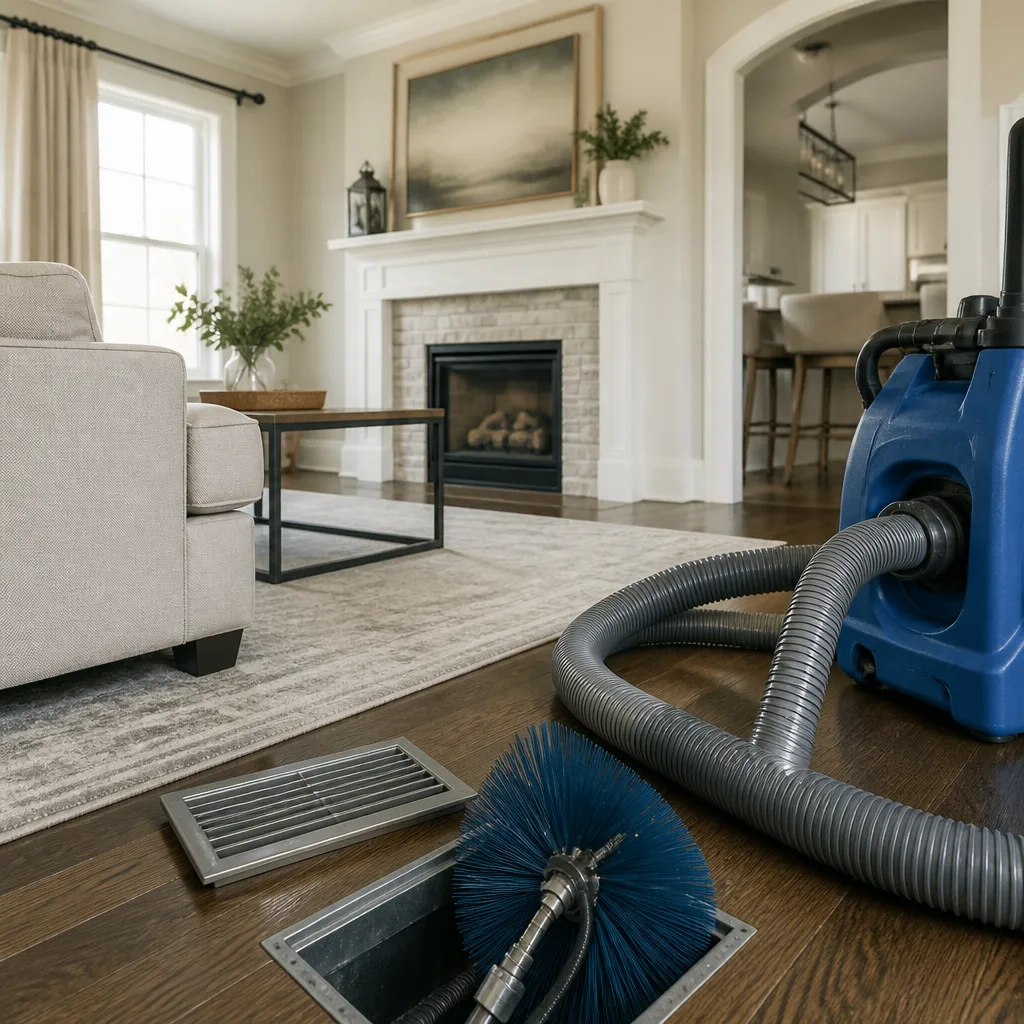 Whole-home duct cleaning
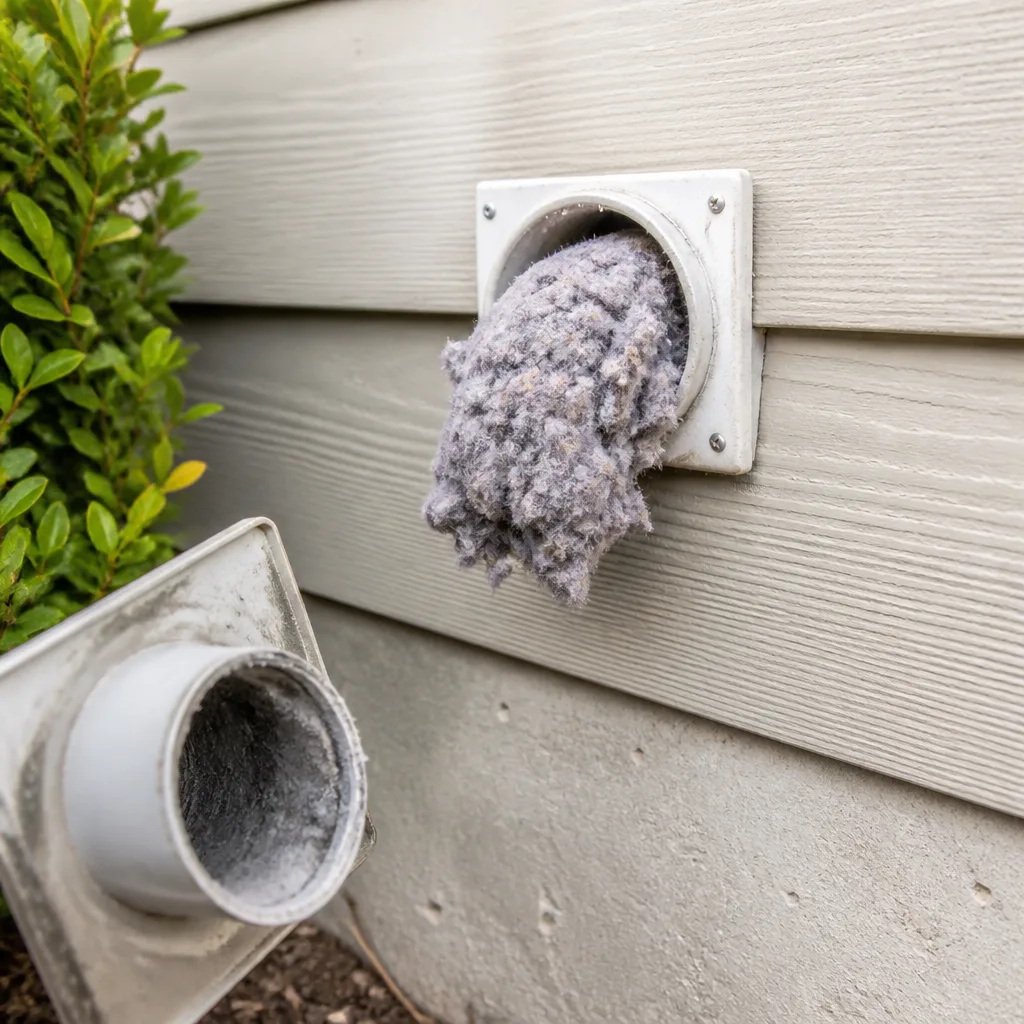 Dryer vent cleaning
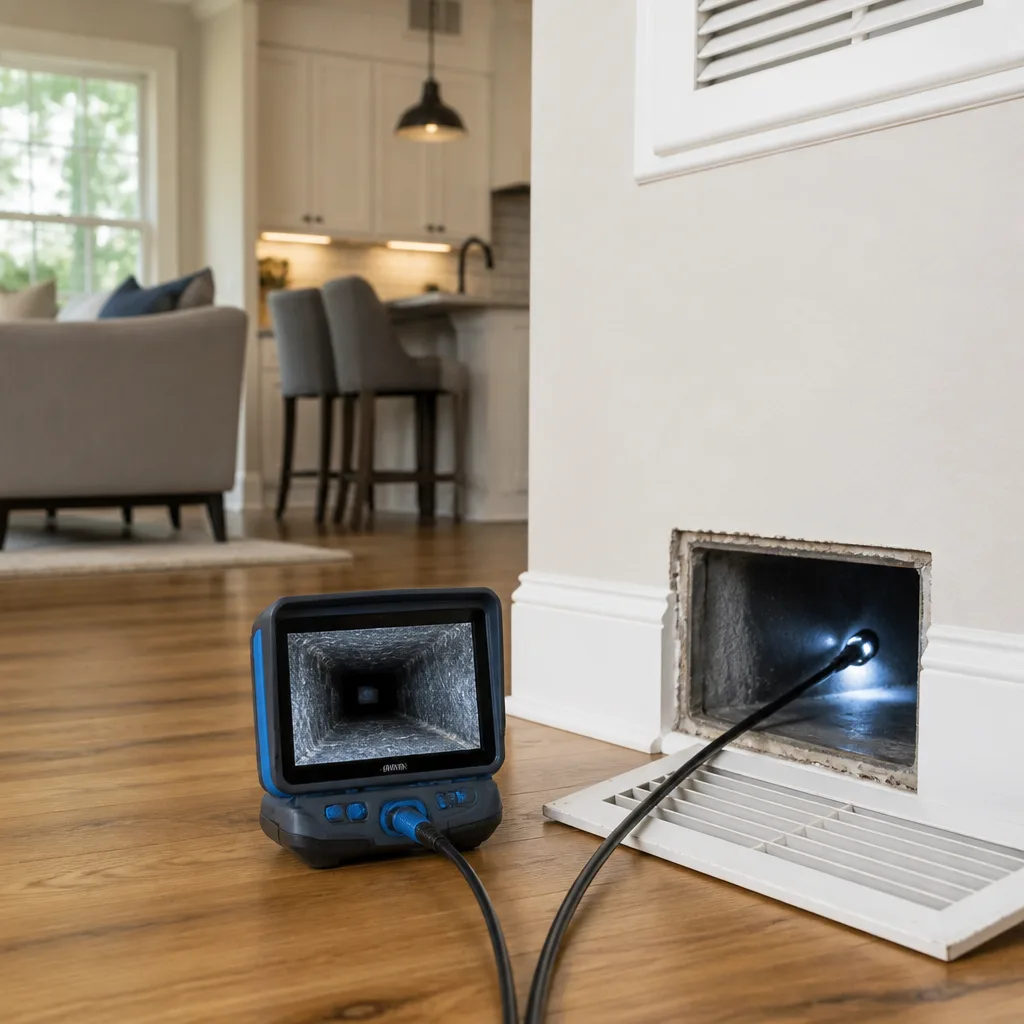 Camera inspection
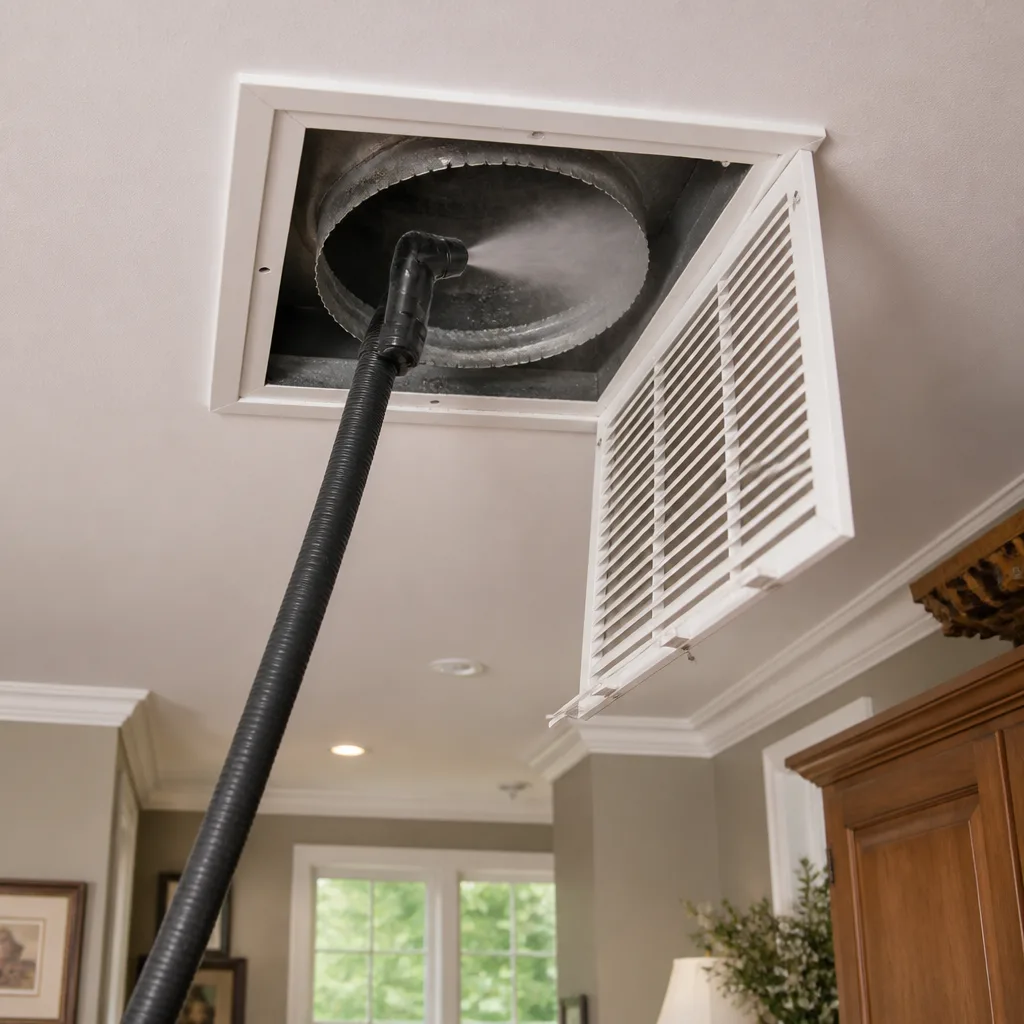 Sanitizing & deodorizing
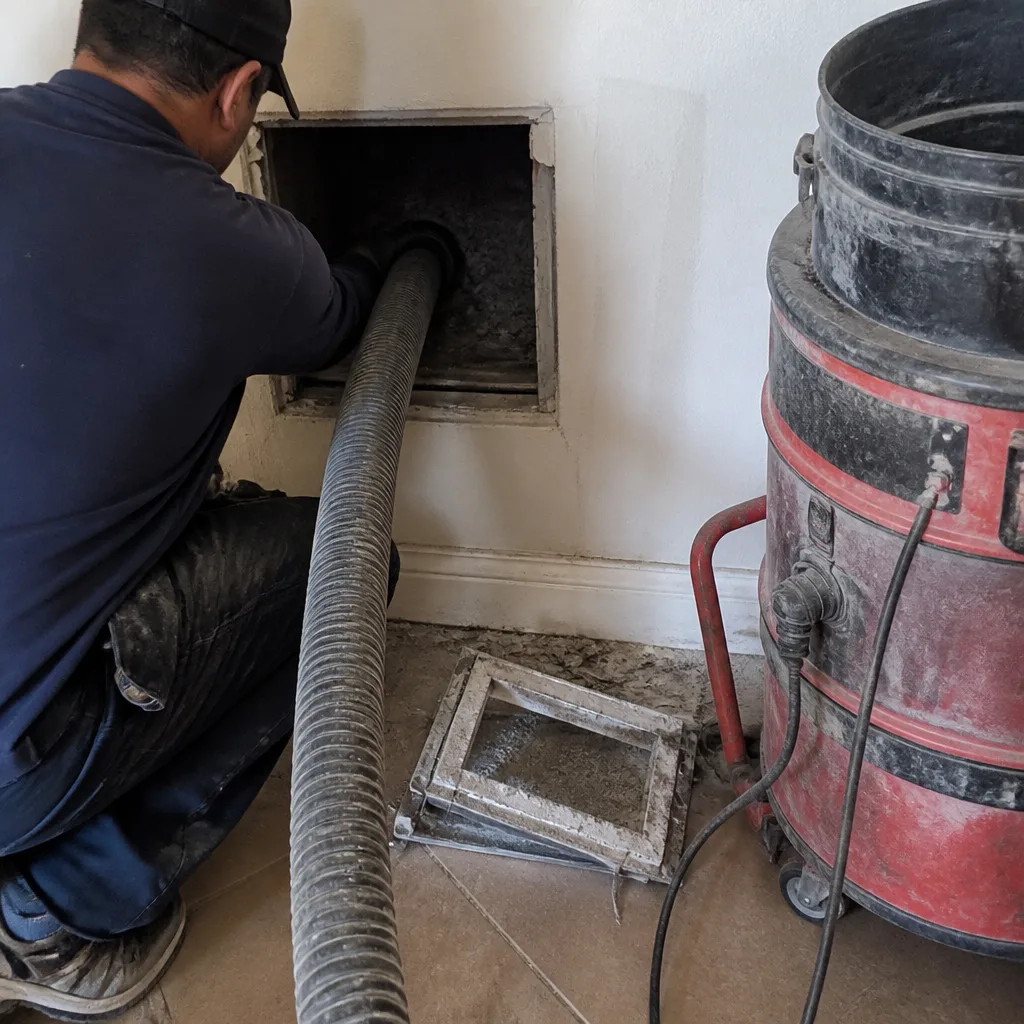
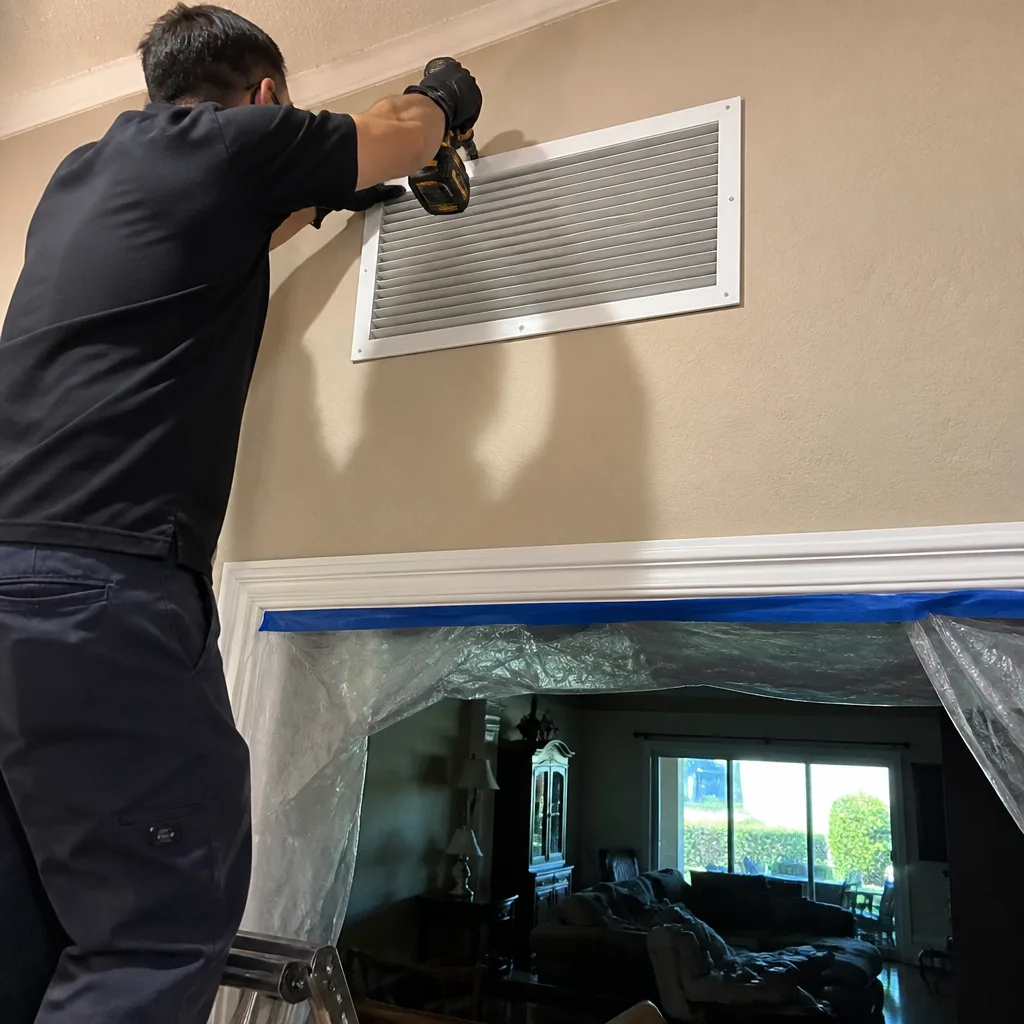
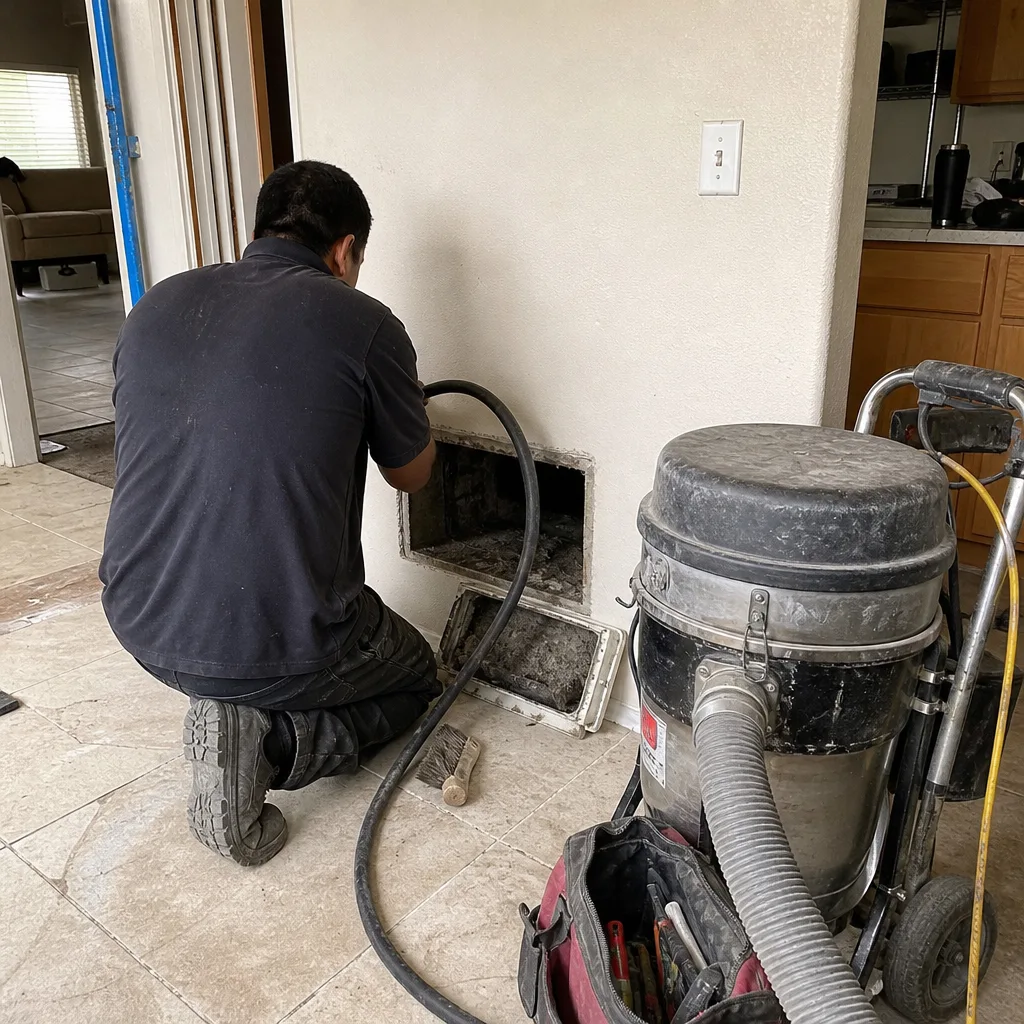
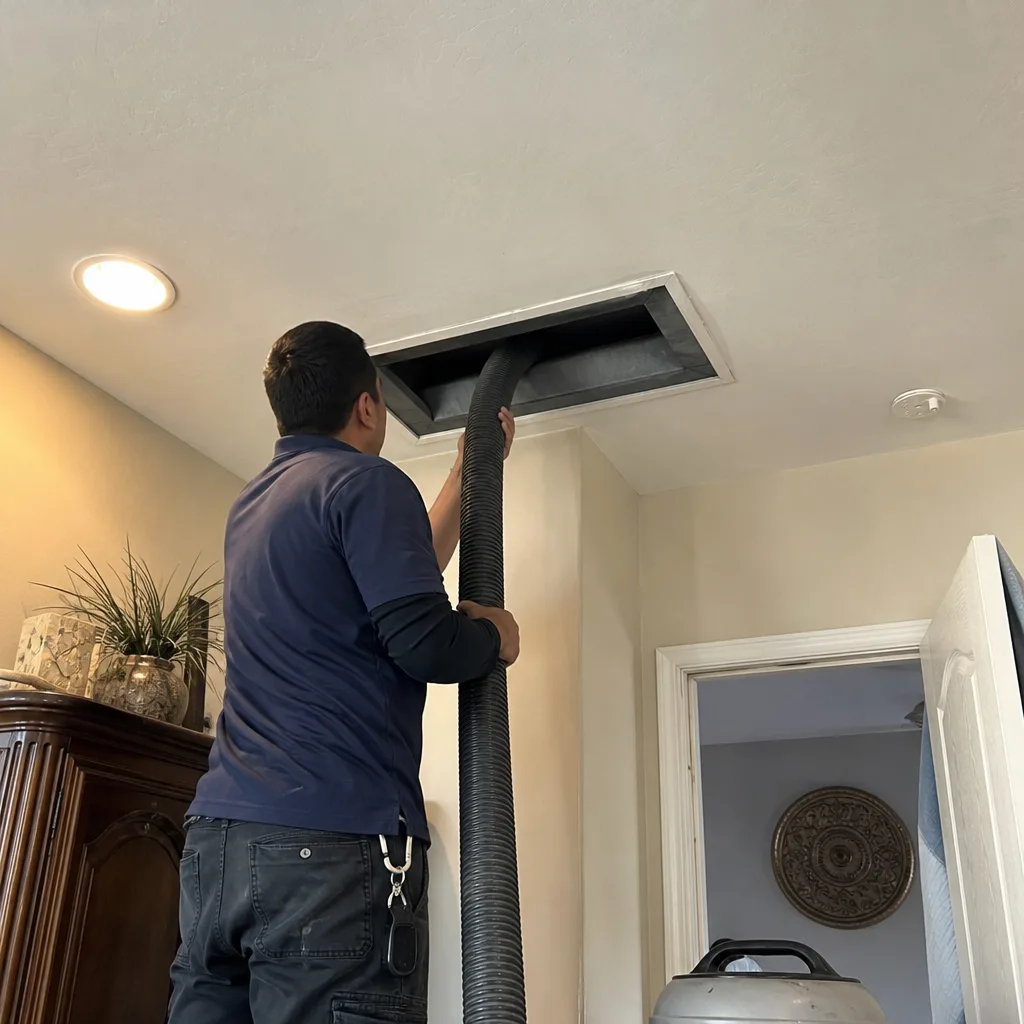
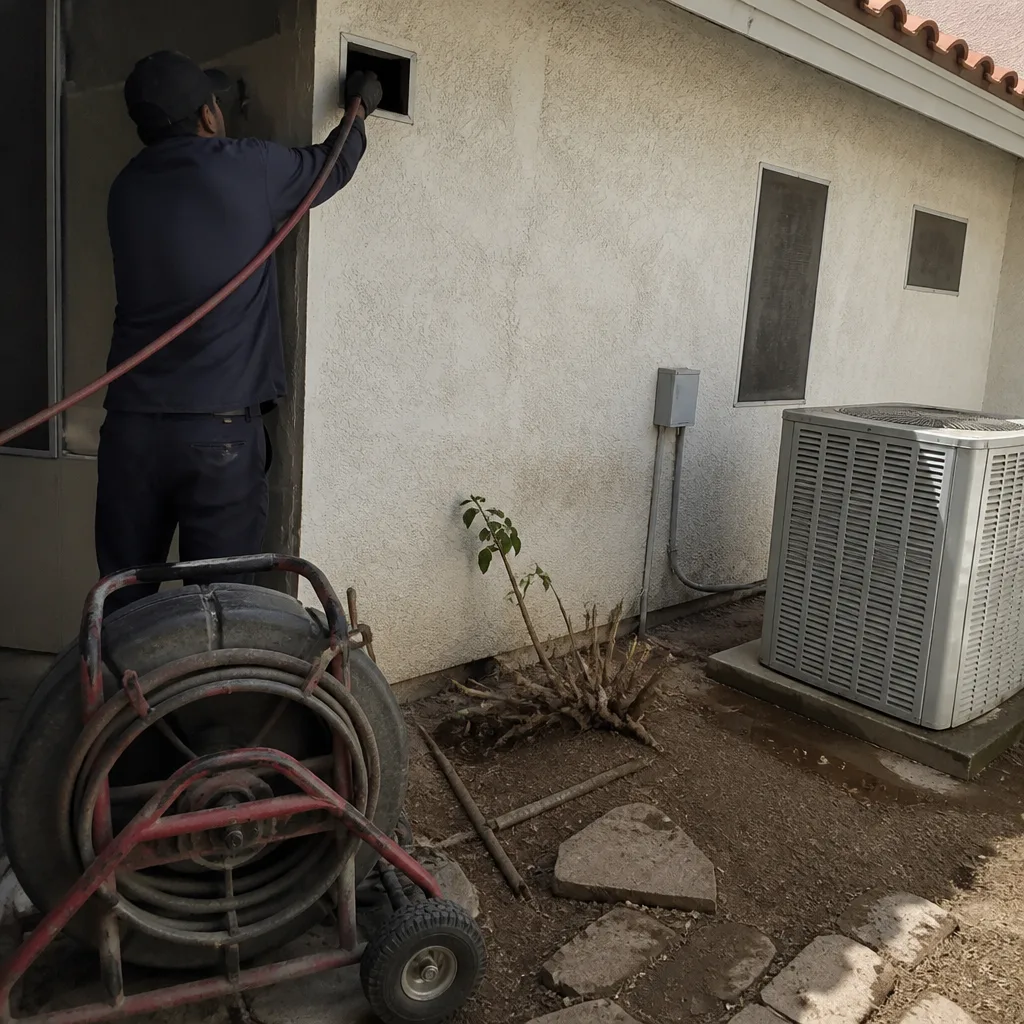
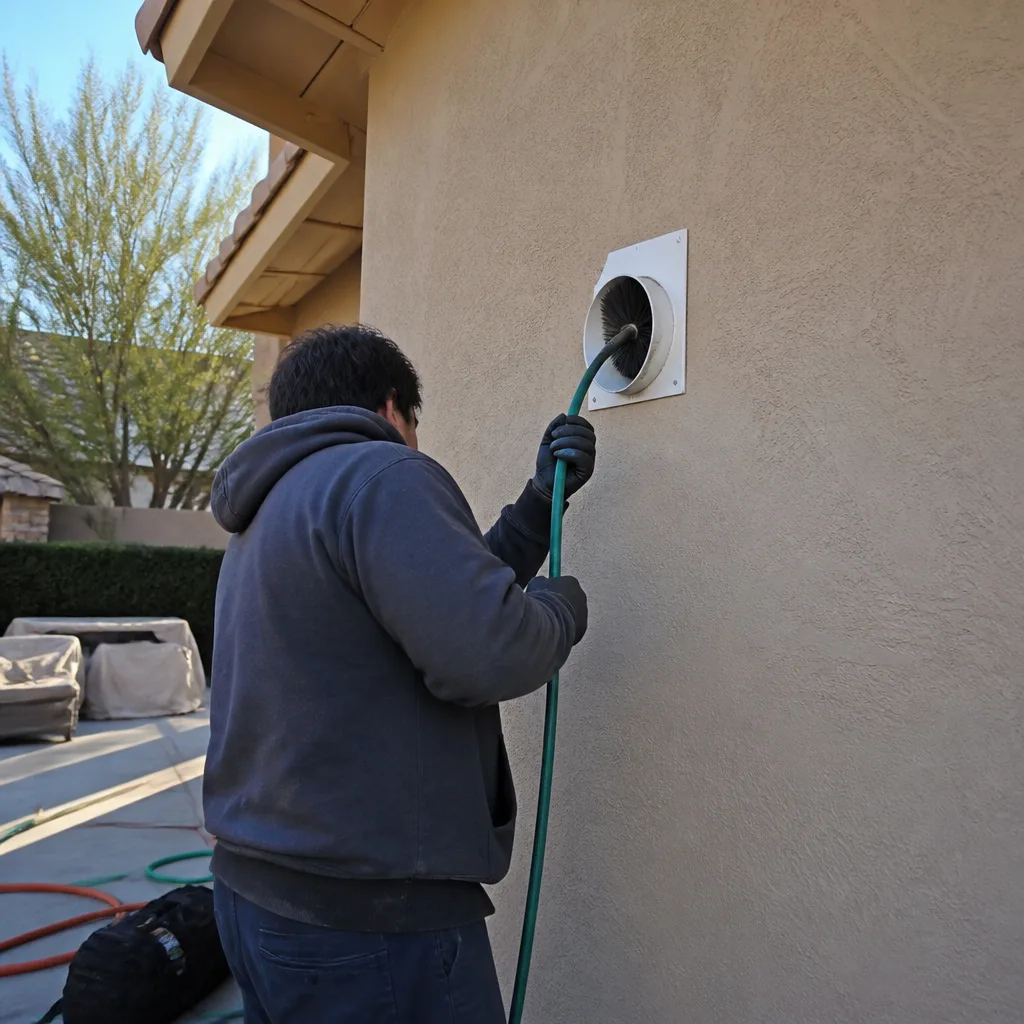
Whole-system duct and dryer vent check with before-and-after photos - you see exactly what came out of your vents
That "$99 whole-house special" is a bait ad - the real number appears once they are in your hallway, or the "clean" is a shop-vac at the register. We photograph the inside of your ducts before and after instead.
Air Duct Cleaning Permits, Codes & Inspections in CA: What You Need to Know
Here’s something most homeowners don’t realize until a project goes sideways: the actual act of cleaning air ducts doesn’t require a permit anywhere in California. But the work that often accompanies it – cutting access panels, resealing boots, replacing damaged duct sections, applying antimicrobial coatings – can trigger permit requirements under Title 24, and most cleaning contractors never mention it. In Palm Desert, where summer temperatures routinely push past 110°F and HVAC systems run nearly year-round, the condition of your ductwork directly affects your energy bills. If you’ve noticed rising costs or uneven cooling, our Air Duct Cleaning Warning Signs: A Palm Desert Homeowner’s Reference Guide can help you spot problems early. This guide cuts through the confusion and tells you exactly where the permit line sits, what codes actually apply, and how to protect yourself before anyone touches your system.
Styles & brands we work with
- Whole-home duct cleaning
- Dryer vent cleaning
- Camera inspection
- Sanitizing & deodorizing
Quick Answer
Air Duct Cleaning services are classified as maintenance in California and do not require a permit from Riverside County or the City of Palm Desert. However, any modification to ductwork – replacing sections, cutting new access holes, resealing connections with mastic, or applying antimicrobial products – may trigger California Building Code and Title 24 energy code requirements. The safest approach is to ask your contractor up front what their scope of work involves, and verify that any modifications they plan to make are either documented or permitted.
Table of Contents
- What Actually Requires a Permit in California
- Title 24 Duct Sealing and Leakage Standards
- EPA Section 608 and Refrigerant Rules During Duct Work
- Proposition 65, Antimicrobials, and Product Disclosures
- Riverside County vs. City-Level Requirements
- How to Protect Yourself: Consumer Verification Steps
- Filing a CSLB Complaint for Unlicensed Work
- Common Mistakes to Avoid
- When to Call a Professional
- Frequently Asked Questions
- The Bottom Line
What Actually Requires a Permit in California
California’s building code draws a bright line between “maintenance” and “modification.” Routine air duct cleaning – running brushes, negative-air vacuums, and agitation tools through existing ductwork – is maintenance. No permit. No inspection. The moment the work changes the physical structure of the duct system, you cross into territory that may require a building permit.
Here’s the breakdown of what typically falls on each side of that line:
- No permit needed: Source-removal cleaning, HEPA vacuuming, brushing, debris extraction, camera inspection of existing ducts, replacing air filters, cleaning registers and grilles.
- Permit likely required: Replacing more than a small section of ductwork, adding new duct runs, modifying plenum connections, cutting new access panels that didn’t previously exist, significant resealing of joints that requires disassembly.
- Gray zone (ask questions): Resealing duct boots at the register, minor mastic application to visible leaks, reconnecting loose duct sections, replacing register boxes.
In Palm Desert, many homes were built during the 1980s and 1990s construction boom. Those systems are now 30 to 40 years old, and the ductwork has often been through multiple repairs. If a cleaning contractor discovers collapsed flex duct or disconnected sections – which we see regularly in older Palm Desert neighborhoods – replacing that section is a repair that may require a permit, not part of the cleaning.
The practical risk: if unpermitted work is done and later causes a problem – a leak, mold growth, a fire – your insurance company may deny the claim. That’s the part nobody talks about until it’s too late.
Title 24 Duct Sealing and Leakage Standards
California’s Title 24 energy code is the piece most relevant to duct cleaning, and it’s also the one most contractors won’t raise because it creates work they’d rather not do. Title 24 sets specific limits on how much air a duct system is allowed to leak. For residential systems, the standard is typically a maximum of 6% leakage of total airflow when tested at 25 pascals of pressure. New construction and major remodels often have to pass a HERS (Home Energy Rating System) duct leakage test before the building can get its certificate of occupancy.
Why does this matter for cleaning? Because when we use source-removal methods with Rotobrush or Nikro HEPA systems, the agitation and negative pressure can expose weak joints, cracked mastic, and loose connections that were holding together only by accumulated debris. The cleaning didn’t create the leak – it revealed it. But now the leak exists, and under Title 24, fixing it properly means resealing to code standards, which is a repair, not maintenance.
Here’s what homeowners should know about the cleaning-to-sealing transition:
- A thorough cleaning often exposes problems that routine inspections miss. Dust and debris can mask cracks and gaps. Once the debris is removed, the leaks become visible.
- Proper resealing uses UL 181-rated mastic or foil tape, not duct tape. Duct tape – the cloth-backed gray stuff – fails within a few years in a Palm Desert attic where temperatures can exceed 140°F in July. Title 24-compliant sealing requires materials rated for that environment.
- If significant sections of ductwork need resealing or replacement, pull a permit. It adds cost and time, but it creates a record that the work met code. If you sell the home, that record protects you.
- Testing after repair is the only way to verify compliance. A duct blaster test measures actual leakage. Without it, any claim of “we sealed your ducts to code” is just words.
We bring commercial-grade equipment to residential jobs specifically because Palm Desert’s climate punishes sloppy work. An attic leak in this desert heat doesn’t just waste energy – it pulls hot air into the system, making your AC work harder every single day for years.
EPA Section 608 and Refrigerant Rules During Duct Work
This one catches people off guard, even contractors. EPA Section 608 of the Clean Air Act governs the handling of refrigerants. It applies to anyone who opens a refrigerant circuit or services components that contain refrigerant. Air duct cleaning – the ducts themselves – doesn’t touch refrigerant. But if the same contractor also services your evaporator coil, moves the air handler, or disconnects refrigerant lines to access ductwork, Section 608 certification becomes legally required.
Here’s the practical scenario: your evaporator coil sits above the furnace or air handler. Ductwork connects to that unit. If a cleaning contractor needs to access the plenum and has to disassemble part of the air handler cabinet to do it, any accidental release of refrigerant becomes an EPA violation – for them, not you. But if they’re not certified under 608, they shouldn’t be touching that equipment at all.
Questions to ask before any contractor starts work:
- “Will you need to move or service the air handler or coil as part of this job?”
- “Are you EPA Section 608 certified?” (If they say yes, ask to see the card. It fits in a wallet.)
- “What happens if you discover damage to the coil or refrigerant lines during cleaning?”
In our experience in Palm Desert, evaporator coils take a beating from the hard water and dust combination. For more guides & resources on keeping your entire HVAC system running efficiently, explore our blog. A coil covered in dust and mineral scale can’t transfer heat efficiently, and the fix involves cleaning the coil – which is HVAC work, not duct work. A reputable company will tell you that up front rather than discovering it mid-job and handing you a surprise invoice.
Proposition 65, Antimicrobials, and Product Disclosures
California’s Proposition 65 requires businesses to provide warnings before exposing consumers to chemicals known to cause cancer, birth defects, or reproductive harm. It applies to products applied inside your ducts – and this is where some duct cleaning companies get loose with the truth.
Antimicrobial products, encapsulants, and sanitizers used inside ductwork can contain chemicals on the Prop 65 list. The product itself may be perfectly legal to use, but the contractor is required to disclose that a listed chemical is present and being applied in your home. If a contractor casually mentions they’ll “sanitize your ducts” without handing you any product information, that’s a red flag.
Here’s what to ask before anything gets sprayed inside your ducts:
- What is the exact product name and its Safety Data Sheet? A legitimate contractor has this on file and will show it to you. If they can’t produce it, don’t let them apply anything.
- Is this product registered with the EPA for use in HVAC systems? Not all sanitizers are approved for duct interiors. Some are intended for hard surfaces only.
- Does this product require a Prop 65 warning? If it does and they haven’t mentioned it, they’re out of compliance with California law.
- Why is the antimicrobial necessary? If the cleaning was thorough – using source-removal with HEPA filtration – the ducts should be clean. Antimicrobials are appropriate when there’s a documented moisture or mold problem, not as a routine upsell.
In Palm Desert’s low-humidity climate, mold growth inside ducts is far less common than it is in coastal California. If a contractor in this market is pushing antimicrobial treatments after every cleaning, ask to see the moisture readings that justify it. In our experience, that request alone ends the upsell conversation quickly.
Riverside County vs. City-Level Requirements
Riverside County enforces the California Building Code through its Building & Safety Department, but the City of Palm Desert has its own building division that handles permits within city limits. The requirements are generally aligned – both use the California codes as the baseline – but the process and fees differ slightly depending on whether your property falls under city or county jurisdiction.
Most of Palm Desert within city limits goes through the City of Palm Desert Building & Safety Division. Unincorporated areas of the Coachella Valley – parts of Thousand Palms, Bermuda Dunes, and areas adjacent to Palm Desert – go through Riverside County directly.
What this means for your duct project:
- A routine cleaning never needs a permit in either jurisdiction. This has been consistent for decades and isn’t changing.
- Duct replacement or significant modification requires a mechanical permit. Expect to pay a few hundred dollars for the permit itself, plus any inspection fees.
- If your HVAC contractor pulls a permit, verify it’s actually open. You can check permit status online through the City of Palm Desert’s permitting portal or Riverside County’s system. It’s a 5-minute check that catches a lot of problems.
One detail specific to desert climate homes: many Palm Desert residences have ducts in the attic, which means attic access is usually required for cleaning and inspection. Any contractor working in that attic space needs to navigate around insulation, electrical wiring, and possibly vermin. None of that requires a permit, but it does require care – and it’s one reason we use Abatement Technologies negative-air containment when conditions call for it. It keeps dust from the attic work from circulating through the living space during the job.
How to Protect Yourself: Consumer Verification Steps
You don’t need to become a building code expert to protect yourself. You need to ask the right questions, verify a few key facts, and document what was done. Here’s a step-by-step approach we recommend to any homeowner in Palm Desert before signing with a duct cleaning contractor:
- Ask for the CSLB license number. In California, any contractor performing work valued at $500 or more in labor and materials must hold a valid license from the Contractors State License Board. Duct cleaning companies fall under the C20 (Warm-Air Heating, Ventilating and Air-Conditioning) classification or sometimes D64 (Non-Specialized). Verify the number at CSLB.ca.gov.
- Ask for the exact scope of work in writing before they start. This should specify whether they’ll be cutting access panels, resealing joints, replacing any materials, or applying any products. If the written scope says “cleaning only” and the tech starts cutting new holes mid-job, stop the work.
- Ask what happens if they find damage. A professional should be able to say “we’ll document it, show you photos, and provide a separate quote for any repair work.” The answer should never be “we’ll just fix it while we’re in there” – that’s a permit-evasion red flag. Duct repair is a different service from cleaning, and it should be treated as such.
- Request before-and-after photos of the duct interior. Modern equipment makes this easy. If a contractor can’t provide visual proof of what the ducts looked like before and after, you have no way to verify the work was actually performed.
- Check the permit status if any modification is proposed. If the contractor says a permit is needed, ask for the permit number. If they say no permit is needed for repairs, ask them to put that in writing. If they won’t, that’s your answer.
These steps take about 30 minutes total. They save homeowners thousands of dollars in re-work and prevent the worst-case scenarios: unpermitted work discovered at resale, insurance claims denied, and duct systems that leak worse after “repairs” than they did before.
Filing a CSLB Complaint for Unlicensed Work
If you discover that unlicensed work was performed on your duct system – or that a contractor did work that required a permit without pulling one – the Contractors State License Board is your primary recourse in California. The process is straightforward, and the CSLB takes unlicensed contracting seriously because it’s a misdemeanor offense under California law (Business and Professions Code Section 7028).
Here’s how to file:
- Gather your documentation. Save contracts, invoices, receipts, photos, text messages, and emails. Write down dates, names, and a timeline of what happened.
- File the complaint form. The CSLB has an online complaint form and a downloadable PDF. You can file against licensed contractors, unlicensed individuals, or both.
- Include specific details about what was done. “They cleaned my ducts” is not a complaint. “They cut two access panels into my ductwork and replaced 15 feet of flex duct without a permit, and the CSLB has no record of their license” is a complaint the board can act on.
- Expect a response within a few weeks. The CSLB investigates and can issue citations, fines, and referrals to local prosecutors in serious cases. They cannot typically recover your money directly, but their findings can support a civil claim.
- Consider small claims court for financial recovery. If you paid for work that wasn’t performed correctly or was performed without required permits, you can seek recovery in small claims court in Riverside County. Claims up to $10,000 can be filed by individuals.
One thing to understand: the CSLB’s jurisdiction covers contractor licensing. Building permit enforcement is handled by the local building department – the City of Palm Desert or Riverside County. If unpermitted work was done, report that to the building department as well. They can require the work to be corrected, inspected, and brought up to code, even if it means opening walls or ceilings.
Common Mistakes to Avoid
- Assuming a low price means a simple job. In duct cleaning, the companies that quote the lowest prices in Palm Desert often have the least overhead – no license, no insurance, no training. The job may look the same from the outside. It isn’t.
- Not checking the CSLB license before work begins. This is the single most effective 5-minute check you can do. Skipping it is how people end up with no recourse when something goes wrong.
- Accepting “we’ll fix any damage we find” as part of a cleaning agreement. Repair is a separate scope of work, may require a permit, and should be priced separately. Rolling it into a cleaning invoice obscures what was done and why.
- Letting a contractor apply antimicrobial products without seeing the SDS and EPA registration. In California, this disclosure is not optional. If it doesn’t happen, you’re working with someone who either doesn’t know the law or doesn’t follow it.
- Filing away the receipt without documenting what was actually done. When you sell your Palm Desert home, buyers may ask about HVAC and duct maintenance. A receipt that says “duct cleaning” is useful. Photos showing the before-and-after condition of the ducts are better.
- Believing that more expensive equipment always means better results. Professional equipment matters – we use Rotobrush and Nikro systems because airflow problems deserve real solutions – but equipment without an operator who knows how to use it is just expensive decoration. Verify training and experience alongside equipment.
- Ignoring the dryer vent while focusing on the ducts. Dryer vent cleaning is a separate service, and a clogged dryer vent is one of the leading causes of residential fires in the United States. If the crew is already at your home, having the dryer vent evaluated adds minimal cost and real safety value.
When to Call a Professional
Some jobs genuinely need a trained technician. If you’re seeing visible dust buildup around registers after changing filters, if rooms in your home maintain noticeably different temperatures, or if your system hasn’t been cleaned in five or more years, the work goes beyond what a homeowner can effectively DIY. More specific triggers: you’ve renovated recently (drywall dust and construction debris settle in ducts), you’ve had rodents or pests in the attic, or you can see mold or moisture staining around vents. These conditions require professional-grade equipment and someone who knows what they’re looking at. Air Duct Cleaning in Palm Desert should be approached with licensed, insured contractors who use source-removal methods and can document the work. If you’re in the Coachella Valley, we offer free estimates in Palm Desert – call (833) 589-9812 for an honest assessment. If the issue is a dryer vent, our Dryer Vent Cleaning in Palm Desert service addresses the fire risk directly. And if a previous contractor left your ducts damaged or leaking, see our Air Duct Repair in Palm Desert page. You can also visit our Duct Cleaning Palm Desert home page for an overview of all services.
Frequently Asked Questions
No. Air duct cleaning performed as routine maintenance – using brushes, vacuums, and agitation tools inside existing ductwork without modifying the structure – does not require a permit anywhere in California, including Palm Desert. Permits become relevant when the work involves cutting new access panels, replacing duct sections, or making significant sealing modifications. Call (833) 589-9812 to discuss your specific situation.
Replacing duct sections, adding new runs, modifying plenum connections, and cutting new access panels into existing ductwork typically require a mechanical permit in Riverside County and the City of Palm Desert. Minor resealing of visible leaks at existing joints generally falls under maintenance, provided no structural modification is involved. Request an exact quote with permit status in writing before work begins.
The price difference usually reflects what’s included in the scope. Lower-priced quotes in Palm Desert often cover only basic brushing and vacuuming of the main trunk line, while higher-priced quotes include full source-removal cleaning of all supply and return ducts, documentation, and sometimes included inspections. The cheapest quote also often comes from companies that don’t carry the same licensing and insurance. Call (833) 589-9812 for a detailed, itemized estimate specific to your system.
Request before-and-after photos of the duct interior from your contractor. Any professional using modern equipment can provide camera documentation showing the condition of the ducts before and after cleaning. If a company cannot or will not provide visual proof, treat the work as unverified. Our process always includes before-and-after documentation because the air your family breathes starts in your ductwork.
No. In most cases, antimicrobial products are unnecessary after a thorough source-removal cleaning using HEPA filtration. They are appropriate when there is documented moisture or microbial growth, not as a routine add-on. In Palm Desert’s dry climate, mold growth inside ducts is uncommon. Always ask for the product’s EPA registration and Safety Data Sheet before anything is applied inside your ducts. Call (833) 589-9812 if you have concerns about prior treatments.
The National Air Duct Cleaners Association (NADCA) recommends cleaning every 3 to 5 years for most residential systems, with more frequent cleaning if you have pets, smoke indoors, or have recently completed renovations. In Palm Desert, dust intrusion from the surrounding desert environment means some homes benefit from more frequent service. Request a system inspection to determine the right interval for your home. Contact us at (833) 589-9812 for a free estimate.
The Bottom Line
Air duct cleaning in California doesn’t require a permit – but the work around it often does. The distinction comes down to whether the contractor simply cleans your existing ducts or modifies them. When modification happens without permits, the risks land on you: denied insurance claims, resale complications, and CSLB complaints. In Palm Desert, where duct systems age fast in the heat, this distinction matters more than most homeowners realize. Ask questions before work starts. Get everything in writing. Verify licenses on CSLB.ca.gov. Use Air Duct Cleaning in Palm Desert as a reference point for what proper service looks like. And if you work with us, your ducts get cleaned, inspected, and repaired – by one crew, one visit.
Written by the team at Duct Cleaning Palm Desert, serving Palm Desert since 2018.
See the difference
 Before
 After
 Before
 After
 Before
 After