
Last updated November 2, 2026
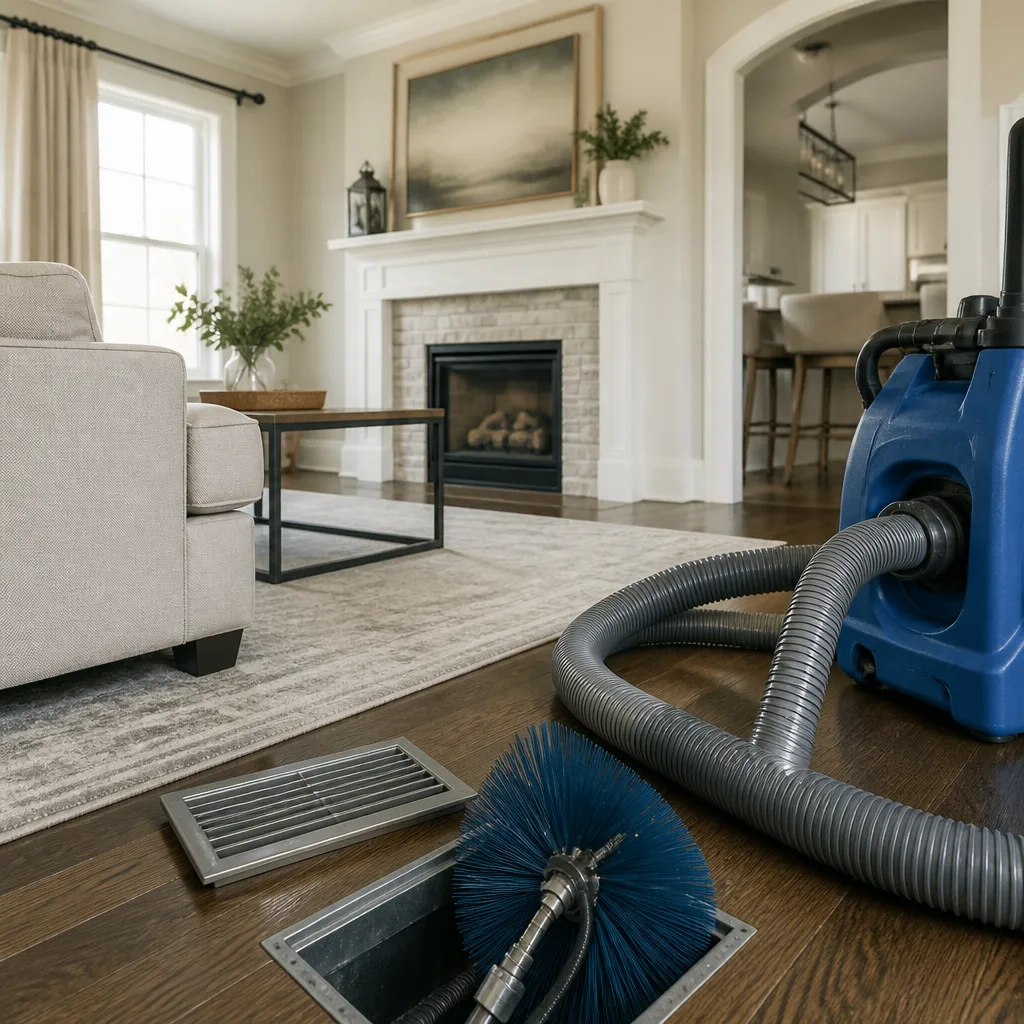 Whole-home duct cleaning
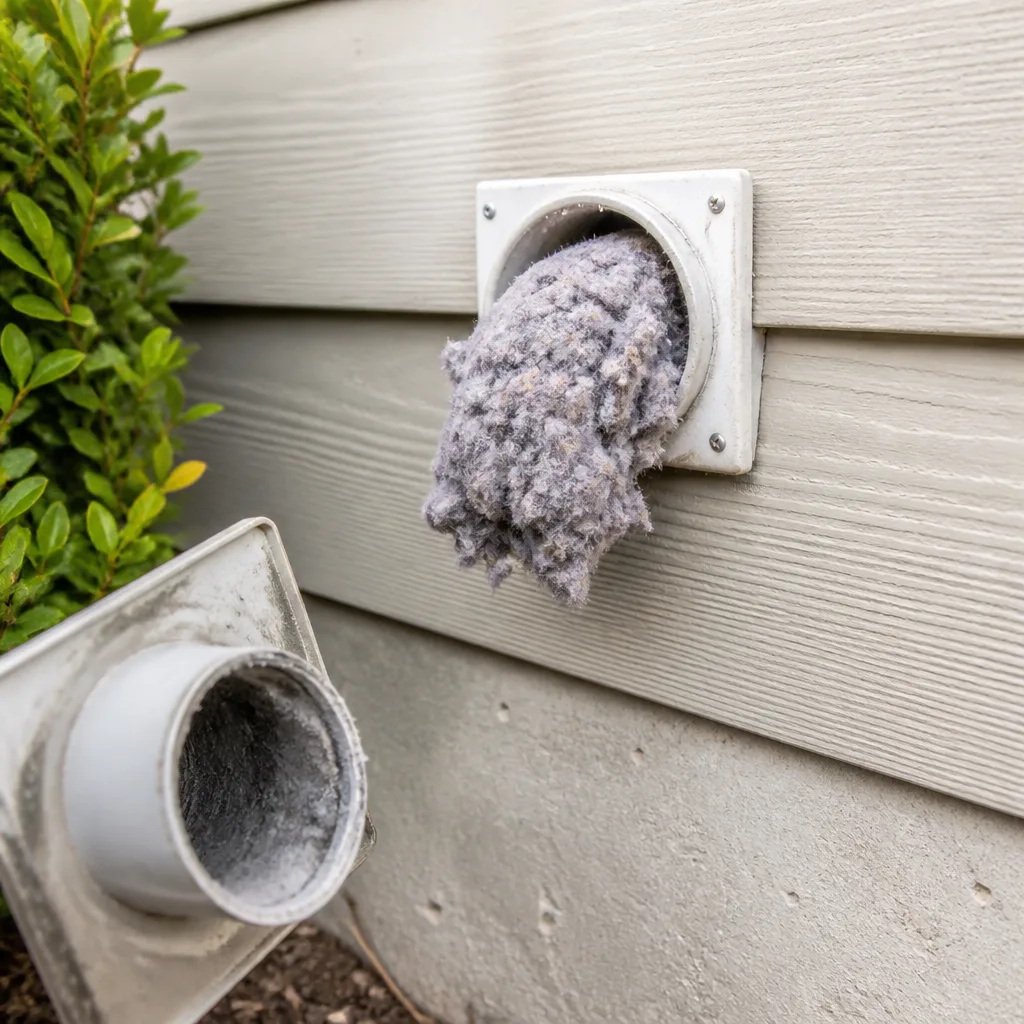 Dryer vent cleaning
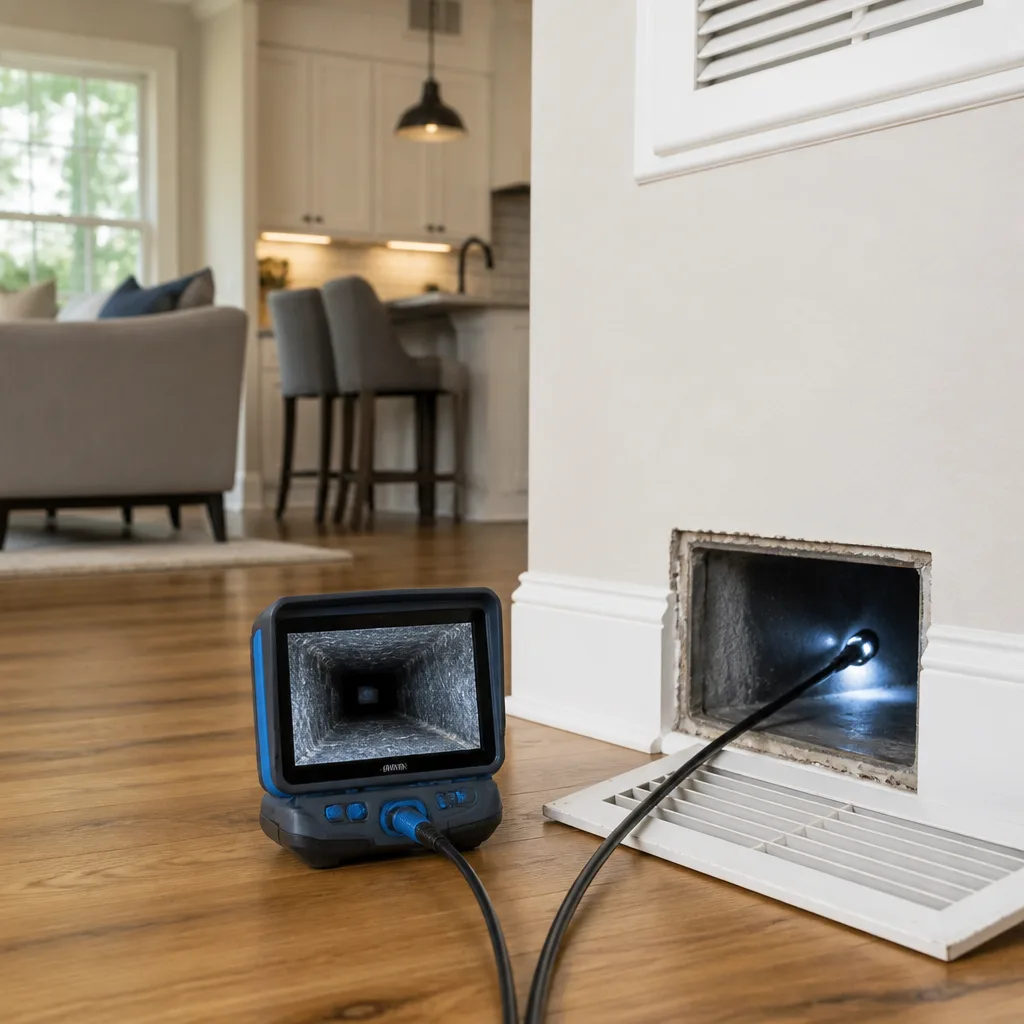 Camera inspection
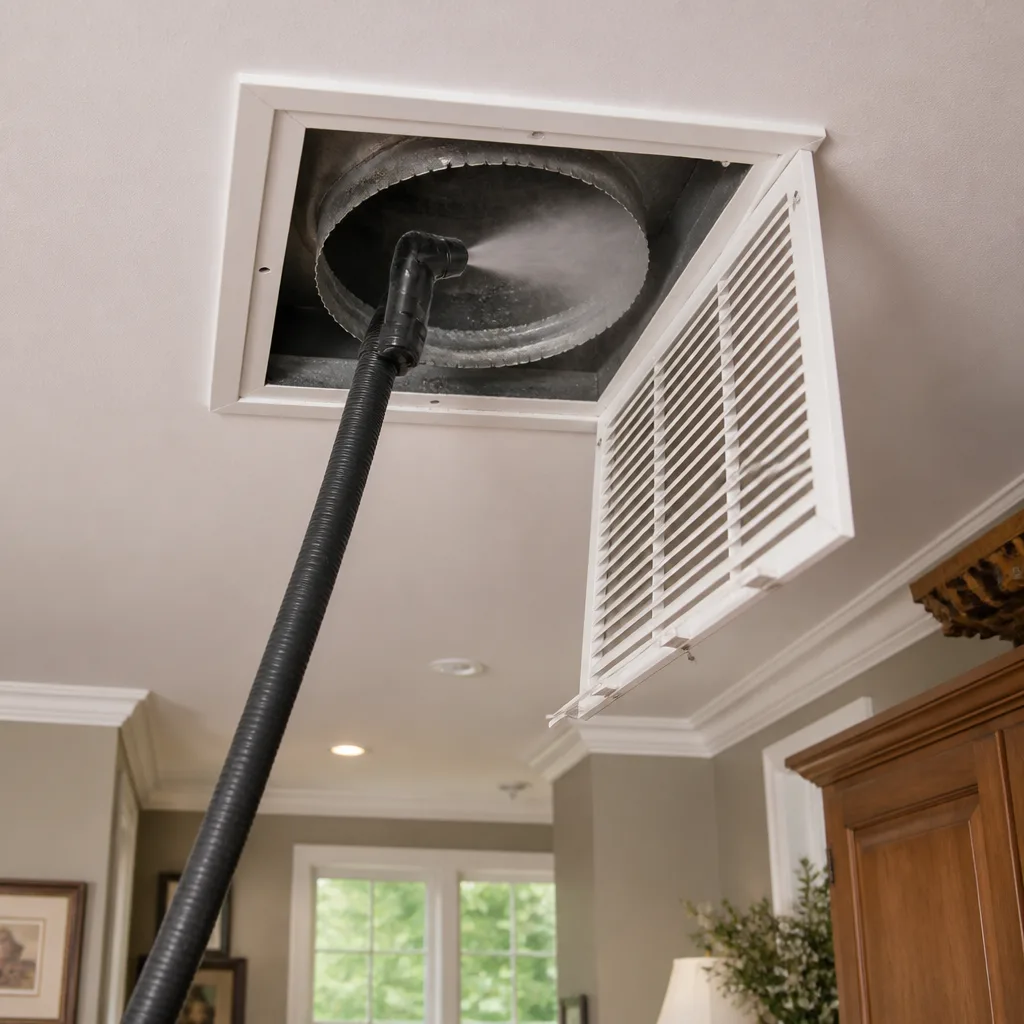 Sanitizing & deodorizing
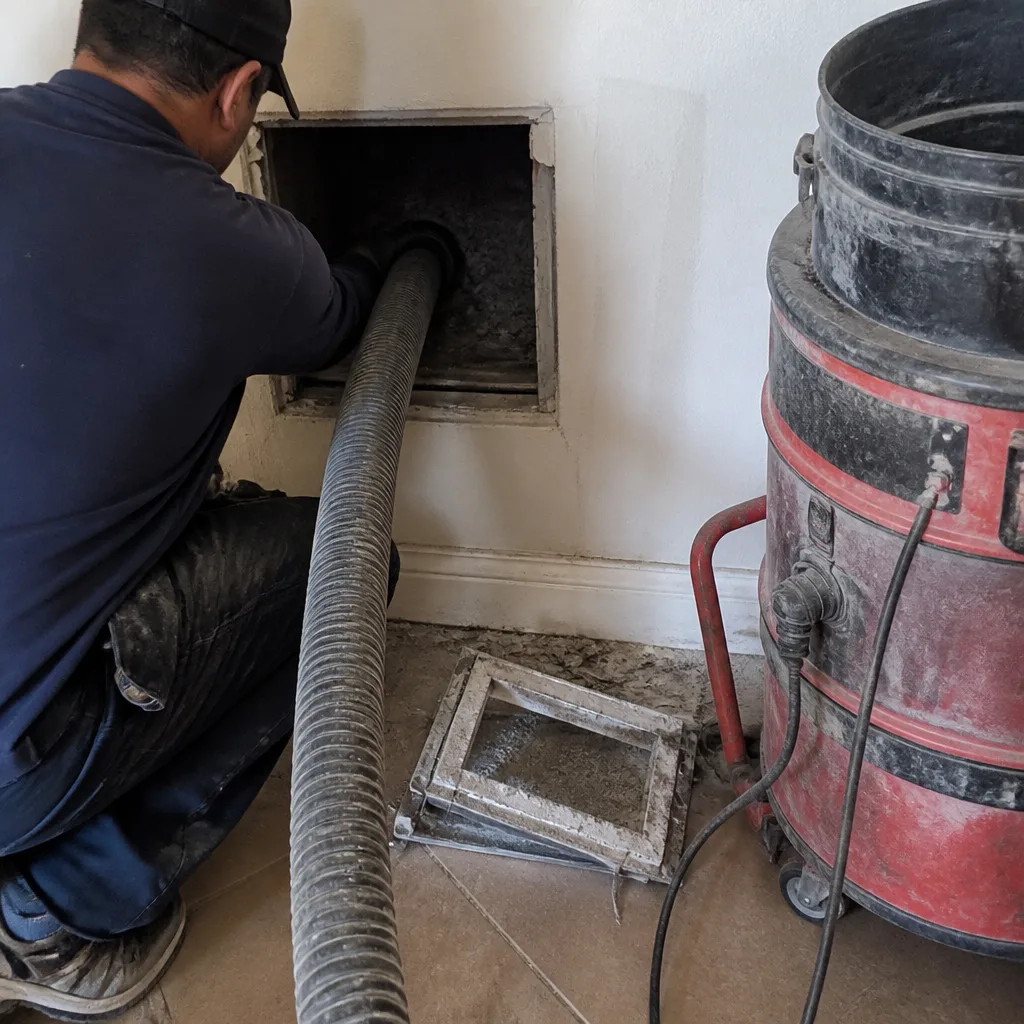
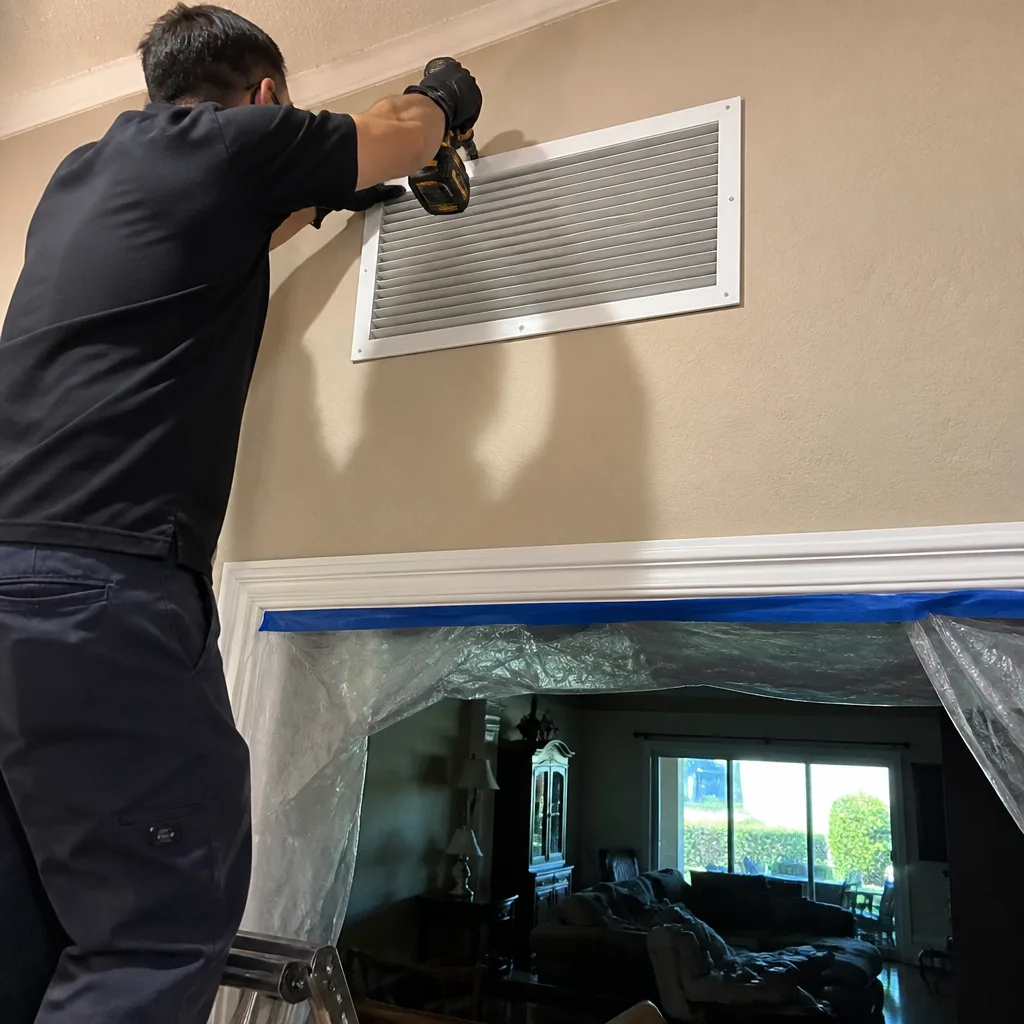
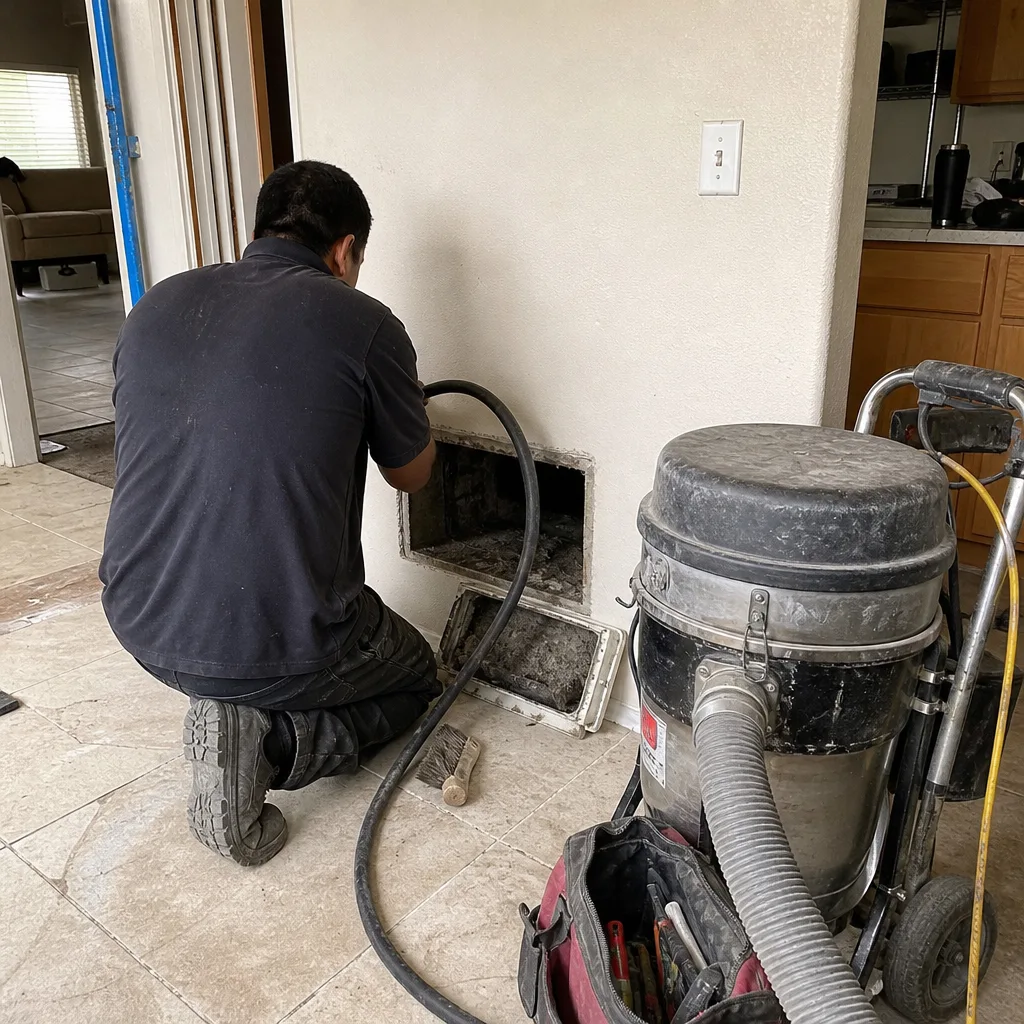
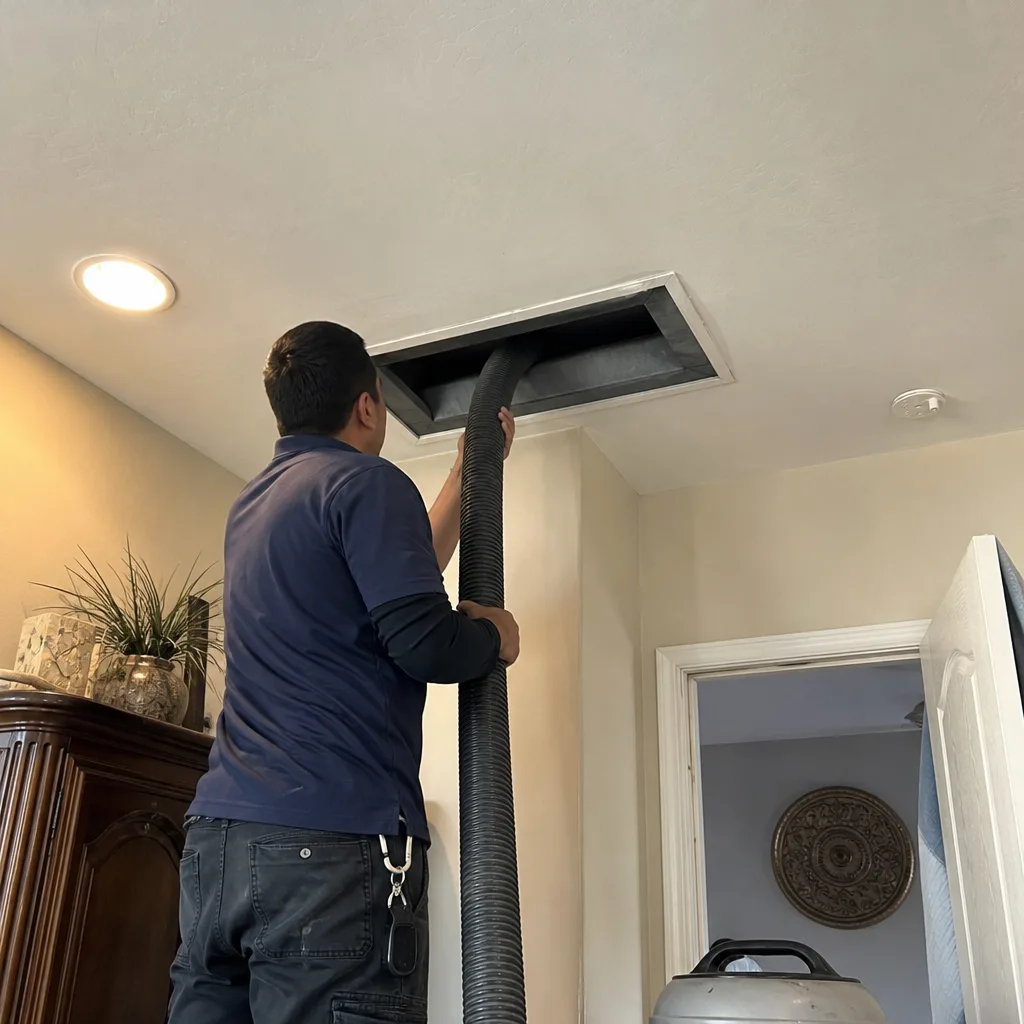
Whole-system duct and dryer vent check with before-and-after photos - you see exactly what came out of your vents
That "$99 whole-house special" is a bait ad - the real number appears once they are in your hallway, or the "clean" is a shop-vac at the register. We photograph the inside of your ducts before and after instead.
Air Duct Cleaning Troubleshooting: Common Problems and How to Fix Them
Here’s a number that surprises most Palm Desert homeowners: roughly nine out of ten calls we get about “dirty ducts” are actually about something else. The ducts are the messenger, not the message. A musty smell that won’t quit, a register that barely blows, dust reappearing a week after cleaning – these point to problems in the coil, the condensate line, the return plenum, or the duct seals themselves. This guide walks through the most common duct and airflow complaints we encounter, how to tell whether Air Duct Cleaning will actually solve them, and when the fix requires something more: repair, mechanical work, or a hard look at the air handler. You’ll learn to separate contamination problems from mechanical problems before you spend a dollar on service.
Styles & brands we work with
- Whole-home duct cleaning
- Dryer vent cleaning
- Camera inspection
- Sanitizing & deodorizing
Quick Answer
Air duct cleaning troubleshooting starts with identifying whether the symptom is contamination (dust, debris, microbial growth inside the ductwork), mechanical failure (a collapsed duct, a failed blower, a stuck damper), or design leakage (unglued joints, disconnected returns). Cleaning solves contamination; it will not fix a collapsed flex duct, a leaking return, or a coil pan that never drains – those need repair or HVAC service. In Palm Desert, where the air handler runs hard from May through October, we see all three categories overlap constantly.
Table of Contents
- Symptom vs. Source: The Three Categories of Duct Problems
- Persistent Odors After Cleaning: The Three Overlooked Culprits
- Signs of a Botched Cleaning Job and How to Undo the Damage
- When One Register Blows Less Than the Others
- Contamination Rebound: Why Clean Ducts Get Dirty Again in Months
- Palm Desert Humidity, Condensation, and Mold in Ductwork
- What a Homeowner Can Check vs. What Needs Professional Equipment
- Common Mistakes to Avoid
- When to Call a Professional
- Frequently Asked Questions
- The Bottom Line
Symptom vs. Source: The Three Categories of Duct Problems
Before anyone touches your ductwork, you need to know which of three buckets your problem falls into. We use this exact framework on every Palm Desert service call because it saves homeowners from paying for work that won’t fix their issue.
Category one: contamination. This is what air duct cleaning addresses. Dust, pet dander, construction debris, insect casings, and sometimes microbial growth accumulating inside the duct interior. Symptoms include visible dust puffing from registers at startup, black staining around vent covers, allergy symptoms that worsen when the AC runs, and debris visible inside the duct when you remove a register and look in with a flashlight. Cleaning, when done with true source-removal methods and negative pressure, fixes this.
Category two: mechanical failure. Collapsed flex duct, a blower motor that’s failing, a damper stuck shut, a disconnected boot, a crushed return. Symptoms look different: one room that never cools, airflow that’s suddenly weak everywhere, a whistling noise from a specific register, a loud bang when the system starts. No amount of cleaning repairs a collapsed duct. This is where Air Duct Repair in Palm Desert comes in: you need someone who can diagnose and fix the physical ductwork, not just clean its interior.
Category three: design and leakage. The duct system was poorly designed, poorly sealed, or both. Symptoms include dust accumulating on surfaces within days of cleaning, rooms that are always five degrees off from the rest of the house, and energy bills that don’t match the home’s square footage. Leaky returns pull unfiltered attic air, insulation fibers, and desert dust directly into the system. Leaky supply ducts push conditioned air into the attic instead of the living space. Cleaning a leaky system means the contamination returns within months.
Here’s the diagnostic sequence we follow on every call:
- Identify the symptom precisely: odor, airflow, dust, noise, moisture.
- Locate where the symptom appears: one room, one floor, at the register, at the return, at the air handler.
- Inspect the duct interior with a camera to confirm or rule out contamination.
- Inspect accessible duct joints, boots, and plenum connections for leakage or disconnects.
- Check the air handler: filter, coil face, blower wheel, drain pan, condensate line.
- Recommend the correct service: cleaning, repair, both, or a referral to an HVAC mechanical specialist.
This sequence exists because treating every duct complaint as a cleaning job is how homeowners end up paying twice. The Duct Cleaning Palm Desert home approach is to diagnose first, then recommend – not the other way around.
Persistent Odors After Cleaning: The Three Overlooked Culprits
If your home still smells musty two weeks after a duct cleaning, the ducts probably weren’t the source. We say this on the phone constantly: re-cleaning won’t fix a smell that’s coming from somewhere else. Here are the three sources we find most often in Palm Desert homes when a “duct smell” persists after the ductwork has been properly cleaned.
The condensate drain pan. Your AC produces gallons of condensation during a Palm Desert summer. That water collects in a pan under the coil and drains through a PVC line. If the pan doesn’t fully drain – because it’s tilted, cracked, or the line is partially clogged – standing water breeds bacteria and mold. The smell gets pulled into the airstream every time the blower runs. It smells like dirty socks or wet earth. Cleaning the ducts does zero for this. The pan and line need cleaning, and the drain line may need a proper flush or re-slope.
The coil face. The evaporator coil sits in the airstream before the ducts. It’s wet during operation and it’s a dust magnet. Over years, the coil face becomes a mat of dust and microbial growth that produces a distinctive sour smell when the AC first kicks on. We’ve seen coils so coated that you couldn’t see the fins. Duct cleaning alone leaves this source untouched, because the coil lives upstream of the ductwork. It needs to be brushed, treated, and in severe cases chemically cleaned by an HVAC technician.
Insulation liner degradation. Many older duct systems, and plenty of newer flex duct, have fiberglass insulation on the interior of the duct. When that liner degrades, it absorbs humidity and becomes a substrate for mold. The smell is earthy and persistent, and it’s often worst in the return ducts where the air is humid and warm. Once the liner is compromised, cleaning won’t restore it – the affected duct sections need replacement. This is a repair job, not a cleaning job.
Here’s how to narrow it down before you call anyone:
- Does the smell come from one register or every register? One register suggests a localized duct issue. Every register suggests the air handler or the return side.
- Is the smell worse when the AC first starts? That points to the coil or the drain pan, not the ducts.
- Does the smell change after rain or humid days? That points to moisture ingress, which is a leak or a liner problem.
- Can you smell it when the system is completely off? That points to the ducts themselves or the filter area.
The point is this: persistent odor after cleaning is diagnostic information. It tells you the original diagnosis was incomplete. A thorough inspection of the air handler and the return side will find the source faster than another full-system cleaning.
Signs of a Botched Cleaning Job and How to Undo the Damage
Not all duct cleanings are equal. We’ve followed behind plenty of “cleaning” crews in Palm Desert and found duct interiors that look like they were cleaned with a leaf blower. Here’s what a botched job looks like, and what to do about it.
Debris redistribution instead of removal. The classic sign: dust deposits appear inside the duct downstream of the cleaning, or debris is found piled against the inside of register boots. This happens when a crew uses a rotating brush without adequate negative pressure pulling the loosened debris out of the system. They break everything free, and then it just settles back down in new locations. A proper source-removal cleaning uses negative pressure to pull dislodged debris out as it’s freed, not after. At Duct Cleaning Palm Desert, we run Abatement Technologies negative-air equipment that keeps the ductwork under continuous negative pressure during the entire cleaning process. The debris leaves the duct, not just the spot where it was sitting.
Damaged flex duct. Flex duct has a thin inner liner and an outer vapor barrier with fiberglass insulation between them. Aggressive brushing or running equipment through flex too fast can tear the inner liner or separate the layers. The result: fiberglass particles circulating through the system, airflow turbulence, and in worst cases, a duct that partially collapses. After any cleaning, walk your attic and look at the flex runs. Kinks, flattened sections, or visible tears are signs the crew was too aggressive or careless.
Inadequate negative pressure. If the cleaning did not use a HEPA-filtered negative air machine sized for your system, the fine particulate – the stuff that actually causes respiratory irritation – was not contained or removed. It was stirred up. The telltale sign is a fine dust film over every surface in the house within 48 hours of the cleaning. That’s the sub-5-micron particulate that a consumer-grade vacuum can’t capture, re-deposited onto your furniture. Our Nikro HEPA vacuum systems are rated to capture the fine fraction, not just the visible dust bunnies.
If you suspect a botched cleaning, here’s the recovery sequence:
- Document what you’re seeing with photos: register staining, surface dust, visible debris inside ducts.
- Check the return side first – that’s where redistributed debris typically collects since the system draws inward.
- Have the duct interior re-inspected with a camera to confirm whether debris remains or was redistributed.
- Do not re-clean the entire system until you know what went wrong. Targeted re-cleaning of affected runs is often sufficient.
- If flex duct was damaged, replace the damaged sections – do not attempt to patch inner liner tears.
The takeaway: a low-priced duct cleaning that doesn’t use commercial-grade extraction equipment is not a cheaper version of the same service. It’s a different, inferior process. The air your family breathes starts in your ductwork, and the method matters.
When One Register Blows Less Than the Others
One room that never cools while the rest of the house is fine. That’s a complaint we hear constantly in Palm Desert, especially in homes where the duct system was added onto over the years. Here’s how to tell what’s causing it.
A blocked or partially closed balancing damper. Most duct systems have manual dampers near the trunk line takeoffs, intended to balance airflow across the house. Over time, these dampers vibrate out of position, or a previous owner adjusted them and never restored them. The fix is often simple: locate the damper, check its position, and adjust it. The challenge is that these dampers are usually in the attic, the crawlspace, or behind drywall, and the lever that indicates position is ambiguous. If you’re comfortable, checking damper position is a homeowner-viable task. If you’re not, this is a 20-minute service call.
A disconnected or leaking branch duct. Flex duct connections at the trunk line and at the register boot are held with zip ties or tape and mastic. In Palm Desert attics, where temperatures regularly hit 140 degrees in August, adhesive tape fails. A branch duct that has separated from its boot dumps conditioned air into the attic instead of the room. The symptom is classic: one register blowing weak, and a room that’s consistently five to eight degrees warmer. This is not a cleaning issue – it’s a physical disconnection that requires air duct repair. The duct may be perfectly clean and still useless because it’s not connected.
A collapsed or crushed flex duct. Flex duct needs to be supported every four to five feet and pulled taut. When it’s run loose over attic joists, around sharp corners, or crushed under stored boxes and Christmas decorations, it kinks. The airflow restriction can cut volume to a room by 50% or more. The fix is re-supporting the duct or replacing the crushed section. Cleaning cannot restore the internal diameter of a crushed duct.
A dented or fallen register boot. The metal boot that connects the duct to the floor or ceiling register can fall, dent, or be blocked by debris. If you remove the register cover and look down into the boot, you may see the obstruction directly. In homes with floor registers, boots fill with everything from pet hair to matchbox cars to construction debris from a renovation. Clearing the boot is a five-minute DIY job if the obstruction is visible and reachable.
The diagnostic sequence for weak airflow:
- Remove the register and look into the boot with a flashlight. Clear anything obvious.
- Compare the weak register’s airflow to the register nearest to the air handler. They should feel similar.
- Walk the accessible duct run in the attic and look for kinks, disconnects, or collapsed sections.
- Check dampers at the trunk or near the air handler. Note their positions before adjusting anything.
- If none of this reveals the issue, the problem may be duct design: the run is too long, too small, or takes too many turns for the blower to push air effectively.
Contamination Rebound: Why Clean Ducts Get Dirty Again in Months
Here’s a scenario we hear weekly: a Palm Desert homeowner had their ducts cleaned six months ago, and the dust is already back. They assume the cleaning was poor quality. Sometimes that’s true. But more often, the ducts were cleaned well and the system is pulling in contamination through leaks the cleaning couldn’t address.
Your return ducts are under negative pressure when the system runs. Every joint, seam, and connection on the return side is pulling air in from wherever the duct passes – which in most Palm Desert homes is a hot, dusty attic. If the return duct has unsealed joints, disconnected panned returns, or gaps where the filter housing meets the plenum, the system pulls in attic air. That attic air carries insulation fibers, dust from roof penetrations, rodent debris, and – in desert climates – an endless supply of fine particulate that blows in from outside. You can clean the ducts perfectly, and within a few months the return side is coated again because the contamination source was never the ducts. It’s the leaks feeding the ducts.
The same applies to the supply side in reverse. A leaky supply duct pushes conditioned air out before it reaches the register. That creates negative pressure in the living space, which pulls in outdoor air through every window gap, door seal, and wall penetration. The air feels dusty because it is – you’re breathing unfiltered outdoor air.
This is why a real duct cleaning should include an inspection of duct sealing. If the ducts are leaky, sealing comes before cleaning – otherwise you’re cleaning a system that’s actively re-contaminating itself. We use Rotobrush source-removal cleaning equipment to get duct interiors truly clean, but the durability of that clean depends on what the ducts are connected to and how well they’re sealed.
Signs your contamination rebound is leakage-driven:
- Dust returns to surfaces near the return register first.
- You can see dust streaks on the attic side of duct connections.
- The dust is fine and gray, not the color of household lint or pet hair.
- Airflow has always been weaker in the rooms farthest from the air handler.
- Your energy bills are consistently higher than neighbors with similar homes.
If the ducts are clean and the leakage remains, you haven’t solved the problem – you’ve scheduled the next cleaning prematurely.
Palm Desert Humidity, Condensation, and Mold in Ductwork
Palm Desert is a dry climate. Most of the year, relative humidity sits below 30%. But condensation in ductwork is not about outdoor humidity alone – it’s about temperature differentials, and a poorly insulated duct in a 140-degree attic creates a big one.
When cold supply air travels through an uninsulated or under-insulated duct in a hot attic, the duct exterior sweats. That moisture soaks the insulation, drips onto the ceiling below or the attic floor, and creates a microclimate where mold can grow on the duct exterior and the surrounding framing. Inside the duct, the cold interior surfaces can also condense moisture from the air stream if the air is humid enough – which happens during our brief summer monsoon season, or when the home has a pool, an overwatered lawn, or a leaky return pulling in outdoor air.
The result: mold growth on the interior liner or exterior jacketing of the duct, a persistent musty smell from the registers, and in severe cases, visible staining on the ceiling around supply registers. This is a real problem in Palm Desert because the temperature differential between the attic and the conditioned air is extreme, and any breach in insulation amplifies it.
Here’s what actually resolves condensation-driven mold in ductwork:
- Repair or replace the affected duct sections. Once fiberglass liner or exterior jacketing is water-soaked, it cannot be dried and restored.
- Seal return-side leaks so the system stops pulling in humid outdoor air.
- Verify the duct insulation R-value is appropriate for an attic application – in our climate, R-6 or R-8 duct insulation is standard.
- Check that the air handler’s condensate pan drains fully and the line is running clear, so the system isn’t adding moisture to the airstream.
- If the home is chronically humid, consider whole-house dehumidification – brands like Aprilaire build systems designed for exactly this. We work with Aprilaire and Honeywell products, so if the answer to your moisture problem is a dehumidifier, we can install it in the same visit as the duct repair.
The important distinction: mold on the interior of a metal duct can be cleaned. Mold inside the fiberglass liner of flex duct cannot. If the liner is the problem, the duct comes out and new duct goes in.
What a Homeowner Can Check vs. What Needs Professional Equipment
Homeowners can and should inspect the parts of the system they can reach. This isn’t gatekeeping – it’s the difference between a five-minute visual check and a job that requires a camera scope and a negative-air machine.
What you can do yourself:
- Remove register covers and vacuum the visible boot interior with a standard household vacuum and a crevice tool.
- Inspect the filter. A filter that’s visibly clogged after three weeks means excessive dust loading – that’s diagnostic information.
- Check the condensate drain line at the air handler for standing water or visible buildup at the clean-out tee.
- Walk the attic and visually inspect the accessible duct runs. Look for kinks, disconnects, crushed sections, and gaps at the boot connections.
- Note which rooms are consistently hot or cold, and write it down. The pattern matters more than any single room.
- Check that all supply registers are open and return grilles are not blocked by furniture, rugs, or stored items.
What requires professional equipment and training:
- Camera inspection of the full duct interior. Branches run 20 to 40 feet from the trunk, and you cannot see the middle of a run without a push camera.
- Cleaning that removes debris rather than redistributing it. That requires negative pressure, HEPA filtration, and agitation tools sized for your duct dimensions.
- Sealing interior duct leaks. The sealant needs to be applied from inside the duct, which requires access equipment and the right material.
- Mold testing and remediation. If you see or smell what appears to be mold, do not disturb it. Disturbing mold releases spores throughout the home. Have it assessed first.
- Replacing or repairing duct sections. Flex duct replacement requires proper sizing, proper support, and proper sealing – a poorly installed replacement duct will fail in the same way as the original.
Our process at Air Duct Cleaning in Palm Desert starts with a camera inspection of the duct interior, because the inspection determines everything that follows. You can’t troubleshoot what you can’t see. The camera shows us – and more importantly, shows you – what’s actually in the ducts before any work is recommended or performed.
Common Mistakes to Avoid
- Re-cleaning before diagnosing. If ducts were cleaned and the problem persists, the second cleaning won’t work either. Find the source first. Persistent odor, for example, usually lives in the coil or drain pan, not the ducts.
- Sealing registers in unused rooms. Closing registers to “redirect” airflow increases static pressure and can increase leakage throughout the system. It doesn’t save energy in a forced-air system; it stresses the blower and pushes air out of every leak it can find.
- Using a cheap filter to “improve airflow.” Thin, fiberglass filters let fine particulate pass through and coat the coil and the ducts. A filter that costs less than a cup of coffee is protecting nothing downstream of itself.
- Ignoring the dryer vent. The dryer vent is the duct people forget until it becomes a problem. In Palm Desert, where houses are built tightly and dryers run constantly, lint accumulation in the vent is a fire hazard. Dryer Vent Cleaning in Palm Desert addresses the most overlooked duct in the house.
- Attempting DIY duct sealing with tape. Duct tape is not for ducts. It fails in attic temperatures within a year. Proper sealing uses mastic, foil tape rated for HVAC, or aerosol sealant – not whatever’s in the junk drawer.
- Waiting until the smell is unbearable. By the time a musty odor is obvious in the living space, the microbial growth has been active for weeks or months. Early intervention costs less and involves less remediation.
When to Call a Professional
Most of the problems in this guide share one characteristic: they’re not visible from the living room. Duct interiors, attic runs, coil faces, and drain pans live in spaces most homeowners never see, and the difference between a guessed diagnosis and a confirmed one is the equipment and experience to look where the problem actually is. Call a professional when you have persistent odors that survive cleaning, when dust returns within months, when one room won’t cool no matter the thermostat setting, when you can see mold or heavy debris inside a duct boot, or when you hear air moving but feel almost nothing at the register. These are not cleaning-only problems, and they need a diagnostic approach, not a promotional special.
Duct Cleaning Palm Desert offers free estimates in Palm Desert – call (833) 589-9812 to schedule a camera inspection and a straight answer about what’s actually going on in your ductwork.
Frequently Asked Questions
Air duct cleaning in Palm Desert typically runs between $400 and $900 for a full system, depending on the home’s square footage, the number of returns, and the amount of contamination present. A home with extensive buildup, pet hair, or renovation debris will be at the higher end. Be wary of quotes below $300 – at that price, the crew is almost certainly using consumer-grade equipment without proper negative pressure or HEPA filtration. Call (833) 589-9812 for an exact quote based on your system. Estimates are free.
The low quotes come from companies using consumer-grade vacuums with no true negative-pressure containment, no HEPA filtration, and no camera inspection. They agitate debris and remove only what’s visible near the registers, while the fine particulate that actually affects air quality gets stirred up and redeposited. The price difference reflects an equipment difference. Rotobrush source-removal systems, Nikro HEPA vacuums, and Abatement Technologies negative-air equipment cost tens of thousands of dollars – and that’s what produces a verifiable clean, not a cosmetic one.
Any professional duct cleaning company should offer before-and-after camera footage or photos of the duct interior. You should see the same duct section before cleaning and after cleaning, with clearly visible improvement. If a company cannot show you visual proof from a camera scope, you’re being asked to take their word for work that happened in a space you can’t see. At Duct Cleaning Palm Desert, before-and-after photos of your own ducts are standard – not an add-on.
For most Palm Desert homes, every 3 to 5 years is a reasonable interval – provided the ducts are properly sealed and the system is properly filtered. Homes with pets, recent renovations, heavy driveway or landscaped areas that generate dust, or occupants with respiratory sensitivities may need cleaning more often. If your ducts look visibly dirty again within a year of cleaning, the answer is not more frequent cleaning – it’s finding the leak or filter problem that’s re-contaminating the system.
You can clean what you can reach: register boots, visible duct openings, and the immediate area behind vent covers. You cannot clean what you cannot reach – which is 90% of the duct system – and you cannot generate the negative pressure required to remove debris as it’s agitated. Attempting a full DIY duct cleaning with household equipment usually redistributes particulate throughout the home and gives the illusion of a clean system. This is one service where the equipment genuinely determines the outcome.
Mold in ductwork is a respiratory irritant and should be addressed, but the urgency depends on the type, extent, and location. Mold on the interior of metal duct can often be cleaned with appropriate antimicrobial treatment. Mold inside fiberglass liner or growth that has spread into the insulation usually requires duct replacement. The critical first step is assessment – disturbing mold without containment spreads spores through the home. If you suspect mold in your ducts, have it looked at before anyone starts scrubbing. Call (833) 589-9812 for a professional assessment.
The Bottom Line
Troubleshooting air duct problems is about honest diagnosis before any work is performed. Contamination gets cleaned; mechanical failures get repaired; leaking systems get sealed. Most Palm Desert homes we visit have some combination of all three, and the order of operations matters: seal first, then clean, then verify with camera footage. The air your family breathes starts in your ductwork, and the right fix is the one that addresses the actual source – not the one that produces the lowest invoice. For more guides & resources on maintaining healthy indoor air in desert climates, visit our blog. Your ducts cleaned, inspected, and repaired by one crew, in one visit is what a complete solution looks like.
Written by the team at Duct Cleaning Palm Desert, serving Palm Desert since 2018.
See the difference
 Before
 After
 Before
 After
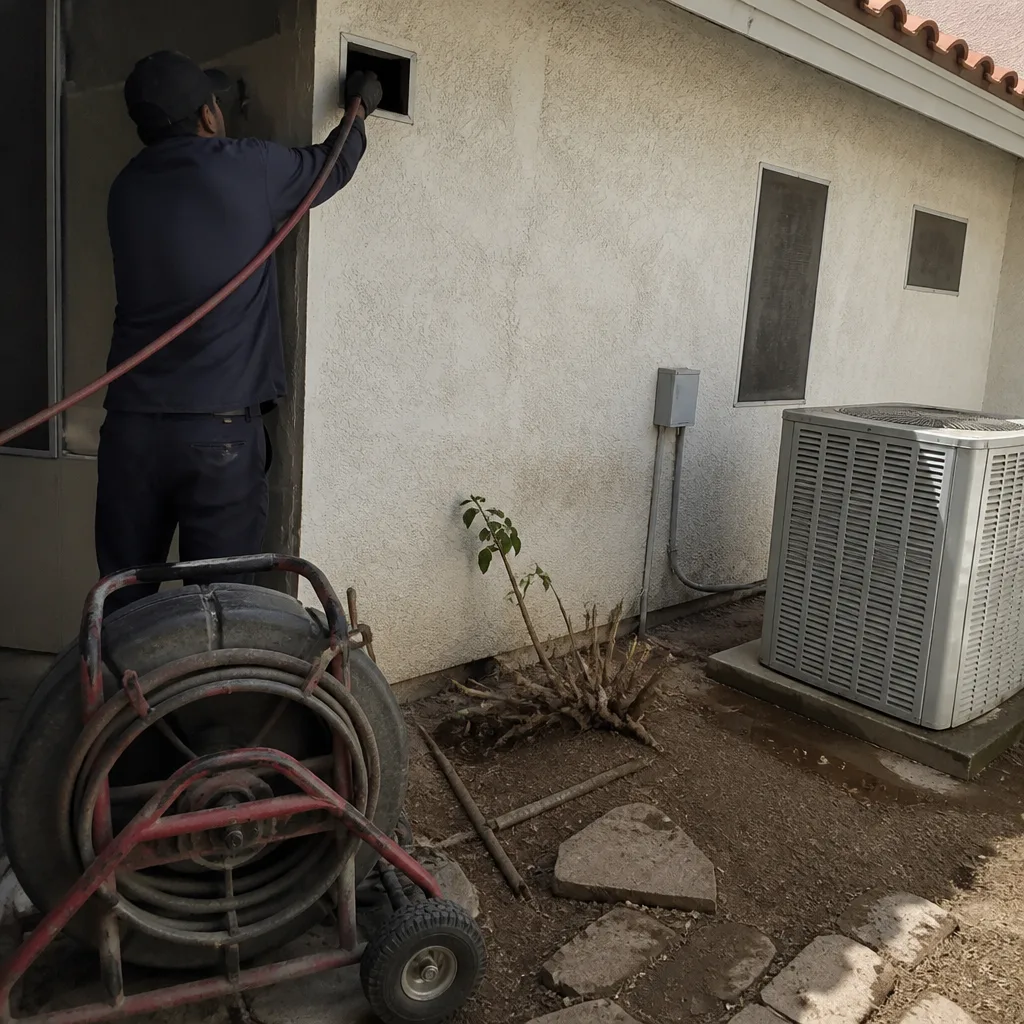 Before
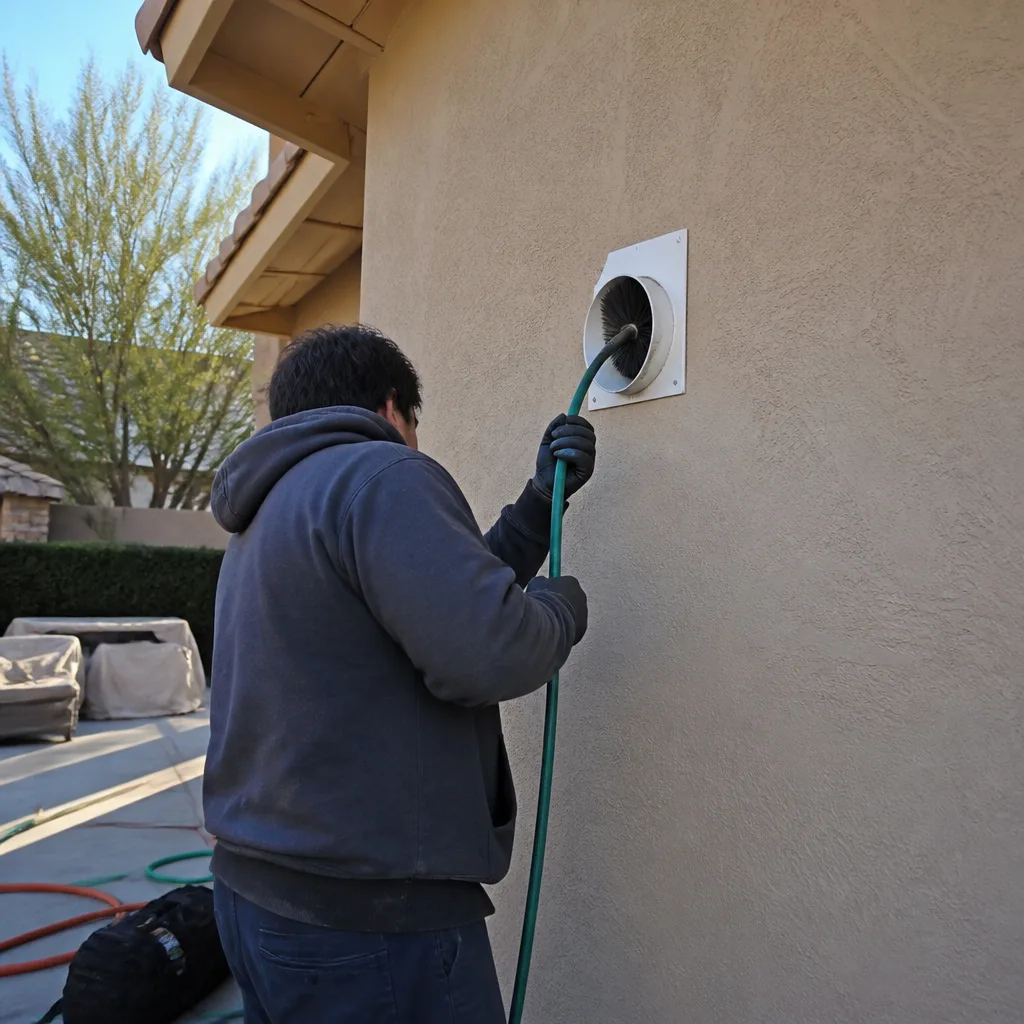 After