
Last updated November 2, 2026
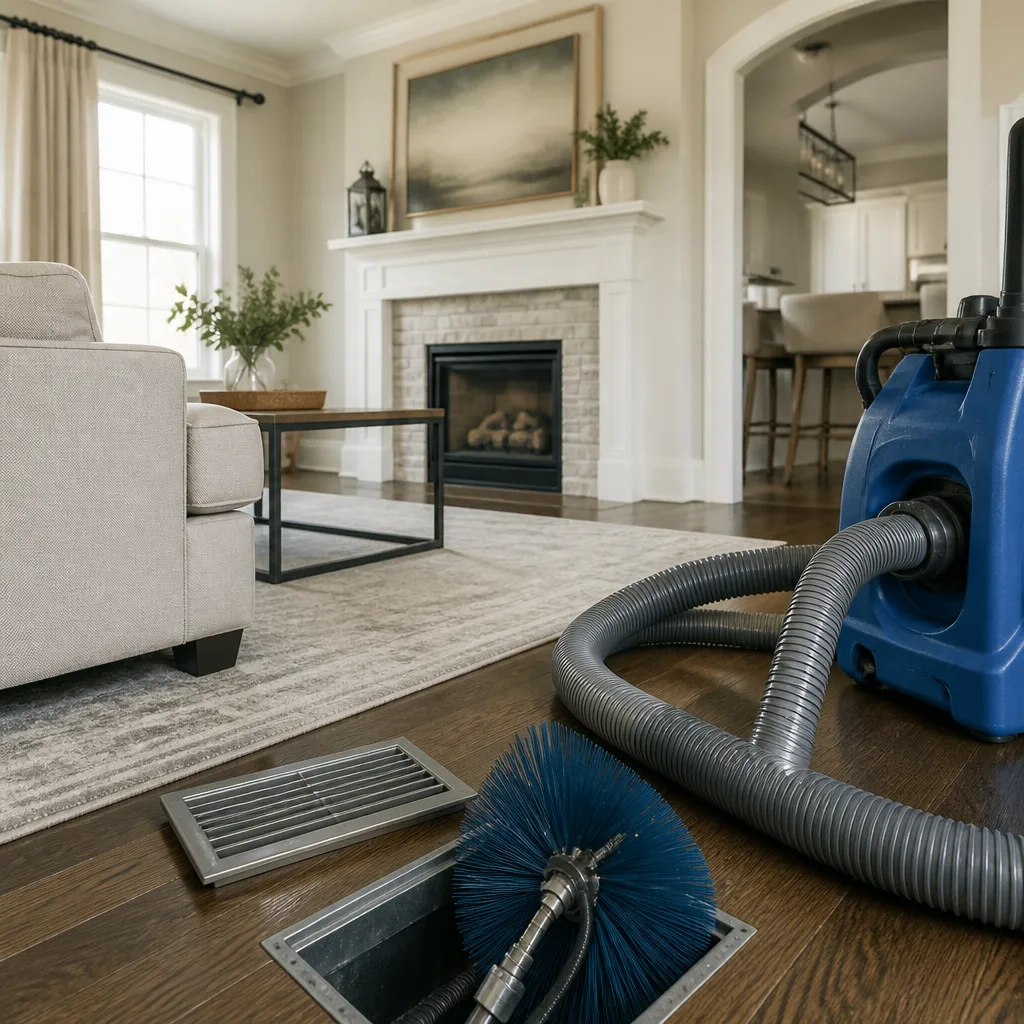 Whole-home duct cleaning
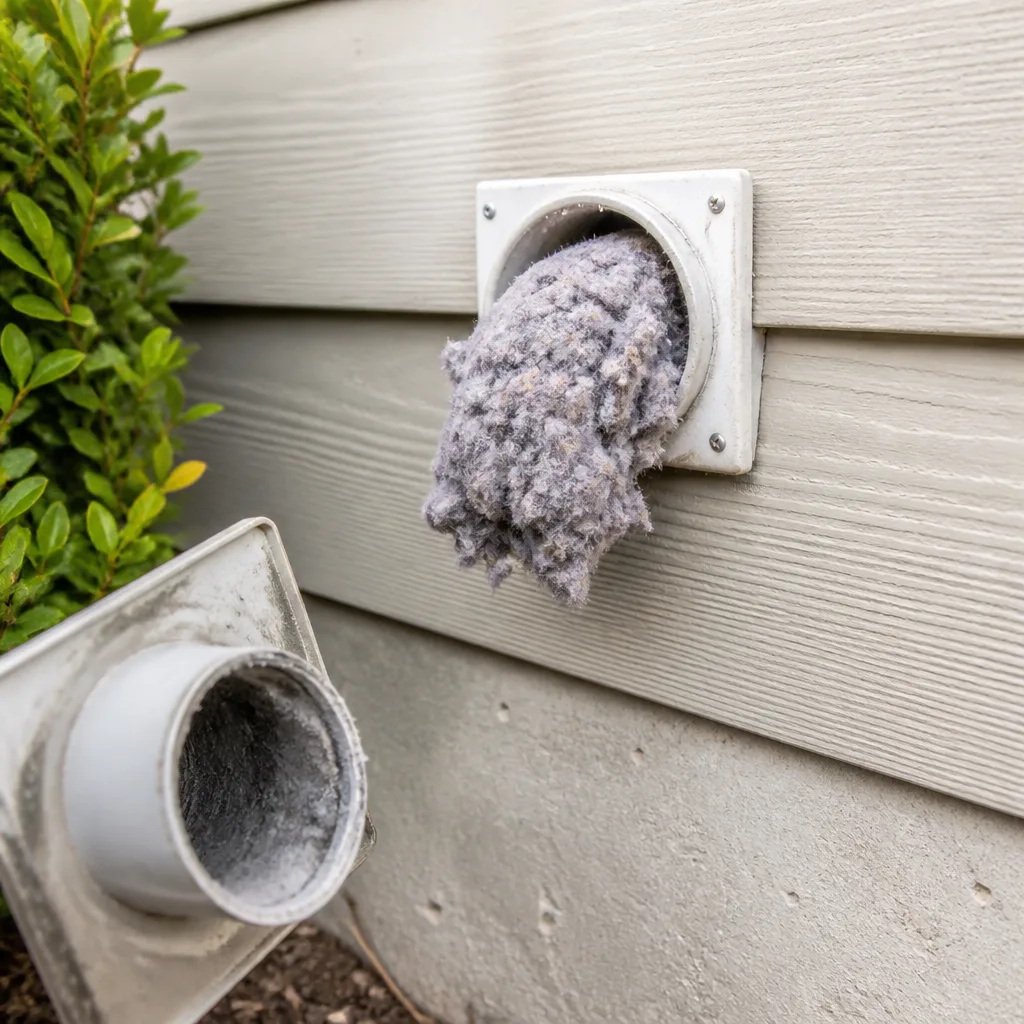 Dryer vent cleaning
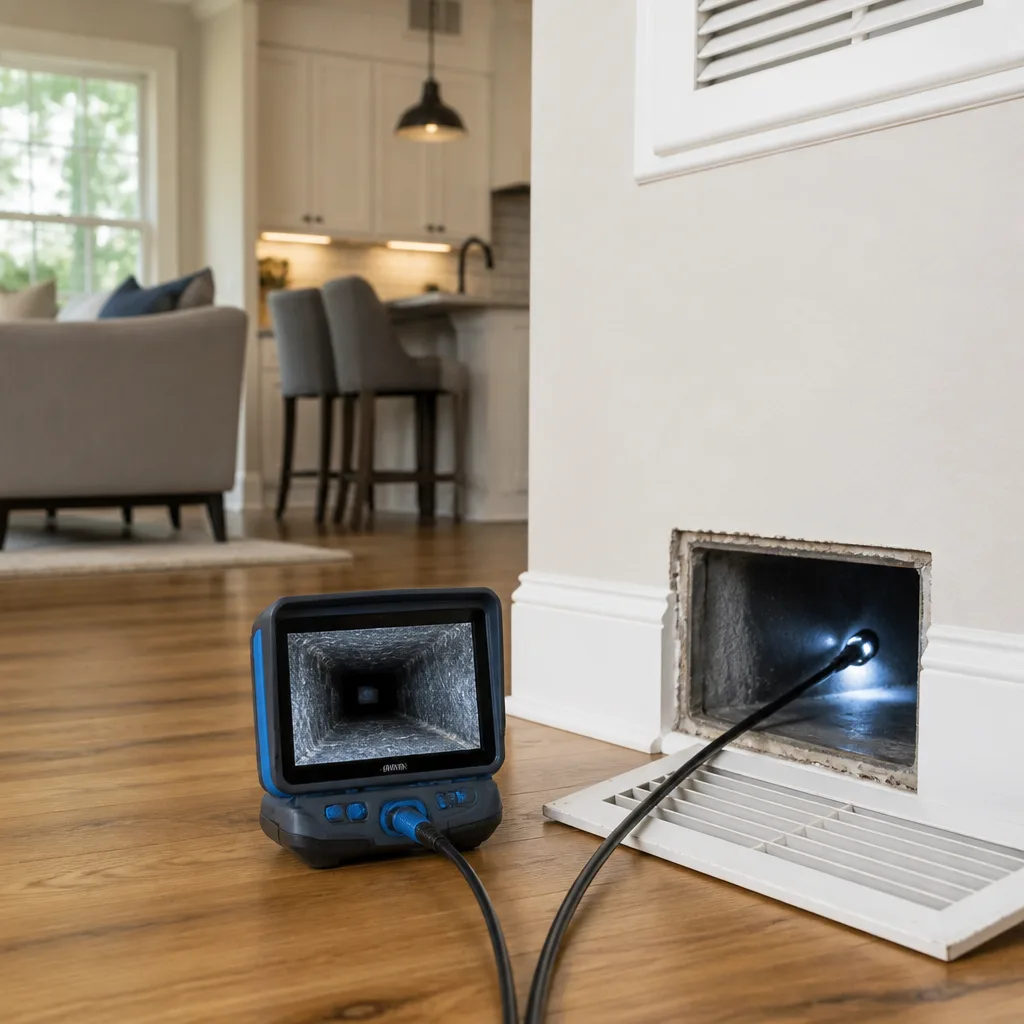 Camera inspection
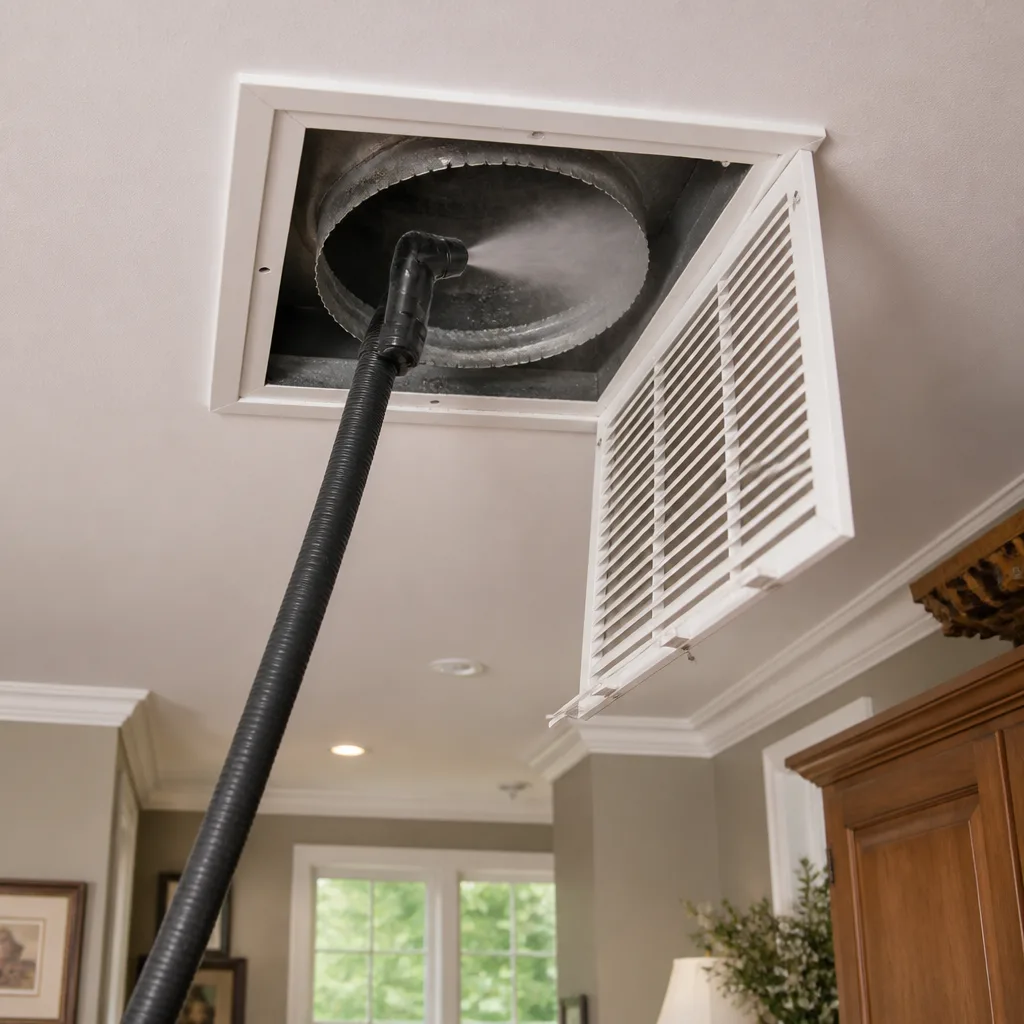 Sanitizing & deodorizing
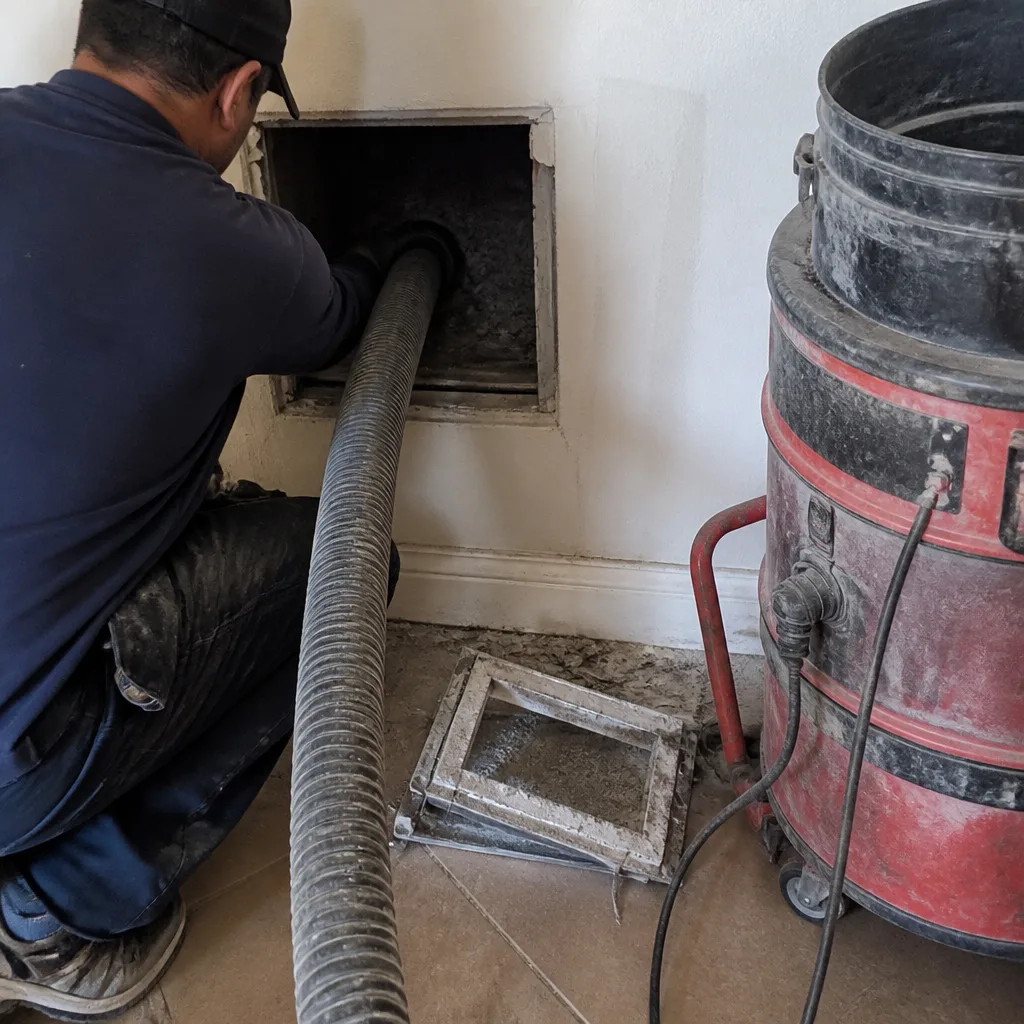
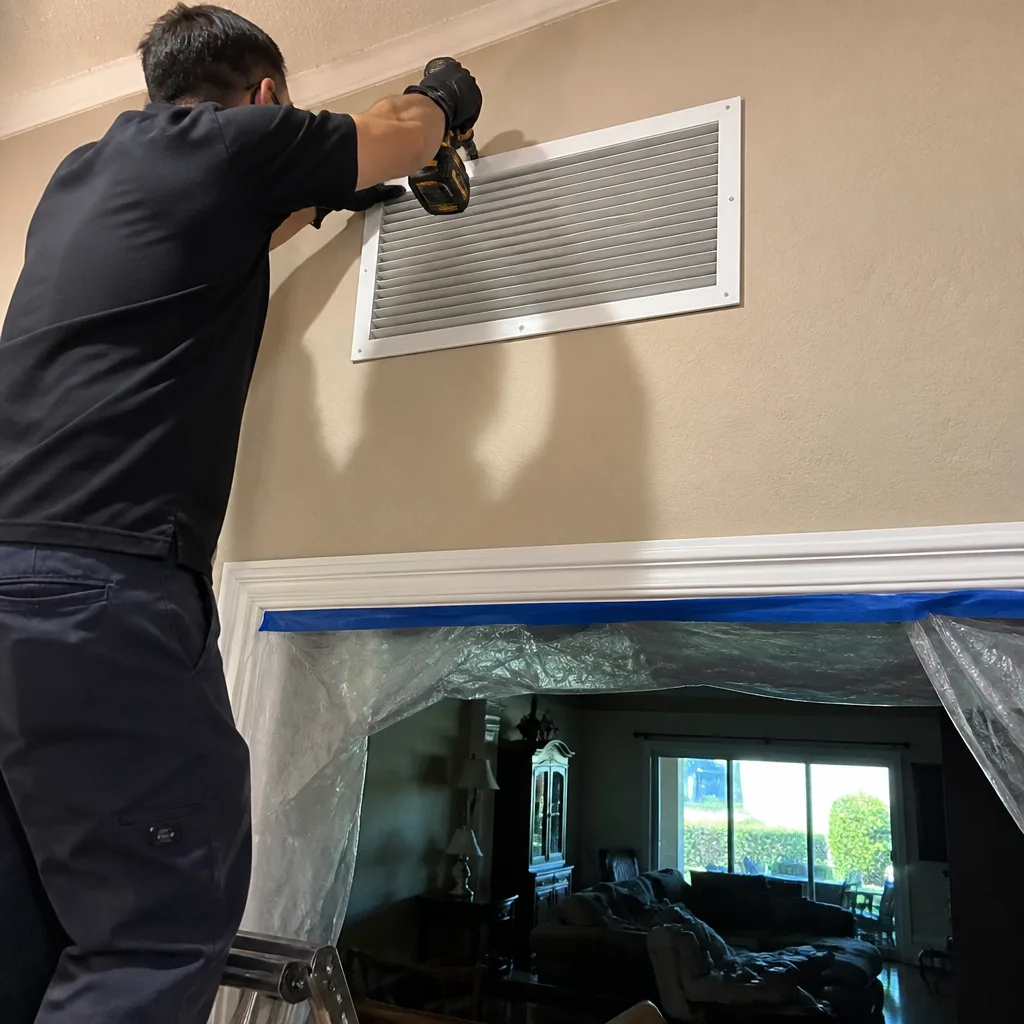
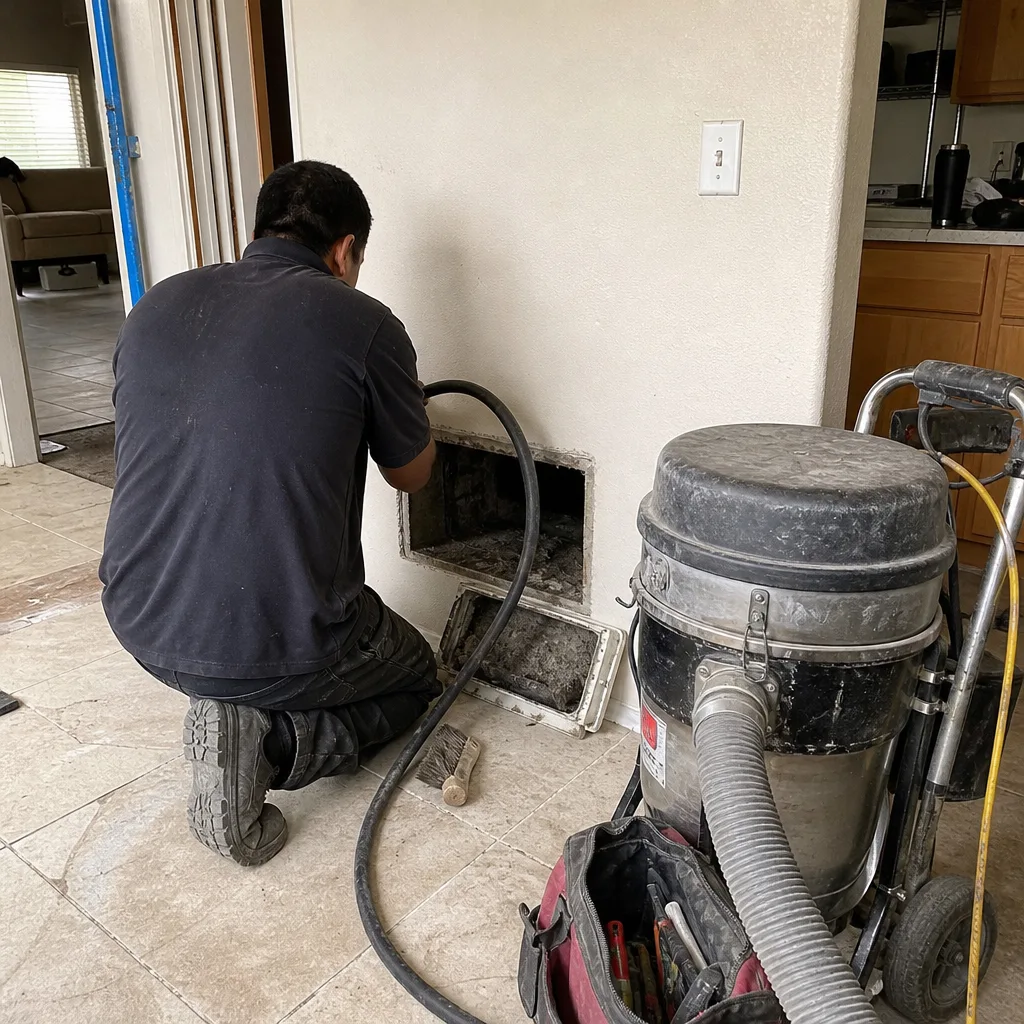
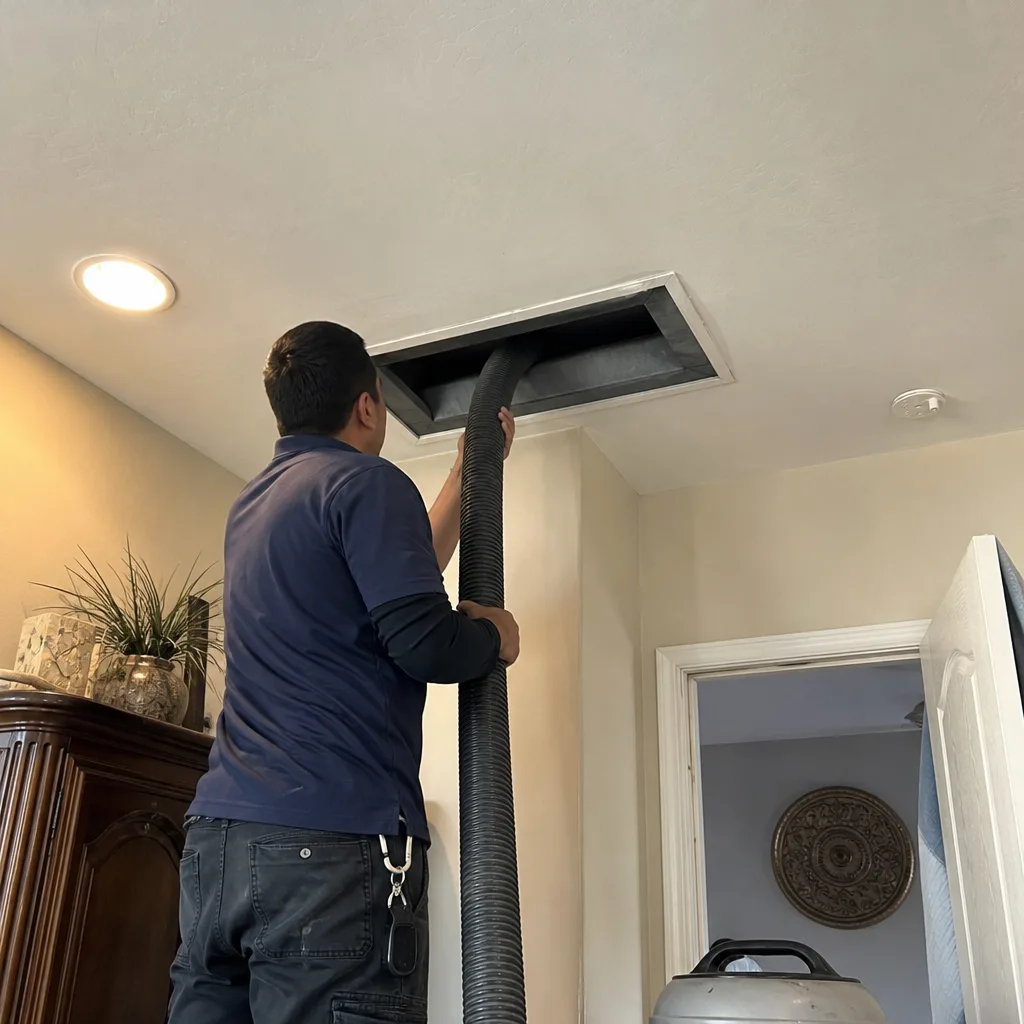
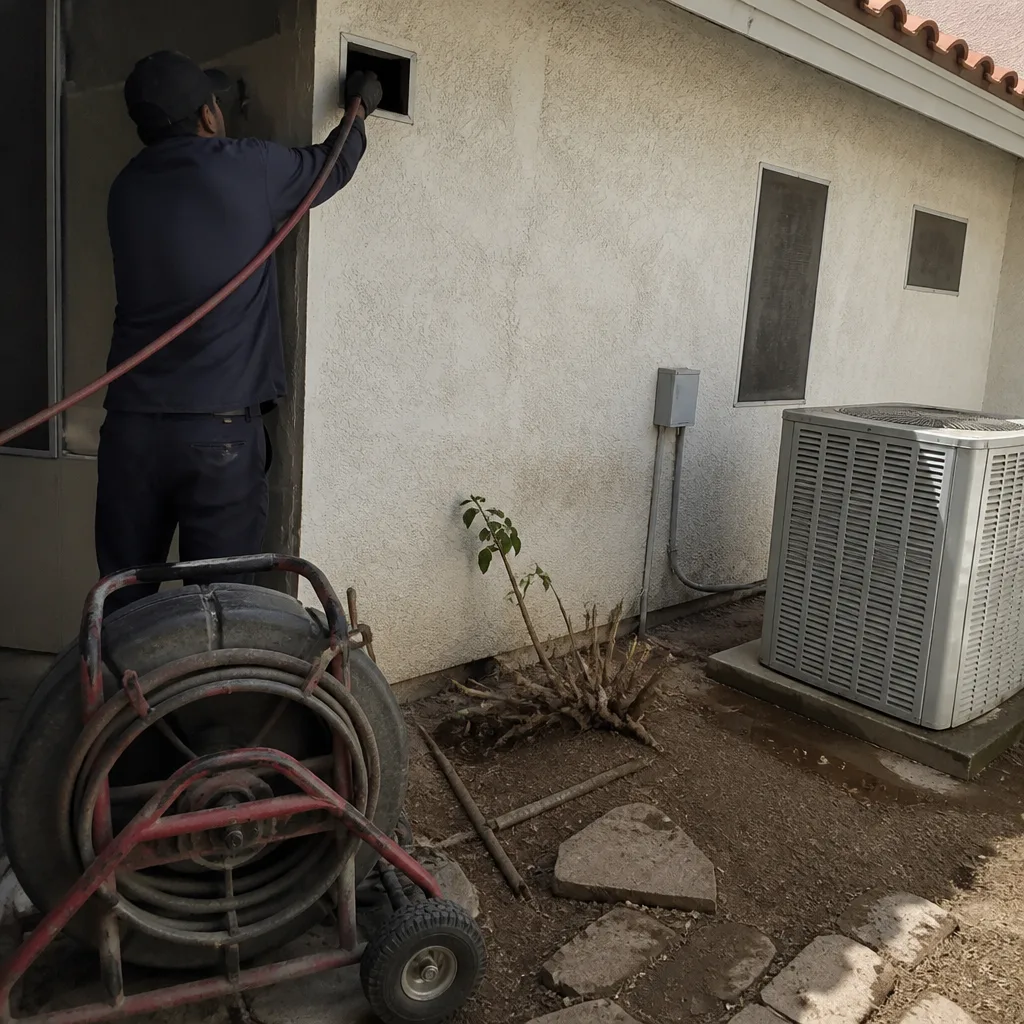
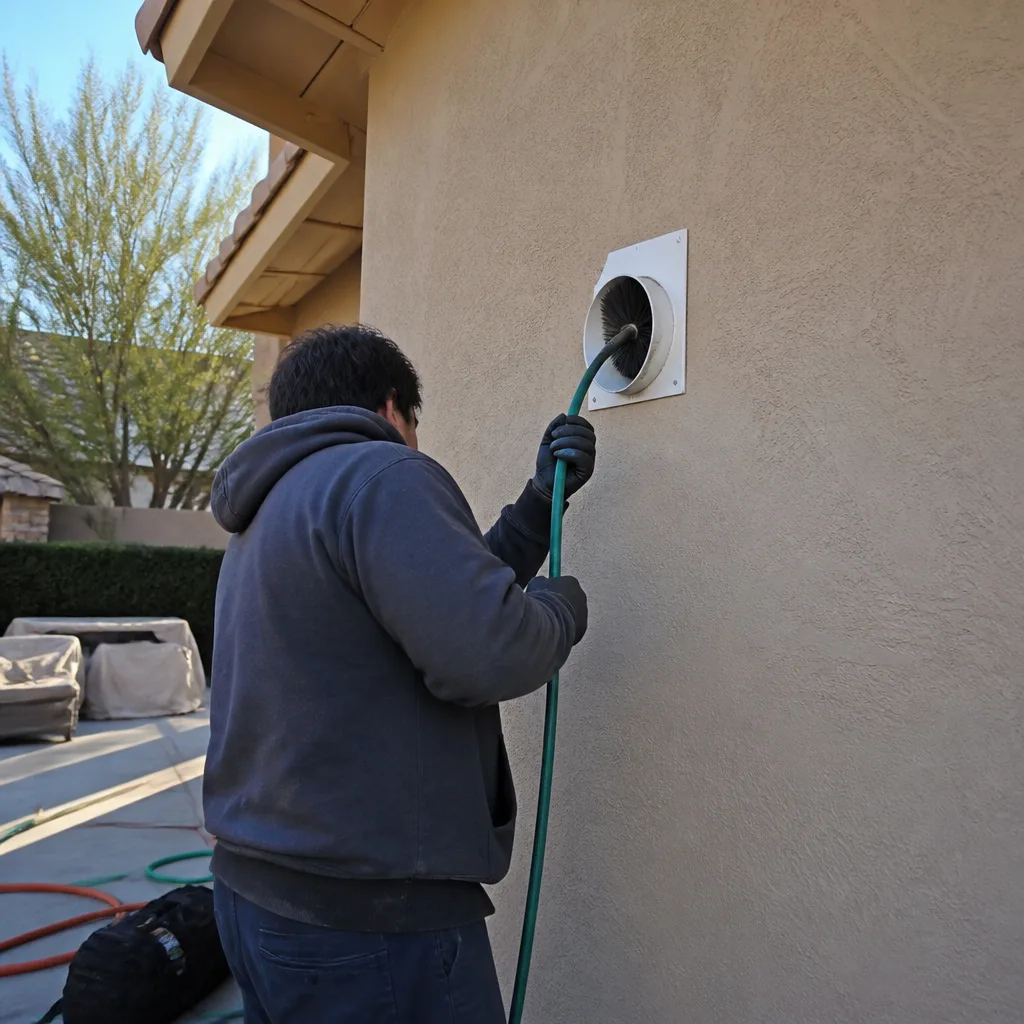
Whole-system duct and dryer vent check with before-and-after photos - you see exactly what came out of your vents
That "$99 whole-house special" is a bait ad - the real number appears once they are in your hallway, or the "clean" is a shop-vac at the register. We photograph the inside of your ducts before and after instead.
Choosing the Right Air Duct Cleaning Brand: A Buyer’s Guide for Palm Desert
Rotobrush, Nikro, and a shop vac from a hardware store can all be described as “professional duct cleaning equipment.” That sentence alone tells you how broken this industry’s language has become. The three produce categorically different results, and most Palm Desert homeowners have no framework for telling them apart. This guide exists to give you that framework. By the time you finish reading, you’ll know exactly what questions to ask any duct cleaning company, why equipment matters more than reviews in this particular service category, and how Palm Desert’s desert climate raises the stakes on the whole decision.
Quick Answer
The right air duct cleaning brand for Palm Desert is one that uses commercial-grade equipment, not consumer or entry-level gear. That means source-removal systems like Rotobrush for mechanical agitation, high-CFM negative pressure units like Nikro for extraction, and HEPA-rated containment equipment from Abatement Technologies when conditions demand it. A company that invests in this professional equipment stack operates closer to commercial remediation standards than a typical residential cleaning crew, and that difference shows in what’s actually removed from your ducts.
Styles & brands we work with
- Whole-home duct cleaning
- Dryer vent cleaning
- Camera inspection
- Sanitizing & deodorizing
Table of Contents
- Why Equipment Matters More Than You Think
- The Three Professional Equipment Platforms Explained
- What Palm Desert’s Climate Does to Your Ductwork
- Five Questions to Ask Any Duct Cleaning Company
- Owning the Equipment vs. Knowing How to Use It
- Why Commercial Equipment Companies Are Built Differently
- Common Mistakes to Avoid
- When to Call a Professional
- Frequently Asked Questions
- The Bottom Line
Why Equipment Matters More Than You Think
The uncomfortable truth about air duct cleaning in Palm Desert is that “cleaning” is a word with no legal definition. One company’s cleaning is a thorough source-removal process that extracts years of accumulated particulate. Another company’s cleaning is waving a brush around the supply registers for forty-five minutes and calling it done. Both will hand you an invoice. Both will tell you the job was completed. And unless you know what to look for, both will be indistinguishable in a two-sentence exchange with a dispatcher before you book.
This is where equipment becomes the most honest signal you have. A contractor running a Rotobrush system with a properly sized vacuum platform has made a five-figure operational investment. A contractor running a consumer-grade shop vac attached to a store-bought hose has made a one-hundred-dollar investment. The former has to deliver results that earn referrals to justify the expense. The latter can afford to be mediocre at volume because the cost of being mediocre is almost nothing. This isn’t a personality test. It’s basic business math, and it plays out in every market, including right here in the Coachella Valley.
The Three Professional Equipment Platforms Explained
Rotobrush: Mechanical Agitation and Source Removal
Rotobrush operates on a simple principle: dislodge, then extract. The system uses a rotating brush assembly that physically scrapes and agitates the interior walls of your ductwork while a connected vacuum pulls loosened debris out of the system in the same pass. In our experience, this combination of mechanical action and simultaneous capture is the core of what professional Duct Cleaning Palm Desert home service should include. Without mechanical agitation, you’re simply vacuuming air. Without simultaneous vacuum, you’re knocking debris loose and hoping it leaves the home on its own.
- The brush is inserted into the duct and rotates at high speed, scrubbing the interior surface and breaking the adhesion between debris and duct walls.
- A vacuum connection runs alongside the brush, creating airflow that carries dislodged particulate back toward the collection unit rather than dispersing it into the living space.
- The process repeats through every supply and return run, including trunk lines and branch runs, until all accessible duct sections have been mechanically cleaned.
What separates Rotobrush from improvised cleaning tools is that the brushers are sized and configured for duct interiors. They’re engineered to navigate bends and elbows, which matters because a rigid tool that can’t follow your duct’s geometry simply misses enormous sections of the system. That’s not cleaning. That’s theater.
Nikro: High-CFM Negative Pressure Extraction
If Rotobrush handles the agitation side, Nikro handles the capture side. Nikro units are built around industrial-grade motors producing the high cubic-feet-per-minute (CFM) airflow required to create genuine negative pressure inside the duct system. Negative pressure means the air inside your ducts is being pulled toward the collection unit, not pushed outward. For your home, this translates to a crucial distinction: dust and debris extracted from the system stays extracted. It doesn’t get blown through register gaps into your living room furniture.
CFM matters because fine particulate, especially the ultra-fine dust common in Palm Desert, behaves aerodynamically. It hangs in the air column. It rides currents. A low-CFM vacuum simply doesn’t move enough air to capture it, no matter how dramatically the tech waves the hose. Nikro’s platform is designed for exactly this challenge, and it’s why we run this caliber of equipment rather than settling for what amounts to household-grade suction. The unit’s filtration setup is also a decisive factor: professional units run multi-stage filtration that traps fine material at the collection point instead of exhausting it back into the room.
Abatement Technologies: Containment for Contaminated Environments
Abatement Technologies occupies a different category entirely. These systems were designed for remediation work: mold, water damage, smoke contamination, and similar conditions where the air being handled shouldn’t recirculate into occupied space. Their negative-air machines and HEPA filtration modules are standard equipment in situations where air quality isn’t a preference but a regulatory concern.
For the typical Palm Desert homeowner, Abatement equipment matters for a less dramatic reason. If your ducts have been exposed to significant particulate loading, desert dust storms, renovation debris, rodent activity, or moisture issues, standard cleaning equipment may disturb contaminants without fully containing them. Remediation-grade containment equipment changes that equation. It creates a controlled air management environment that captures what other systems send airborne. Not every job demands this level of response, but a company that owns and knows how to deploy Abatement systems has a capability ceiling that cleaning-only outfits simply don’t reach.
What Palm Desert’s Climate Does to Your Ductwork
Palm Desert doesn’t have the same dust problem as lower-desert cities. It has a worse dust problem. The Coachella Valley’s prevailing winds carry fine particulate from dry lake beds and open desert terrain. Add the seasonal Santa Ana events, and the air outside regularly contains particulate measured in microns, not millimeters. That same air feeds your HVAC system every time the unit cycles on.
What happens next is physical, not rhetorical. Coarse particulate settles in duct runs where airflow drops. Fine particulate, the sub-10-micron fraction, behaves exactly like a gas. It follows air currents through the system, coats fan housings, packs into plenum corners, and recirculates through your living space on every cycle. The EPA’s guidance on indoor air quality in arid regions emphasizes exactly this dynamic: arid-climate homes with forced-air systems accumulate measurable particulate loading faster than homes in humid climates because there’s no moisture to bind dust and drop it out of suspension.
This is why agitation-only cleaning in Palm Desert is a particular failure mode. A contractor who brushes your ducts without adequate negative pressure extraction is doing something worse than leaving the debris in place. They’re aerosolizing it. Fine desert particulate that had been harmlessly settled becomes airborne, and the circulation fan then distributes it through the home for days afterward. Homeowners in neighborhoods like Indian Wells and Rancho Mirage who’ve hired low-budget duct cleaners have reported exactly this outcome: the house is dustier after the service than before. That’s not a mysterious coincidence. It’s what happens when the equipment can’t keep up with the particulate load.
Equipment selection in Palm Desert isn’t an abstract preference. It’s the difference between capture and redistribution. When we clean ducts in this valley, the extraction discipline is the whole game. Every step of the process assumes the dust will escape unless positively controlled.
Five Questions to Ask Any Duct Cleaning Company
You don’t need to become an HVAC engineer to evaluate a duct cleaning contractor. You need a handful of pointed questions and the willingness to accept only direct answers. Here’s the list we’d recommend to any Palm Desert homeowner before booking, with more guides & resources available for follow-up reading:
- “What vacuum system do you use, and what’s the CFM rating?” Professional source-removal equipment typically runs in the several-thousand-CFM range. Consumer-grade equipment runs far lower. The number itself isn’t a complete answer, but it’s a useful screening tool. Strong contractors answer immediately with a platform name and a number. Weak contractors deflect with phrases like “industrial-strength” or “commercial-quality” without specifics.
- “Does your extraction exhaust through HEPA filtration?” If the answer is no, or if the question produces confusion, you’re talking to the wrong company. HEPA filtration on the exhaust side guarantees captured particulate isn’t simply exhausted into your home’s air. Any reputable duct cleaning operation should answer yes without hesitation.
- “How do you handle both flex and rigid duct sections?” Palm Desert homes run the full range: newer construction often uses flexible duct runs, while older homes in Palm Desert and surrounding communities commonly have rigid sheet-metal ductwork. Flex duct can’t tolerate aggressive brushing. Rigid duct requires it. The right answer describes different approaches for each material. The wrong answer is confusion about why the question matters.
- “What training do your technicians receive on the equipment?” Owning a Rotobrush and knowing how to drive it properly are different things. Look for a real answer: manufacturer training, supervised field hours, ongoing certification of any kind. If the answer is “they learn on the job,” interpret it kindly as “they learn on your job.”
- “Do you inspect the system before and after?” Source-removal cleaning without inspection is a promise without evidence. The best operators document the condition of your ducts before work begins and after work completes, typically with camera inspection in the duct runs that matter. If a company offers only a cleaning with no inspection component, you’re hiring a process, not a result.
Owning the Equipment vs. Knowing How to Use It
There’s a second layer to the equipment question, and it’s where honest evaluation gets subtle: professional equipment is necessary but not sufficient. A Rotobrush in the hands of an untrained operator isn’t a better outcome than a shop vac in the hands of a careful one. The tool requires technique. Brush rotation speed, progression rate through the duct run, vacuum engagement timing, number of passes per section, handling of registers and boots: all of these are operator decisions that determine whether the equipment delivers its rated performance or falls short of it.
In practice, this means you should evaluate the operator, not just the brand name on the truck. In our experience, crews that have spent years running these systems in desert conditions develop an instinct for problem spots: the return drop on a two-story home, the long flex run to a far bedroom, the plenum corner that catches debris but never shows it. Training compounds. An experienced tech with professional equipment sees the system as a set of specific challenges. A novice with the same equipment sees a series of vents. The outcome difference is measurable in what’s extracted and what’s left behind.
There’s also a meaningful difference between a company that runs one cleaning platform and one that maintains a curated lineup. Rotobrush handles most residential systems well. But some jobs call for Nikro’s extraction capability as the lead unit. Others, especially after air duct repair in Palm Desert work or renovation, benefit from Abatement Technologies containment. A company running a single entry-level machine can only do what that machine does. A company running an equipment stack can match the approach to the job. That flexibility is part of what you’re paying for, and it’s a legitimate part of the value comparison between contractors.
Why Commercial Equipment Companies Are Built Differently
There’s a structural reason equipment investment predicts service quality, and it’s worth understanding because it’s the closest thing to a reliable tell in this industry. A company that spends on professional equipment has made a business decision that only pays off one way: through repeat customers and referrals. The equipment costs too much to run a low-price, high-volume operation. The economics don’t work. To stay in business with that overhead, the company has to produce results that make homeowners tell their neighbors. That pressure, more than any training program or company slogan, is what preserves service quality over years.
A shop-vac operation has the opposite incentive structure. Equipment costs almost nothing. The model tolerates low prices and high customer churn because there’s no meaningful capital at risk. Every job is profitable within the first thirty minutes. There’s no structural pressure toward quality because there’s no structural investment to protect. This is not a moral judgment on individual operators; it’s a simple description of how business models shape service standards.
When you evaluate duct cleaning companies in the Coachella Valley, you’re effectively auditing what kind of business you’re hiring. High capital investment plus high training investment plus multiple service lines indicates a company built for the long term. The reverse indicates something else. Both are legal. Both are available. Only one is likely to produce the result you actually want, which is ductwork that’s measurably cleaner than when the crew arrived, not just theoretically cleaner because someone said so.
The same logic extends to adjacent services. A company that also performs dryer vent cleaning in Palm Desert has technicians who understand airflow systems beyond the duct runs themselves. A company that can repair ducts, not just clean them, sees the system holistically. It’s the difference between hiring a specialist and hiring a tourist passing through your system with a rotating brush.
Common Mistakes to Avoid
- Choosing on price alone. Duct cleaning pricing ranges widely in Palm Desert, and the floor of that range exists for a reason. A ninety-nine-dollar whole-house special cannot cover the cost of professional equipment, trained labor, and proper time-on-task. What it covers is a crew in a hurry, and you’ll pay for that hurry in what’s left in the ducts.
- Accepting “we use a truck-mounted system” as an answer. Truck-mount is a mounting configuration, not a capability claim. A truck-mounted shop vac is still a shop vac. Ask for the brand and model, then verify it’s actually professional-grade.
- Skipping the dryer vent when scheduling duct cleaning. The dryer vent is part of your home’s air exhaust system, and it’s the single most common residential fire hazard related to airflow. If you’re cleaning ducts for air quality and safety reasons, the dryer vent should be in the same visit.
- Assuming flex duct needs the same treatment as rigid duct. These are different materials with different tolerances. A company that doesn’t distinguish between them is either inexperienced or careless. Either way, your ducts are the test subject.
- Ignoring what happens after the cleaning. The best equipment operators can’t protect you from a contractor who leaves without verifying the work. Before-and-after inspection matters. If a company has no documentation process, find a company that does.
- Believing a review count substitutes for equipment verification. A thousand five-star reviews from homeowners who don’t know what proper source-removal cleaning looks like are a measure of marketing, not mechanical competence. Reviews are useful. Equipment verification is essential.
- Deferring maintenance until you “notice dust.” By the time you see visible dust accumulating on surfaces shortly after cycling the AC, the duct loading is already significant. Annual or biannual inspection in Palm Desert’s particulate environment catches problems before they become visible, and visibility is a late-stage indicator.
When to Call a Professional
Some duct conditions are obvious: visible dust being discharged from registers when the system cycles on, a persistent musty smell when the AC runs, or significant debris visible inside register openings. Others are less visible but equally legitimate: a recent renovation that sent drywall dust through the return side, a new pet whose dander overloads an aging filter, or a move into a home whose maintenance history you simply don’t know. If you’ve never had the ducts inspected since owning the home, that alone is enough reason. Systems in Palm Desert accumulate particulate faster than most homeowners realize, and inspection is the only way to establish a baseline. Duct Cleaning Palm Desert offers free estimates in Palm Desert. Call (833) 589-9812 and we’ll assess your system and give you an honest evaluation of what it needs.
Frequently Asked Questions
Rotobrush is a purpose-built duct cleaning system that combines mechanical agitation with simultaneous vacuum extraction, removing debris from duct walls and capturing it in the same pass. A shop vac is a general-purpose vacuum with nowhere near the CFM, filtration, or brush engineering required for source-removal duct cleaning. The difference is measurable in extraction volume and visible in what’s left behind. Call (833) 589-9812 for a free estimate using professional equipment.
Ask directly what platform they use, what the CFM rating is on their vacuum unit, and whether the exhaust runs through HEPA filtration. A professional operation answers immediately with specific brand names and numbers. Vague answers are your signal to keep looking. Professional companies in Palm Desert that run Rotobrush, Nikro, and Abatement Technologies equipment can verify all three claims on request.
Yes, for two reasons. Fine desert particulate remains airborne longer than coarse dust and is more likely to accumulate deep in the duct system rather than settling near registers. And arid-climate homes cycle their HVAC systems heavily, which continuously draws outdoor particulate into the return side. Homes in Palm Desert load ducts faster than comparable homes in humid climates, and the particulate itself is harder to capture without professional negative-pressure equipment.
Most Palm Desert homes benefit from inspection every one to two years and source-removal cleaning every three to five years, depending on occupancy factors like pets, renovation history, and proximity to open desert. Homes near wash areas or unpaved corridors may need cleaning more frequently. The only way to establish the right interval for your home is to inspect the system and see what’s actually there.
The low bids are low because the equipment is cheap, the training is minimal, and the time allotted per job is short. There’s no secret efficiency that lets a company charge one-third the market rate while running the same professional platform. A low price in Palm Desert duct cleaning almost always means a different category of service being performed under the same name. Get specifics about equipment and process before comparing prices, and call (833) 589-9812 for a professional assessment.
You can reach the first few feet of duct from each register, which is less than ten percent of your system’s interior surface area. That’s not duct cleaning. It’s register cleaning that leaves the trunk lines, plenum, and most branch runs untouched. Without professional equipment designed to reach the full duct run and capture what it removes, you’re spending effort to accomplish the appearance of maintenance. For genuine source removal, hire a company with the right equipment.
The Bottom Line
Choosing a duct cleaning brand in Palm Desert comes down to one discipline: verify the equipment before you believe anything else. The platform names matter because they describe what will actually happen inside your system. Rotobrush means mechanical agitation with controlled extraction. Nikro means high-CFM negative pressure with proper filtration. Abatement Technologies means containment capability when conditions call for it. A company running this stack has made an investment that only pays off through results. A company running a shop vac has made no such commitment, and the structure of its business reflects that. Ask the five questions in this guide. Accept only direct answers. The air your family breathes starts in your ductwork.
Written by the team at Duct Cleaning Palm Desert, serving Palm Desert since 2018.
See the difference
 Before
 After
 Before
 After
 Before
 After