
Last updated November 2, 2026
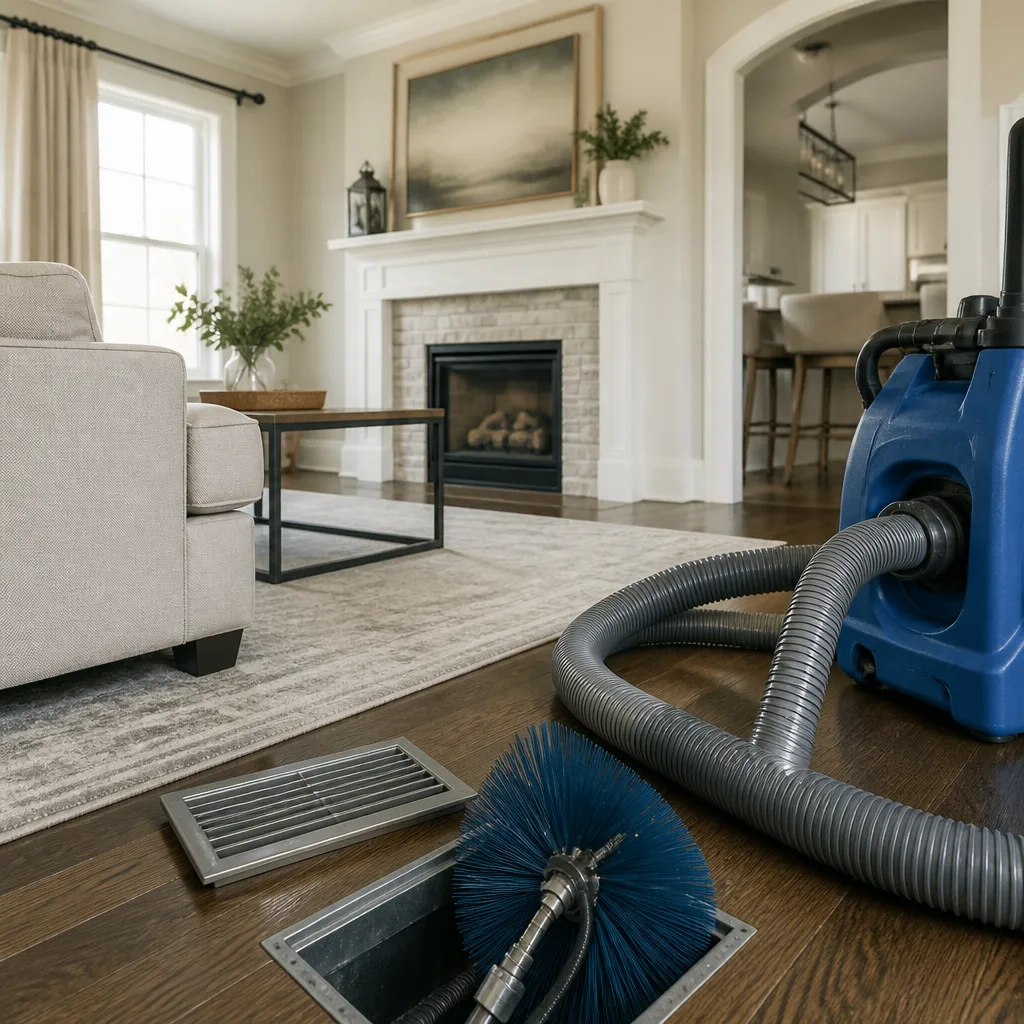 Whole-home duct cleaning
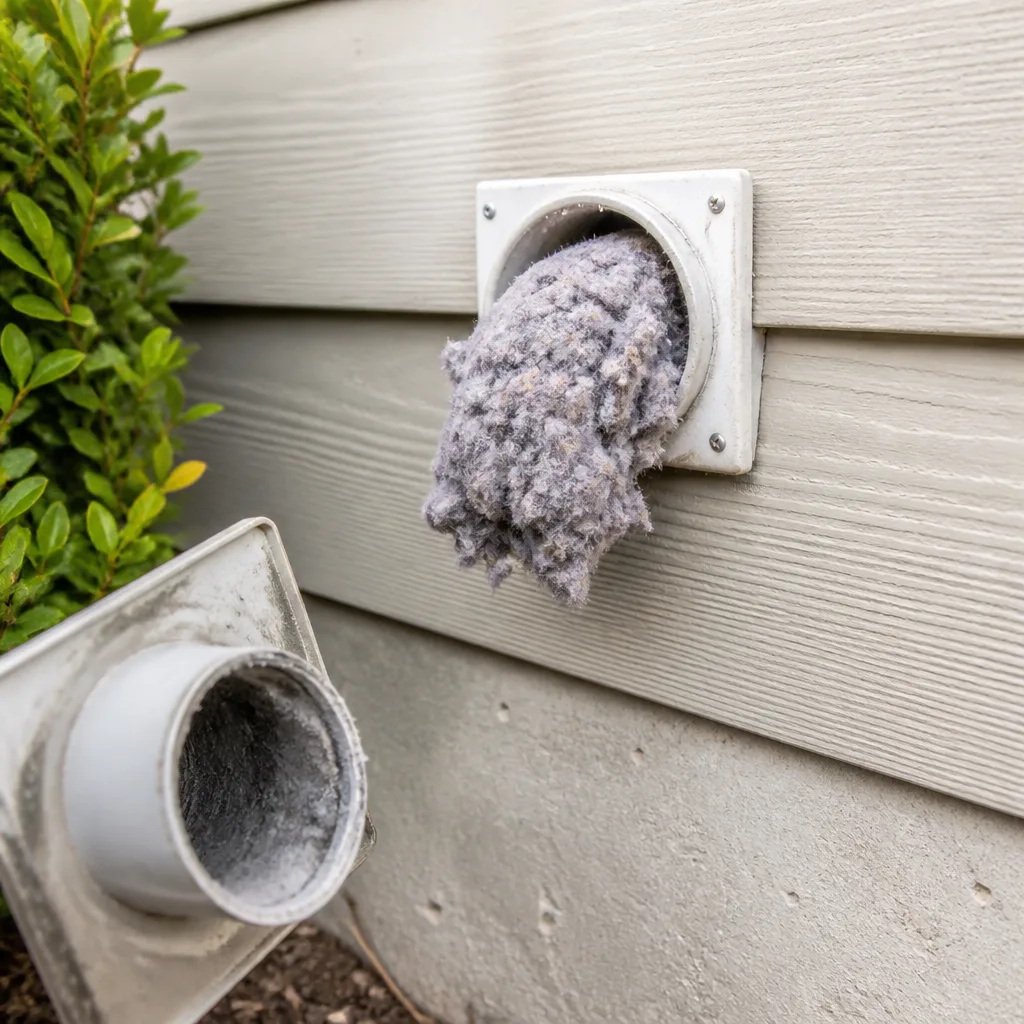 Dryer vent cleaning
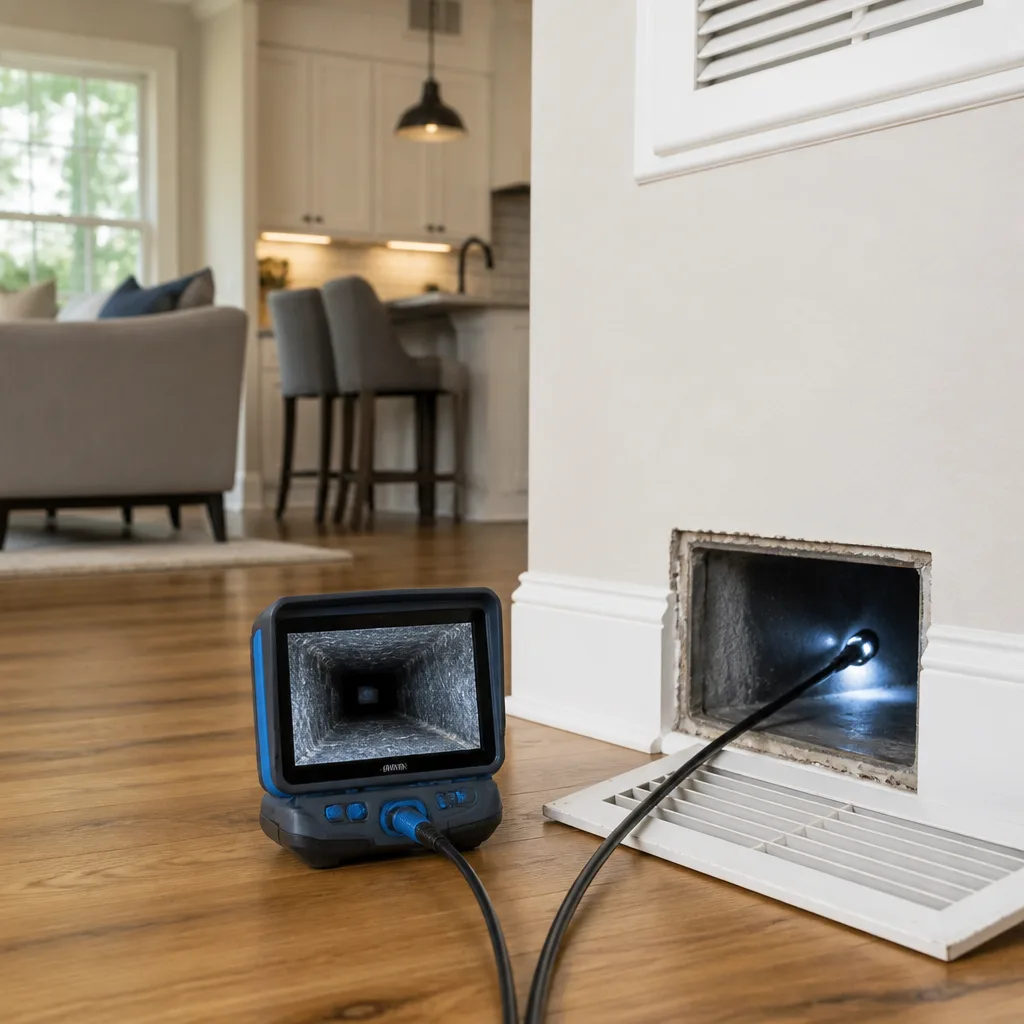 Camera inspection
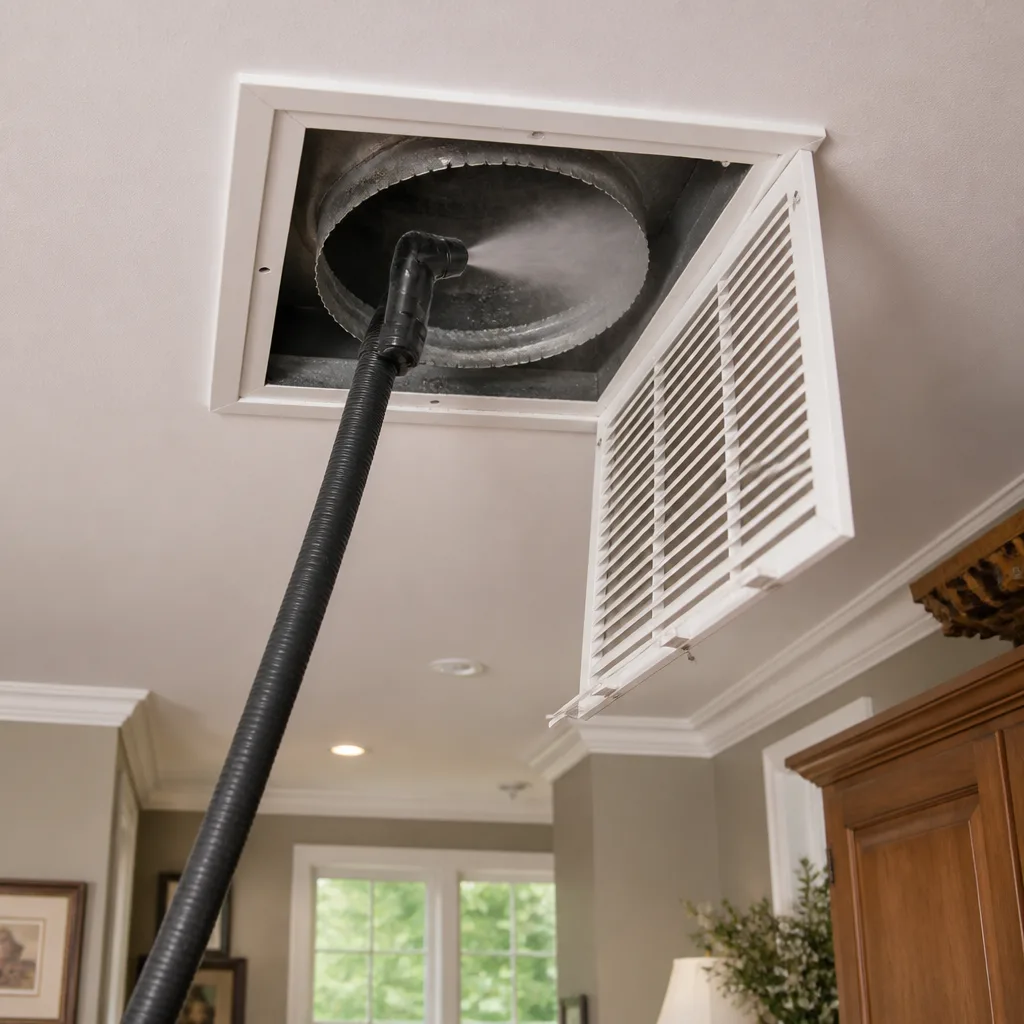 Sanitizing & deodorizing
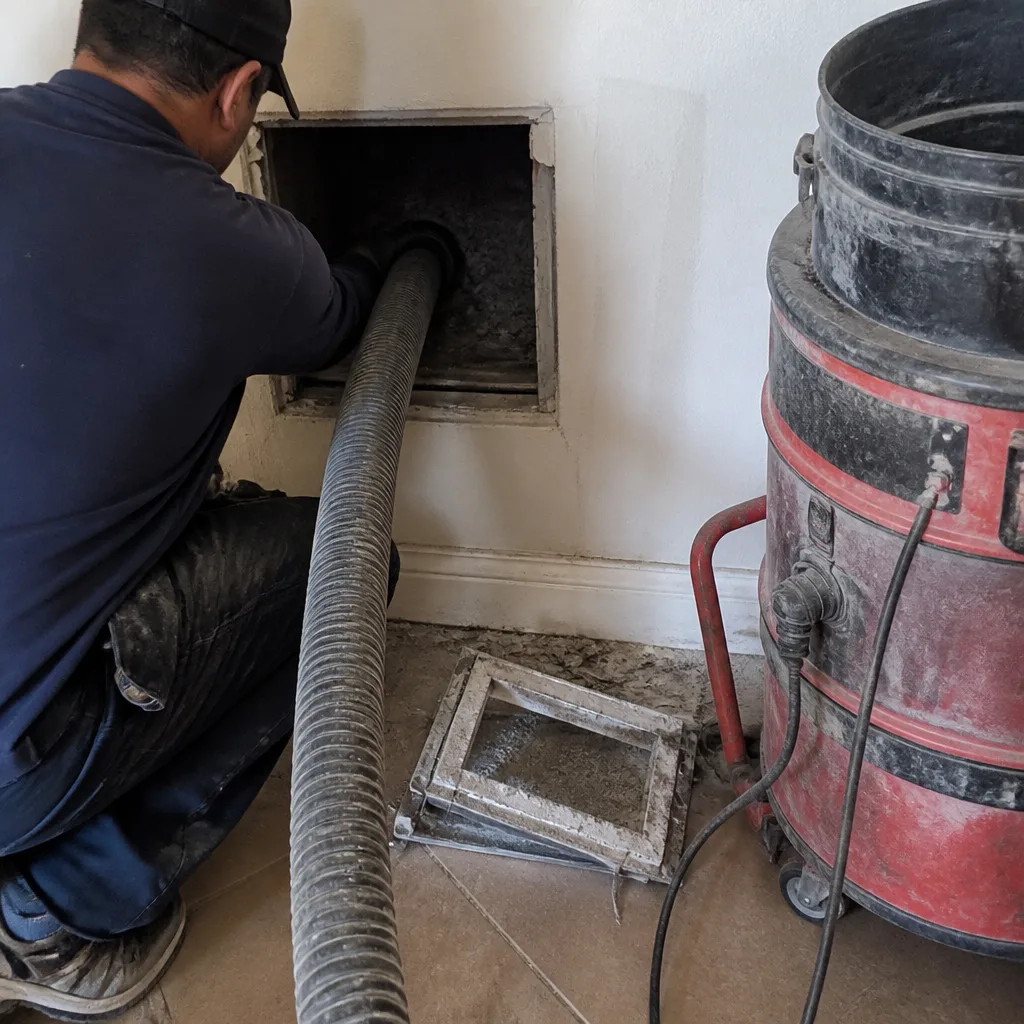
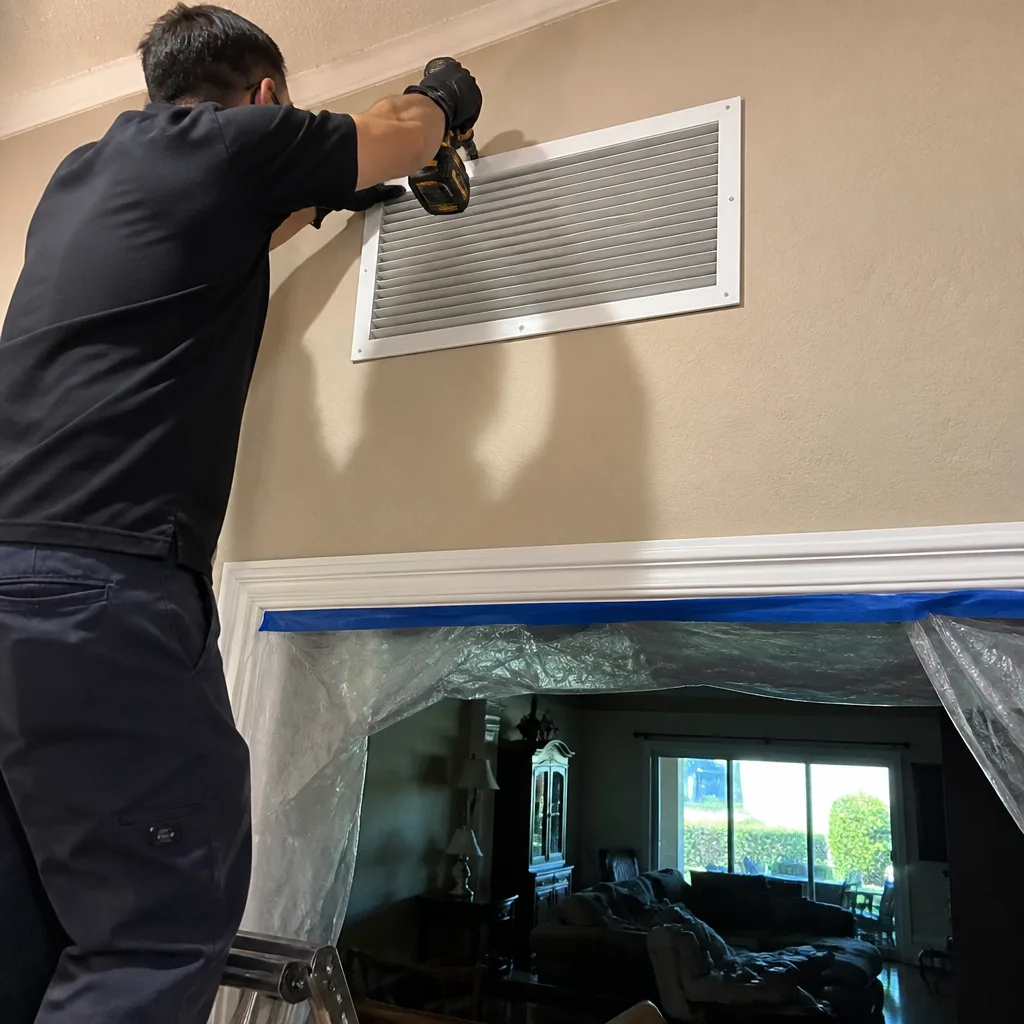
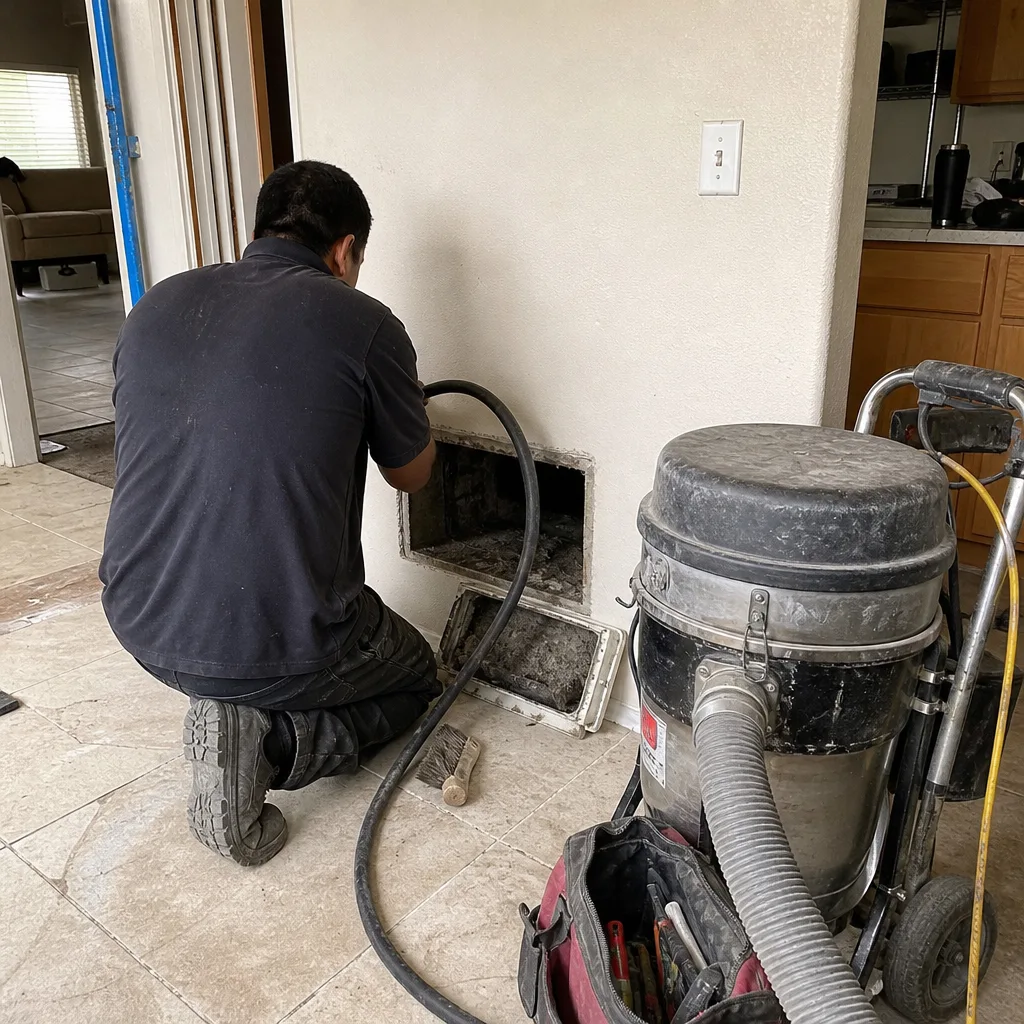
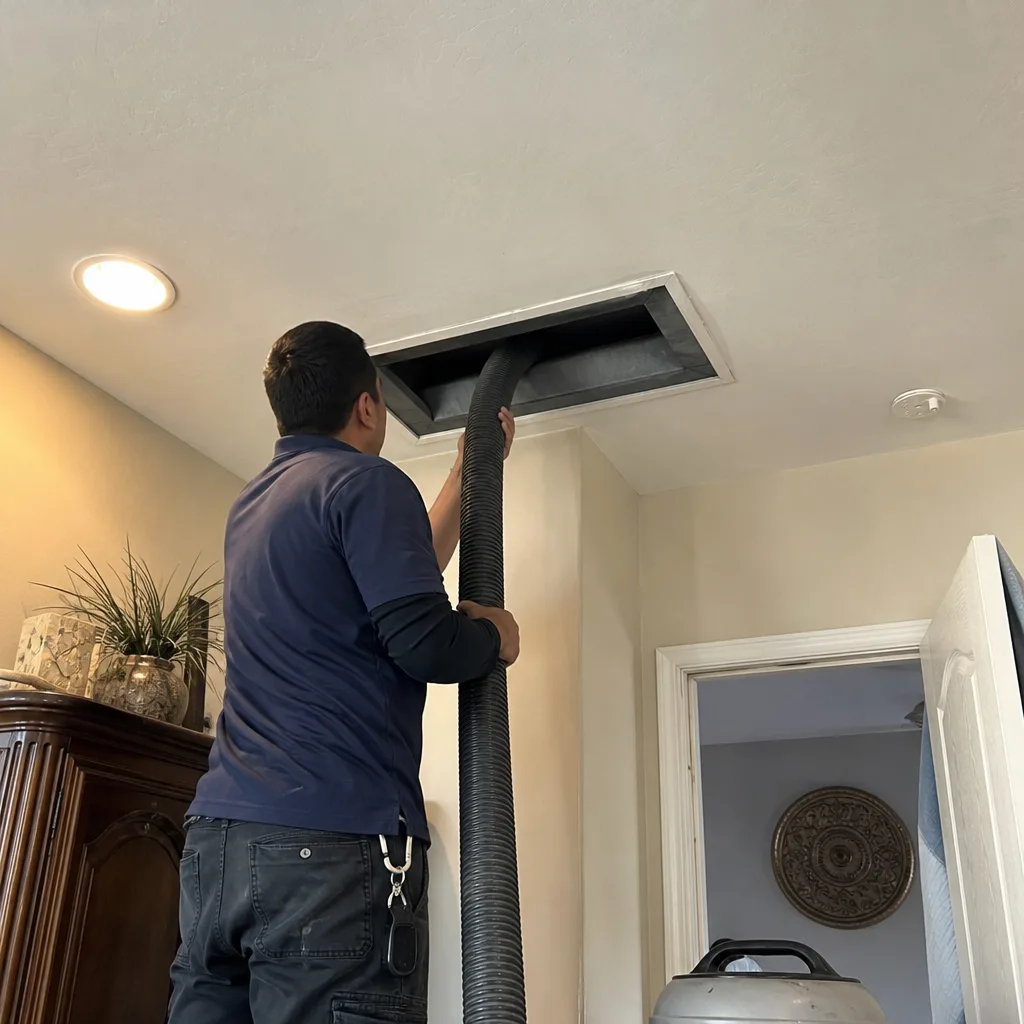
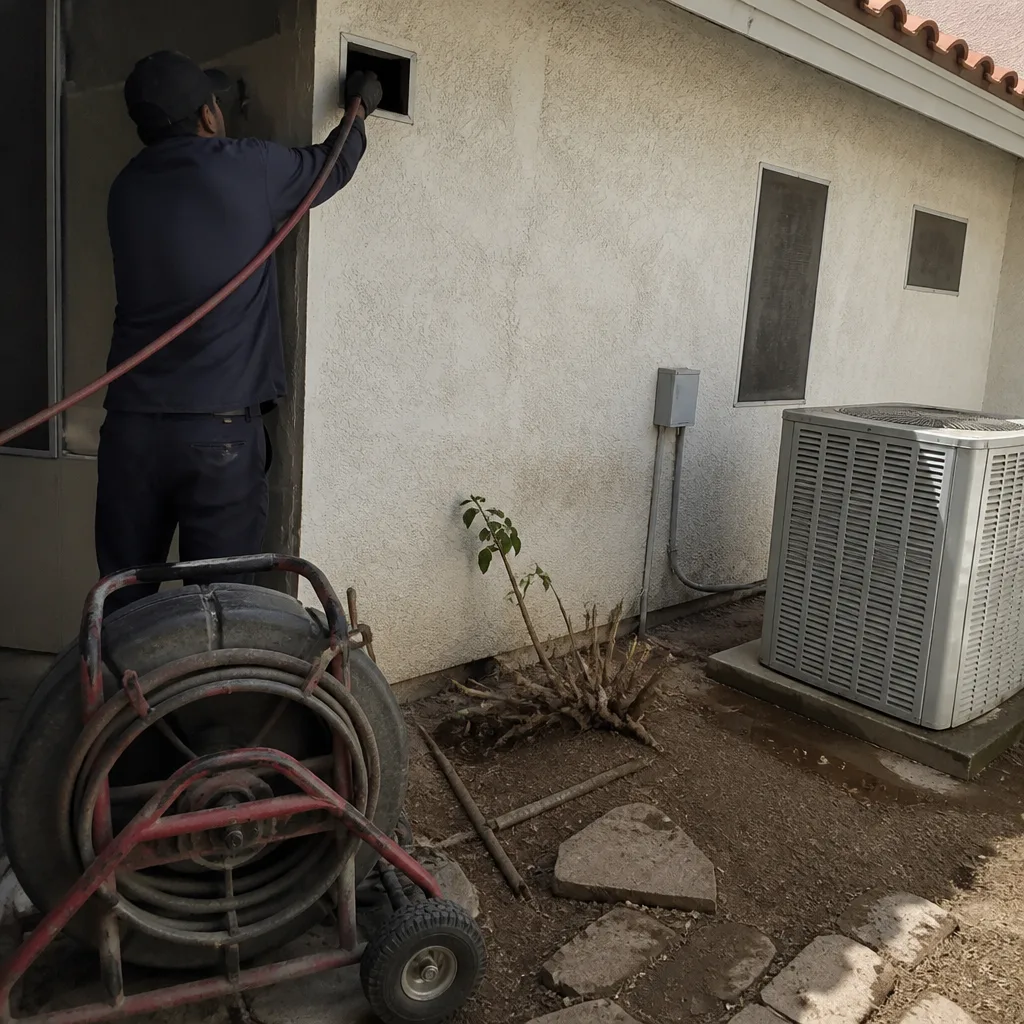
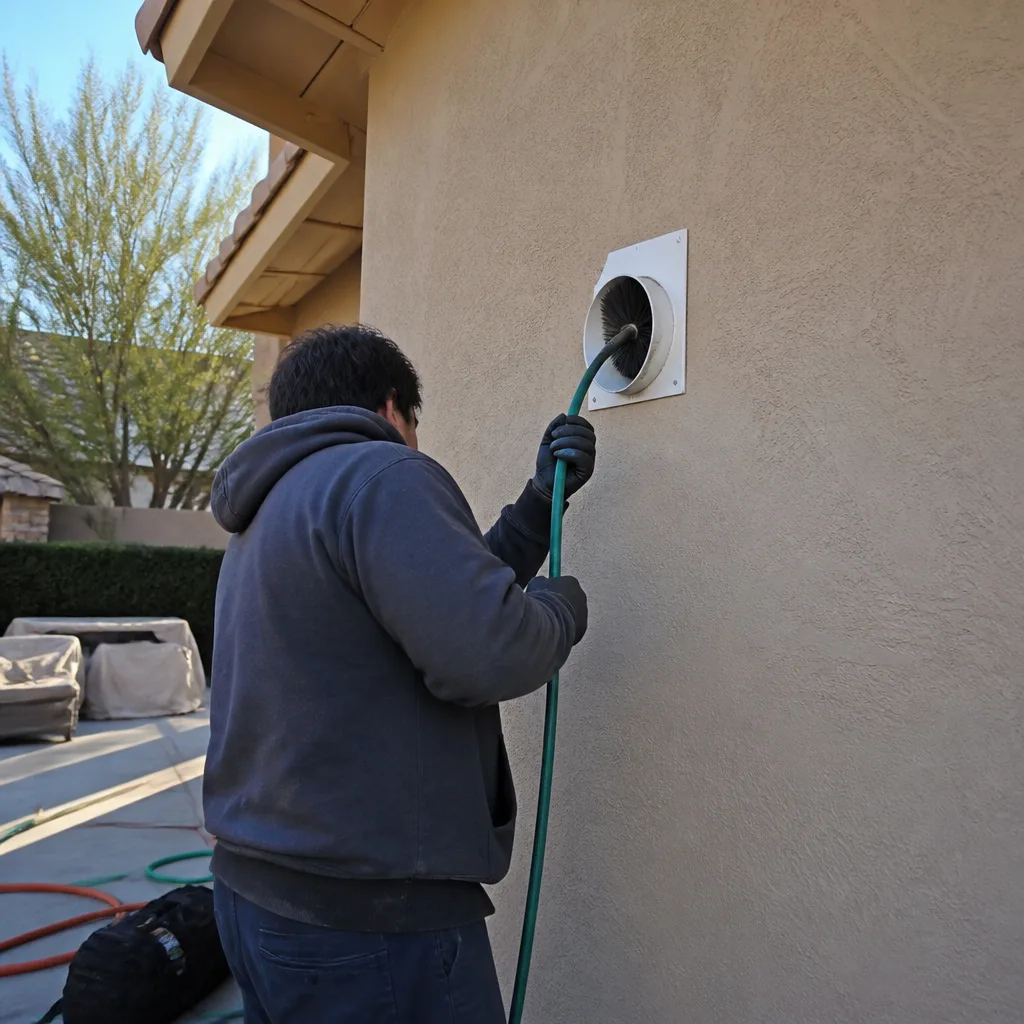
Whole-system duct and dryer vent check with before-and-after photos - you see exactly what came out of your vents
That "$99 whole-house special" is a bait ad - the real number appears once they are in your hallway, or the "clean" is a shop-vac at the register. We photograph the inside of your ducts before and after instead.
DIY vs Professional Air Duct Cleaning: The Palm Desert Homeowner’s Decision Guide
Here’s a number that changes how most Palm Desert homeowners think about duct cleaning: a consumer-grade shop vac generates roughly 1 to 2 inches of water column in static pressure. A professional duct cleaning vacuum operates at 8 to 10 inches or more. That gap is not incremental. It is the difference between actually removing debris from your duct system and simply stirring it up so it resettles throughout your house. This guide explains what that gap means in practical terms, what you can safely handle yourself, and when the physics of airflow make professional equipment the only honest option. For more guides & resources, see our more guides & resources.
Styles & brands we work with
- Whole-home duct cleaning
- Dryer vent cleaning
- Camera inspection
- Sanitizing & deodorizing
Quick Answer
DIY duct cleaning in Palm Desert is realistic only for surface-level maintenance: register cleaning, filter replacement, and visual inspection. Full system cleaning requires negative-pressure equipment that no consumer tool produces, so professional source-removal cleaning is the only method that actually removes contaminants rather than redistributing them. For most homes, a hybrid approach works best: DIY maintenance between our Air Duct Cleaning services every 3 to 5 years.
Table of Contents
- The Physics Problem: Why Negative Pressure Is Non-Negotiable
- What DIY Can Legitimately Accomplish
- Palm Desert-Specific Risks of DIY Duct Work
- When Professional Cleaning Is Non-Negotiable
- The Honest Cost-Benefit Framework
- Why Equipment Matters: What Actually Gets Used on Professional Jobs
- Stretching Time Between Professional Visits: A Maintenance Protocol
- Common Mistakes to Avoid
- When to Call a Professional
- Frequently Asked Questions
- The Bottom Line
The Physics Problem: Why Negative Pressure Is Non-Negotiable
Duct cleaning is not scrubbing. It is extraction. The entire method depends on one principle: creating lower air pressure inside the duct system than exists in the surrounding space, so that dislodged particles are pulled toward the vacuum rather than pushed away from it. This is called negative pressure, and it is the mechanism behind every legitimate professional cleaning method, including source-removal cleaning.
Here is what happens when a homeowner pushes a shop vac hose into a duct register. The vacuum creates suction at the hose end, but the duct system is not sealed. Air enters from every other register, grille, and seam in the system. The result is that the vacuum only influences the few inches immediately around the hose opening. Everything beyond that radius is untouched. Meanwhile, the brush or agitation tool you are using knocks dust loose from duct walls. That dust, now airborne, follows the path of least resistance. With no negative pressure field containing it, much of it drifts back into your living space or settles further down the duct run where you cannot reach it.
Professional systems solve this by sealing the system and connecting a high-powered vacuum unit that draws air through the entire duct network. The negative pressure field spans the whole system, so anything dislodged during agitation is pulled toward the collection point. This is why equipment rated at 8 to 10 inches of water column makes a difference that no amount of homeowner effort with consumer tools can replicate. It is not about trying harder. It is about the physics of air movement. Our Air Duct Cleaning in Palm Desert page explains the full source-removal process we use.
What DIY Can Legitimately Accomplish
None of this means a homeowner is helpless between professional cleanings. There is meaningful maintenance you can do without professional equipment, and doing it consistently reduces how often a full professional cleaning is necessary. Here is what falls squarely in the DIY category:
- Register and grille cleaning. Remove wall, ceiling, and floor registers. Wash them with warm water and mild soap. Let them dry completely before reinstalling. This removes visible dust buildup and improves airflow immediately.
- Accessible boot vacuuming. After removing a register, use a crevice tool on a standard household vacuum to clean the first 6 to 12 inches of the duct boot, the metal or plastic transition piece between the duct and the register. This is accessible, low-risk, and removes the dust you can actually see.
- Filter replacement. Replace HVAC filters every 60 to 90 days, or more often during Palm Desert wind season when particulate load is higher. A clean filter reduces the amount of new dust entering the system. If you are using a high-efficiency filter, check the manufacturer’s rating to ensure it does not restrict airflow beyond what your system was designed for.
- Visual inspection with a phone camera. Remove a register and use your phone’s camera, set to video with the flash on, to film inside the duct run. You will not see the full interior, but you can spot obvious problems: standing dust accumulation, visible mold growth, pest droppings, or disconnected duct sections. This documentation is also useful when requesting a professional assessment.
- Supply and return register mapping. Walk your home and verify that every supply register is open and unblocked by furniture, rugs, or drapes, and that return registers have adequate clearance. Restricted airflow increases dust deposition inside ducts and forces your HVAC system to work harder.
These five tasks, done consistently, extend the interval between professional cleanings. What they cannot do is replace a professional cleaning once meaningful accumulation has already occurred deeper in the system. That is the line DIY cannot cross, and it is worth being honest about it.
Palm Desert-Specific Risks of DIY Duct Work
Palm Desert homes present a specific challenge that generic DIY duct cleaning guides ignore: most residential duct systems here run through attics. Attic temperatures in July and August routinely exceed 130 degrees Fahrenheit. That fact changes the risk calculation for any homeowner considering more invasive DIY work, like disconnecting flex duct sections to vacuum inside them.
Flex duct, the insulated, wire-reinforced tubing used in most Coachella Valley homes, connects to rigid metal duct boots and plenums with plastic zip ties and mastic sealant. In a 130-degree attic, these connections become brittle and fragile. A homeowner who disconnects a flex duct run to clean inside it, then reattaches it imperfectly, has created an air leak. That leak now pulls 130-degree attic air into the conditioned air stream, raising cooling costs and introducing fiberglass insulation particles into the air your family breathes. The repair for that leak typically costs more than the professional cleaning would have in the first place.
There is also the physical risk. Attic work in Palm Desert summer conditions is genuinely dangerous. Heat exhaustion can set in within 15 to 20 minutes of active work at 130 degrees. Professional duct cleaners doing attic work in these months manage hydration, work intervals, and cooling protocols specific to the environment. The homeowner who climbs up on a Saturday afternoon with a shop vac does not have those protocols in place.
If your home has attic-run ductwork, our Air Duct Repair in Palm Desert service covers leak diagnosis and sealing for exactly this scenario. We have seen enough Palm Desert attics to know what compromised flex duct connections look like, and what they cost to fix properly.
When Professional Cleaning Is Non-Negotiable
There are circumstances where DIY maintenance is not a question of preference. Professional cleaning is the only responsible choice. These are the conditions that trigger that recommendation:
- Post-renovation dust. Drywall dust, sawdust, and construction debris are fine enough to remain suspended in duct systems for months. They also destroy HVAC components over time. After any renovation in Palm Desert, including flooring replacement, drywall work, or cabinet installation, a professional cleaning is warranted.
- Post-pest intrusion. If rodents, birds, or insects have been in your duct system, their droppings, nesting materials, and carcasses are inside your air stream. This is not a maintenance issue. It is a contamination issue. Professional source-removal cleaning with proper containment is required. Our Duct Cleaning Palm Desert home page describes how we approach contamination scenarios.
- Visible mold growth. If you see mold on register interiors, duct boots, or inside accessible duct runs, do not attempt DIY remediation. Disturbing mold without proper containment spreads spores throughout the home. Professional assessment is required to determine whether cleaning is sufficient or whether duct replacement is necessary.
- Systems not cleaned in 5+ years. If you cannot remember the last time your ducts were cleaned, or you have lived in the home more than five years without professional duct service, the accumulation level is beyond DIY reach. The buildup requires professional agitation and extraction equipment.
- Unexplained respiratory symptoms that improve away from home. If household members experience congestion, coughing, or allergy symptoms that consistently improve when they leave the house, your duct system may be circulating irritants. Professional assessment is the next step.
None of these scenarios respond to register vacuuming or filter changes. The problem is systemic, and systemic problems require whole-system solutions.
The Honest Cost-Benefit Framework
Let’s talk about money directly. A professional air duct cleaning in Palm Desert typically costs between $350 and $800 for a standard single-family home, depending on system size, number of registers, accessibility, and the level of contamination present. A DIY attempt costs whatever you already spend on a shop vac and attachments, plus your time, which in a 130-degree attic has its own cost equation.
The honest question is not whether professional cleaning is worth it. The question is what you are actually buying. Here is the framework we recommend:
- What DIY saves you: The cost of a professional visit. That is it. It does not clean your ducts. It maintains the visible surfaces and prevents some new dust from entering the system.
- What professional cleaning provides: Actual removal of accumulated debris from the entire duct network, verification that the system is intact and leak-free, and documentation of the condition of your ducts at the time of service. For homes with post-renovation dust, pest contamination, or years of accumulation, this is not a luxury. It is the only option that addresses the problem.
- The hybrid model that works for most Palm Desert homes: Commit to the DIY maintenance tasks listed above on a consistent schedule. Replace filters every 60 to 90 days. Clean registers quarterly. Vacuum accessible boots whenever you replace filters. Then budget for professional source-removal cleaning every 3 to 5 years, or immediately after renovation, pest issues, or mold discovery.
This approach extends the interval between professional visits, protects your HVAC system from premature wear, and ensures that when you do pay for professional cleaning, you are getting actual source removal rather than paying a premium for work your maintenance already handled.
Why Equipment Matters: What Actually Gets Used on Professional Jobs
Not all professional duct cleaning services use the same equipment, and the difference matters. We bring commercial-grade equipment to residential jobs because airflow problems deserve real solutions. Here is what that means in practice:
- Rotobrush systems combine mechanical agitation with simultaneous vacuum extraction. The rotating brush dislodges debris that has adhered to duct walls, while the integrated vacuum immediately captures it. This is the difference between scrubbing and extracting. Without the vacuum component, a brush alone simply redistributes.
- Nikro HEPA-rated vacuum systems filter exhausted air to a standard that prevents cleaned debris from re-entering your living space. This matters especially in Palm Desert, where outdoor particulate levels during wind events are already high. The last thing a cleaning should do is add indoor particulate load.
- Abatement Technologies negative-air equipment creates proper containment during cleaning. This is the same approach used in commercial remediation work. When we connect a negative-air machine to a home’s duct system, the system operates under continuous negative pressure throughout the cleaning process, ensuring contaminants flow toward collection rather than escaping into the home.
We do not list these brands to impress. We list them because the equipment itself is the service. A cleaning performed with a portable consumer-grade vacuum and a brush attachment, even by a well-intentioned technician, does not accomplish source removal. The tool defines the outcome. When you are comparing quotes in Palm Desert, ask what equipment will be used. If the answer is vague, that is your answer.
Beyond cleaning, we work with Honeywell and Aprilaire products for filtration and IAQ upgrades. That means a single visit can address cleaning and leave your system with better filtration than it had before. Our Dryer Vent Cleaning in Palm Desert service addresses the second major failure point in home air systems, and it is worth remembering that a clogged dryer vent is one of the leading causes of residential house fires in the United States.
Stretching Time Between Professional Visits: A Maintenance Protocol
Here is a simple, repeatable protocol for Palm Desert homeowners who want to keep their ducts in defensible condition between professional cleanings. This assumes you are starting from a professionally cleaned system:
- Monthly: Walk the house and verify that no supply or return registers are blocked by furniture, rugs, or stored items. Check that all registers are open. A closed register does not save energy; it restricts airflow and increases duct pressure.
- Every 60 to 90 days: Replace HVAC filters. During Palm Desert wind season, which runs roughly from March through June, check filters monthly and replace them as soon as they show visible discoloration. Filter loading accelerates dramatically when wind events add fine particulate to the air.
- Quarterly: Remove and wash all supply and return registers. Vacuum the accessible boot area behind each register with a crevice tool. Wipe down register openings with a damp cloth.
- Semi-annually: Use your phone camera to perform a visual inspection inside accessible duct runs at multiple points in the house. Look for dust accumulation beyond a light film, visible mold, pest evidence, or disconnected sections. Document what you find.
- Annually: Schedule a professional dryer vent cleaning. This is separate from duct cleaning and addresses a fire-safety issue. In Palm Desert, where dryers run frequently year-round and lint production is consistent, annual service is the responsible interval.
- Every 3 to 5 years: Schedule professional air duct cleaning. The interval depends on household factors: pets, occupancy level, recent renovation, indoor smoking, and whether windows are regularly left open during wind events.
This protocol is realistic. It does not require special tools, significant expense, or dangerous attic work. What it requires is consistency. A Palm Desert homeowner who follows it will see less dust accumulation on surfaces, stable HVAC performance, and cleaner air between professional visits.
Common Mistakes to Avoid
- Using a shop vac as a duct cleaner. A shop vac is a collection device, not a duct cleaning system. It does not generate the negative pressure required for whole-system extraction, and using it to agitate duct interiors without containment sends dust back into your living space.
- Disconnecting flex duct in a Palm Desert attic without knowing how to reseal it. A homeowner who creates an air leak in a 130-degree attic has traded a cosmetic issue for an energy efficiency and air quality problem. Duct repair after a failed DIY attempt typically costs more than the original cleaning would have.
- Believing low-price coupons represent the actual cost. The duct cleaning industry has a documented problem with bait-and-switch pricing. A $99 whole-house cleaning is not economically possible with professional equipment and trained technicians. The real cost is revealed once the technician is in the home. Ask for a flat price per system before work begins, and be suspicious of anyone who will not provide one.
- Ignoring the dryer vent while focusing on ducts. Lint-clogged dryer vents are a documented fire hazard and a completely separate system from your HVAC ducts. A home with clean ducts and a packed dryer vent has not solved its air safety problem.
- Using heavy fragrance or masking agents after cleaning. Spraying air fresheners or deodorizers into registers does not address contamination; it adds chemical compounds to your air stream. If you smell something persistent in your ducts, that is a signal to investigate, not mask.
- Replacing filters with the highest MERV rating available without checking system compatibility. High-MERV filters restrict airflow on systems not designed for them, which increases duct deposition and strains the blower motor. Match the filter to the system, not to the marketing.
- Assuming a home built recently has clean ducts. Construction debris, drywall dust, paint overspray, and drywall compound particles are routinely found in ducts of newly constructed Palm Desert homes. New does not mean clean.
When to Call a Professional
Call a professional when the problem is beyond surface-level maintenance: post-renovation accumulation, pest contamination, visible mold, or a system that has not been cleaned in five or more years. Read our How to Hire an Air Duct Cleaning Contractor in Palm Desert: A Step-by-Step Guide before you call. These are whole-system problems that require whole-system equipment. Duct Cleaning Palm Desert offers free estimates for Palm Desert homeowners. We will assess your system, show you what is inside your ducts, and provide a flat price per system before any work begins. Call (833) 589-9812 to schedule an assessment. You will know exactly what your ducts need, and exactly what it costs, before you commit to anything.
Frequently Asked Questions
Professional air duct cleaning in Palm Desert typically ranges from $350 to $800 for a standard single-family home, depending on system size, contamination level, and accessibility. Homes with post-renovation dust, pest contamination, or multiple systems will land at the higher end. Any quote significantly below this range should be treated with skepticism, as it likely involves per-vent upselling once the technician arrives. Call (833) 589-9812 for an exact quote. Estimates are free, and we provide a flat price per system before any work starts.
No. A shop vac does not generate the negative pressure required for whole-system extraction. You can use it to clean accessible register boots, but attempting to clean the full duct system with consumer equipment will dislodge dust without capturing it, leaving the debris to resettle in your living space or deeper in the ducts.
Every 3 to 5 years for most homes, with more frequent service recommended after renovations, pest intrusions, or if household members have significant allergies. Palm Desert’s wind season accelerates filter loading and introduces fine particulate, but with consistent DIY maintenance between professional visits, most homes can stay within the 3-to-5-year window. See our Seasonal Air Duct Cleaning Care for Palm Desert: Year-Round Homeowner’s Guide for seasonal tips.
Because the cheaper quote is often not the real price. Low-ball offers get a technician into the home, where the price escalates based on per-vent fees, mold treatments you did not request, and services you did not need. Legitimate professional duct cleaning with proper equipment has a real cost floor. Ask for a flat price per system before work begins, and walk away from anyone who will not provide one.
Ask for before-and-after photos of your own ducts, taken from inside the system during the service. A legitimate professional service should be able to document the condition of your ducts before cleaning and show the same locations after. If a company cannot or will not provide this documentation, you have no way to verify the work. We provide this documentation on every job.
It can, if the allergy trigger is particulates accumulating in your duct system: dust, pet dander, pollen that entered during open-window periods, or construction debris. Professional source-removal cleaning removes that reservoir of irritants from your air stream. It is not a cure for allergies, and if your ducts were cleaned recently but symptoms persist, the issue may be filtration quality. That is why we also work with Honeywell and Aprilaire products, so a single visit can address cleaning and upgrade filtration if needed. Call (833) 589-9812 to discuss what is happening in your home.
The Bottom Line
The DIY versus professional duct cleaning question is not about effort or ambition. It is about equipment physics. No consumer tool generates the negative pressure required to extract debris from a whole-home duct system, so DIY duct cleaning is really DIY duct maintenance: registers, filters, accessible boots, and visual inspections. That maintenance is valuable, and it extends the interval between professional visits. But when the system itself needs cleaning, the only honest option is professional source-removal equipment, proper containment, and a technician who can document the before and after. In Palm Desert, where attic-run duct systems complicate the risk equation, the cost of a failed DIY attempt often exceeds the cost of doing it right the first time.
Written by the team at Duct Cleaning Palm Desert, serving Palm Desert since 2018.
See the difference
 Before
 After
 Before
 After
 Before
 After