
Last updated November 2, 2026
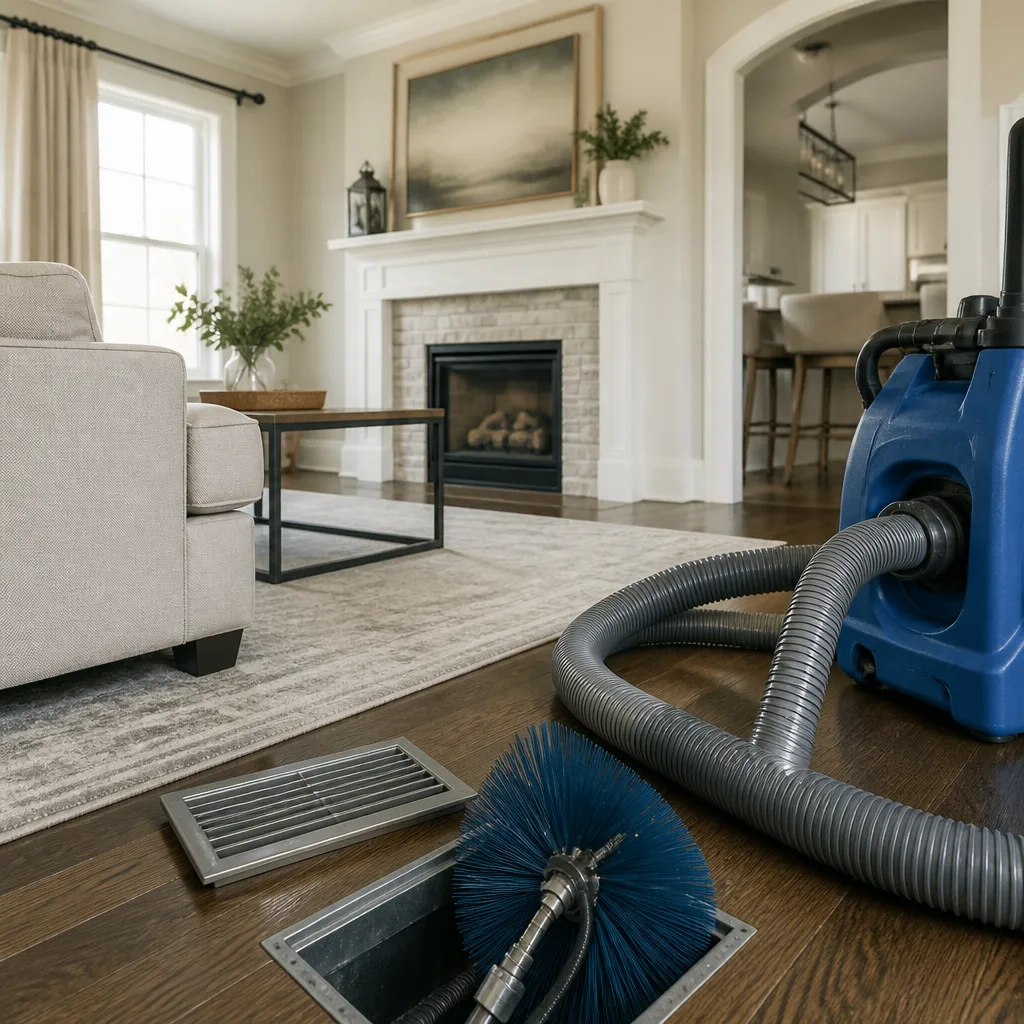 Whole-home duct cleaning
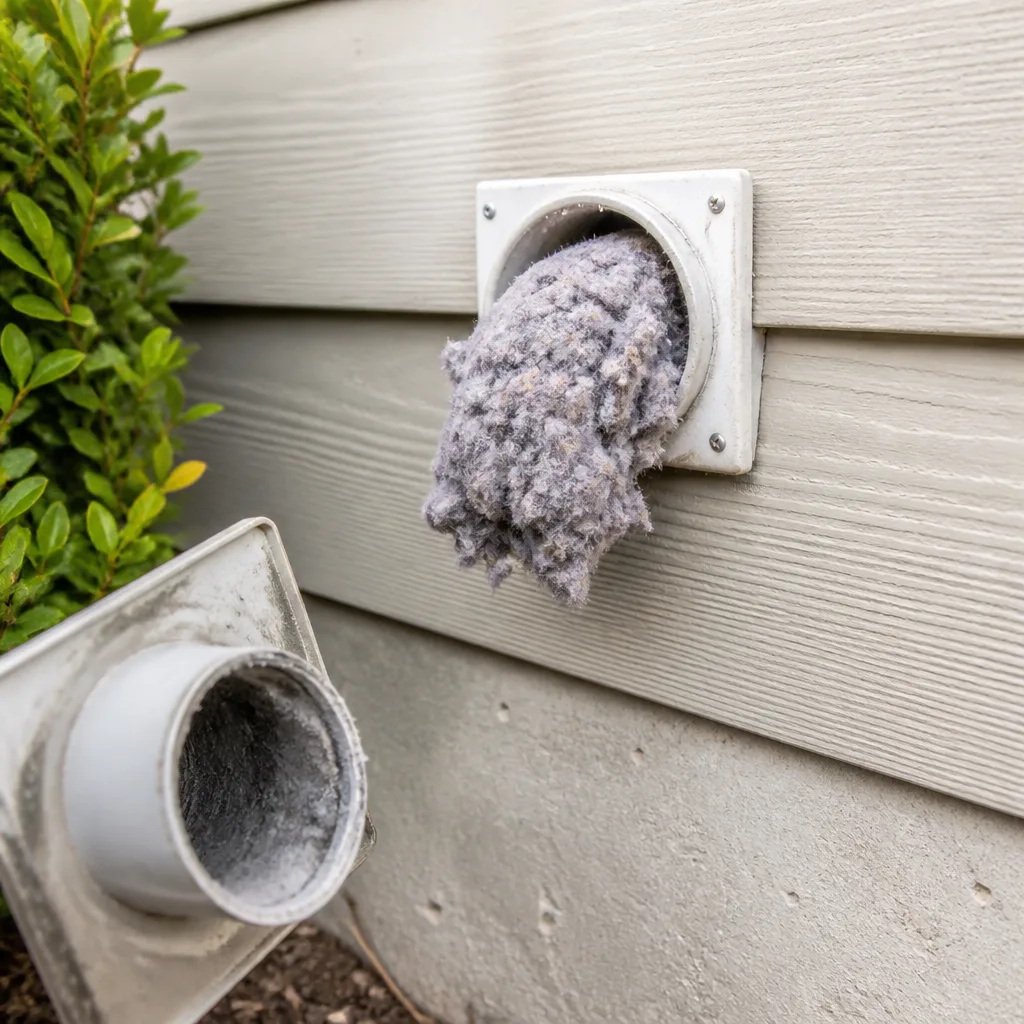 Dryer vent cleaning
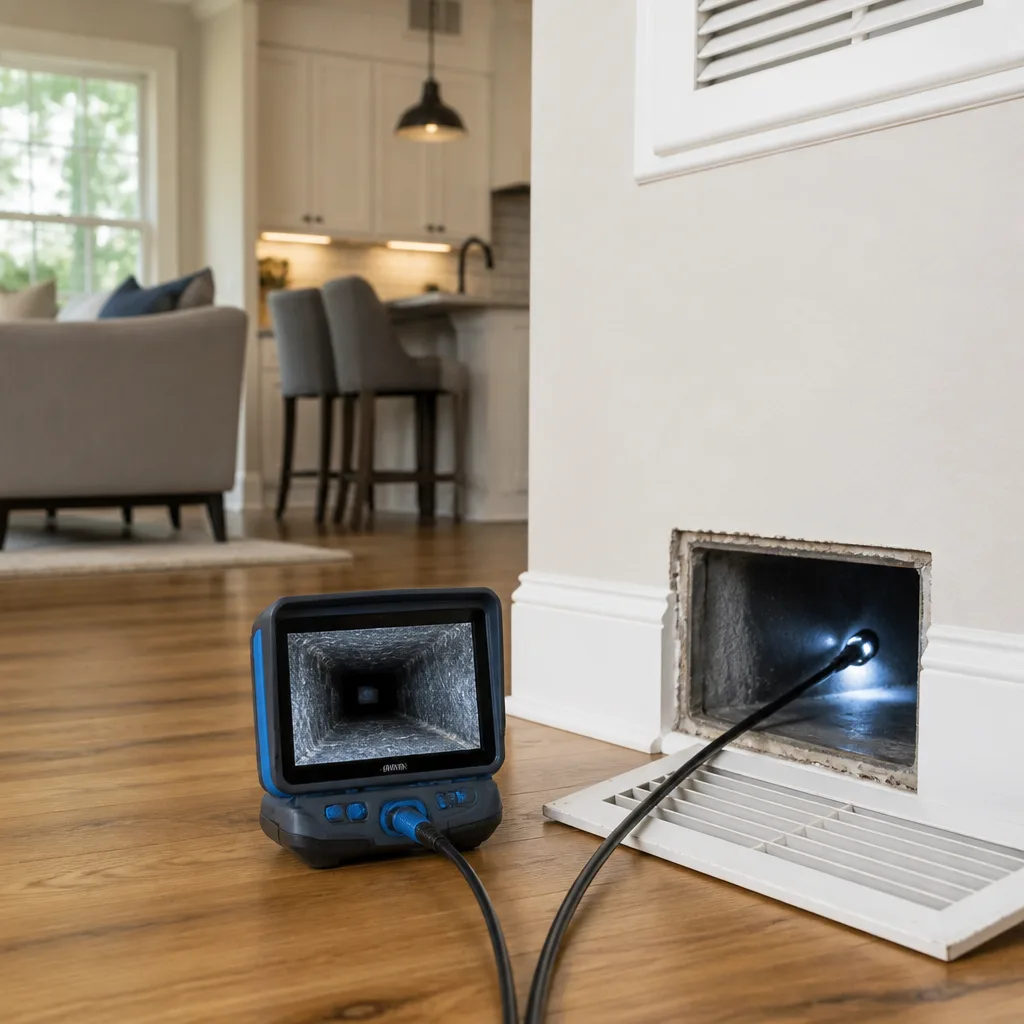 Camera inspection
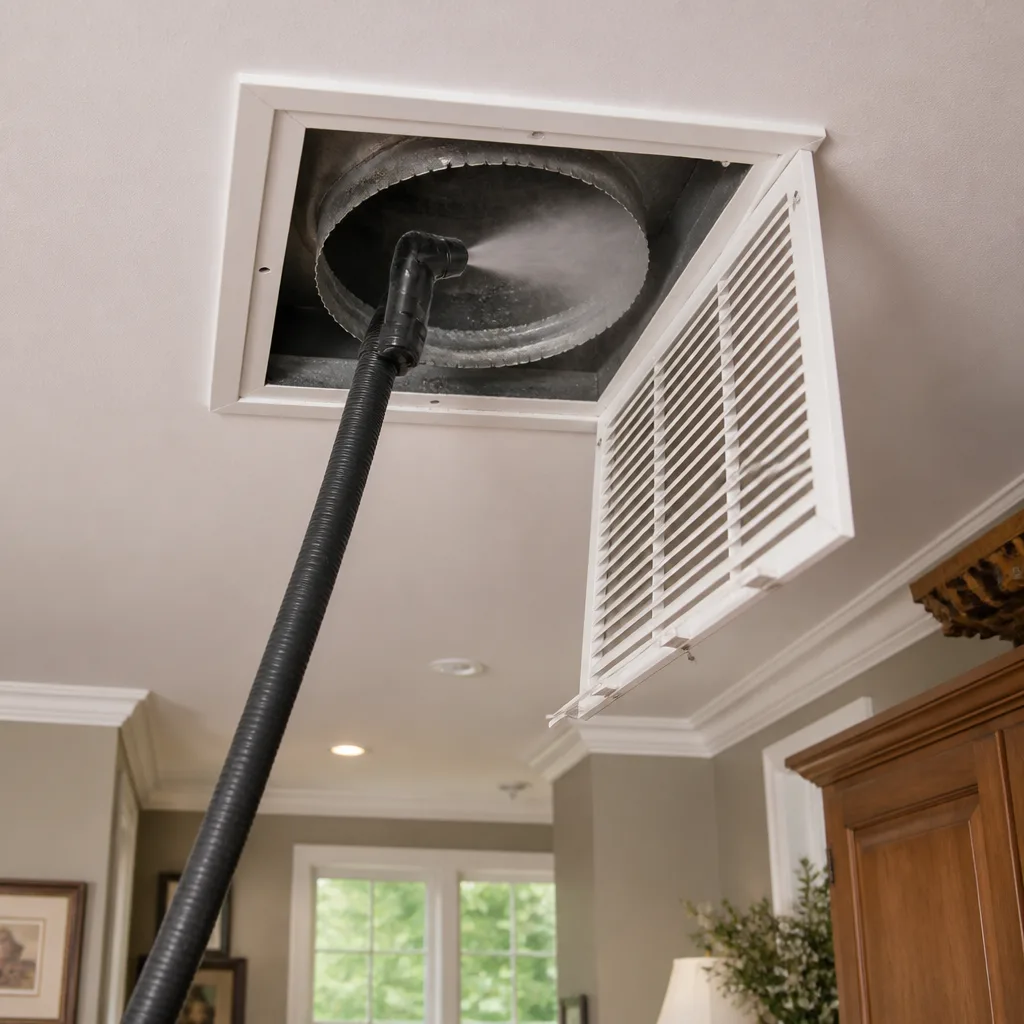 Sanitizing & deodorizing
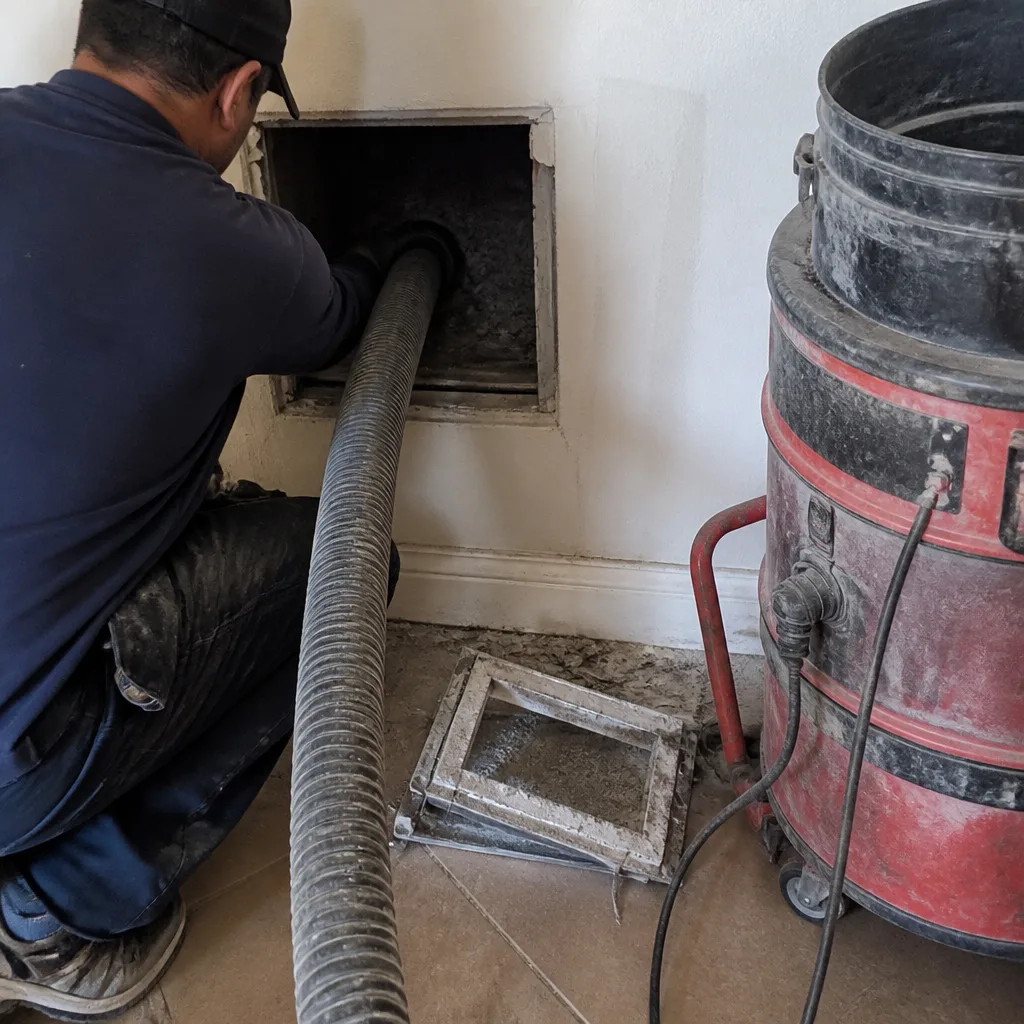
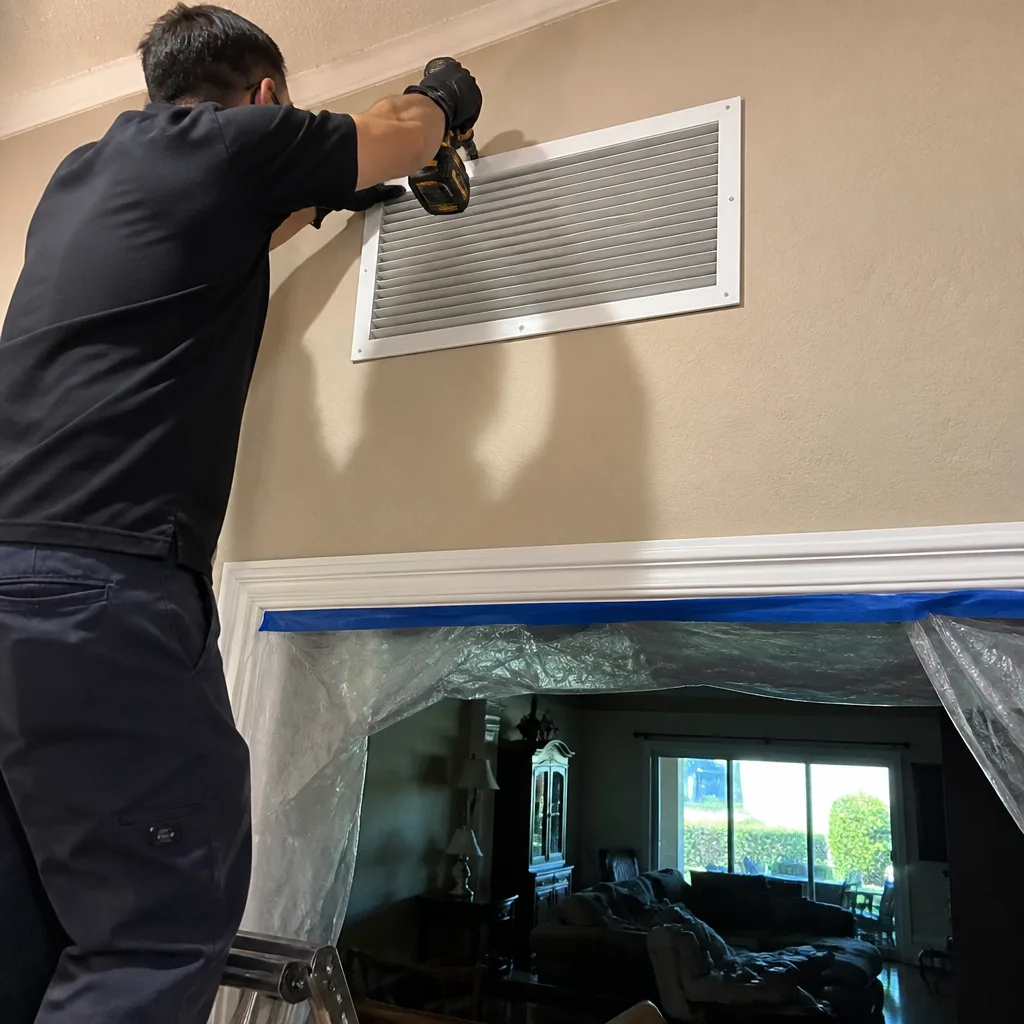
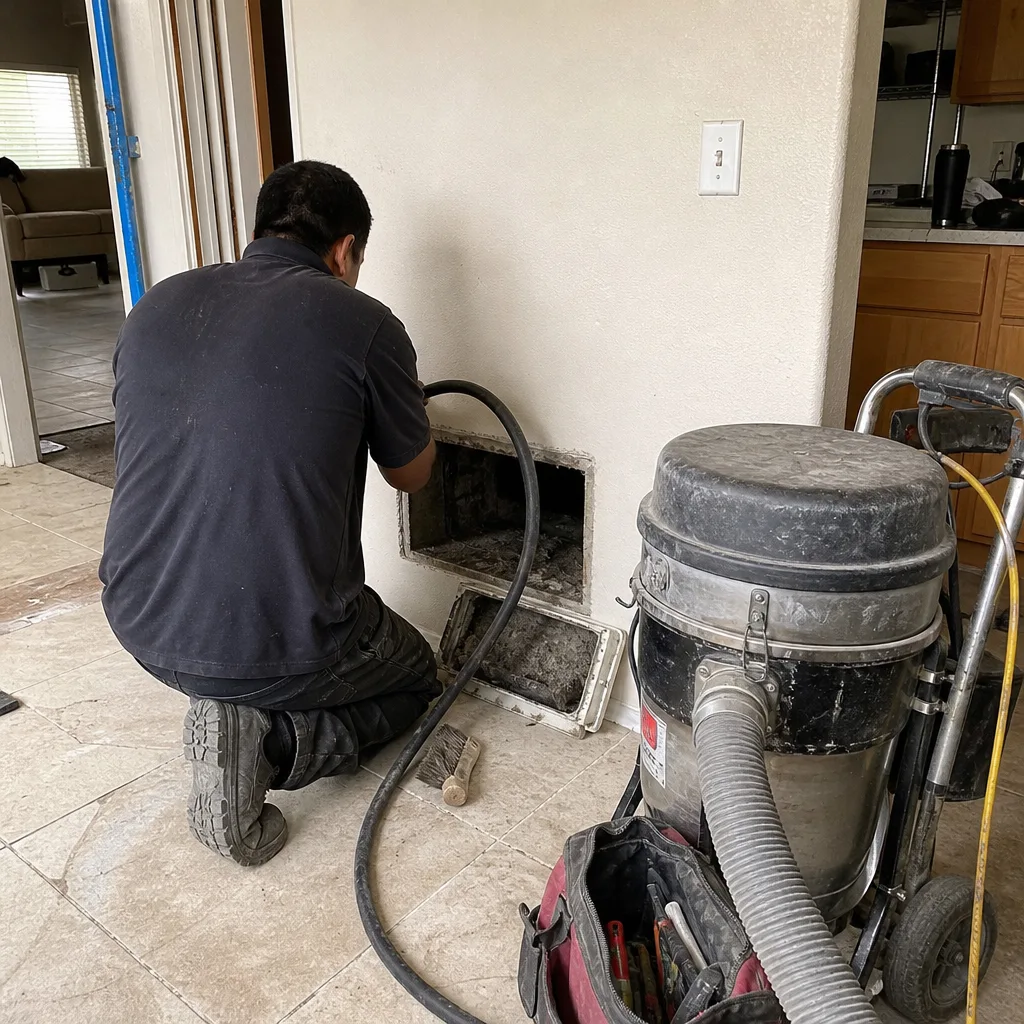
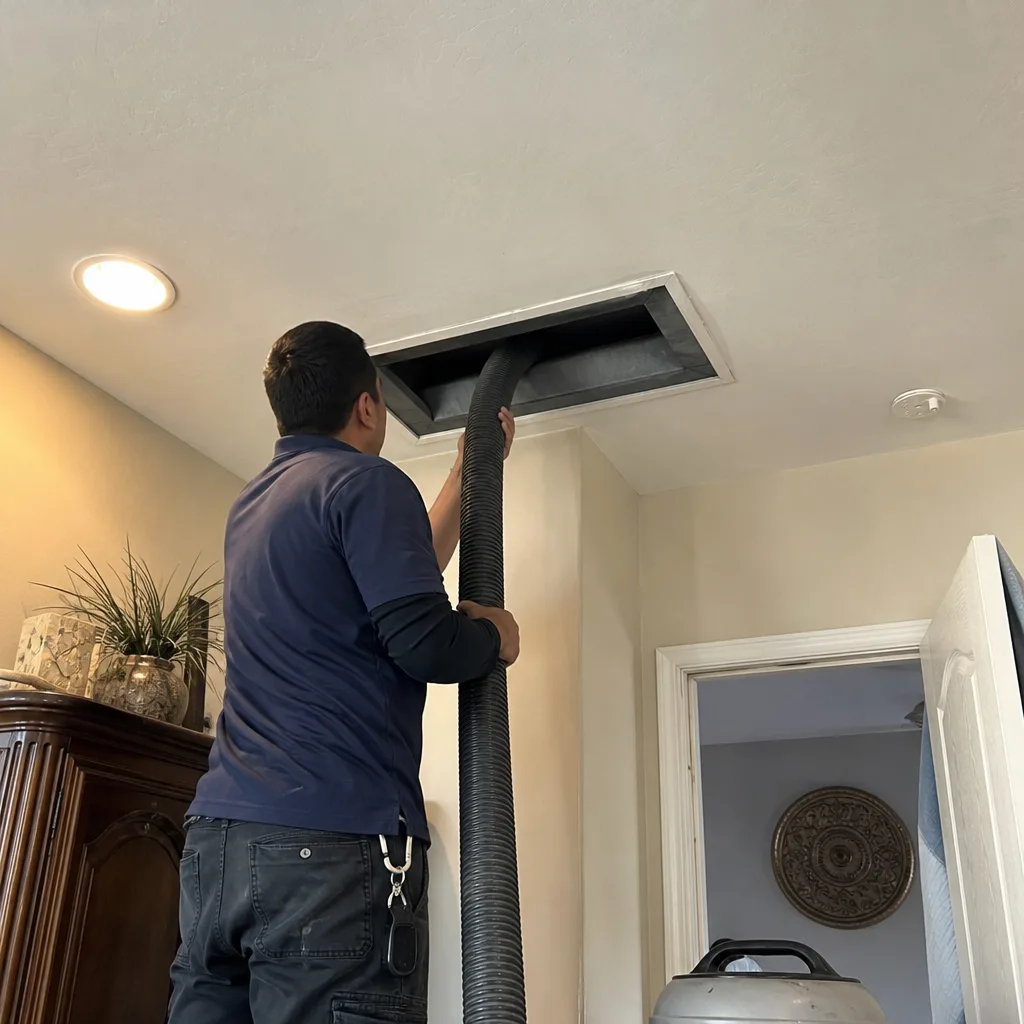
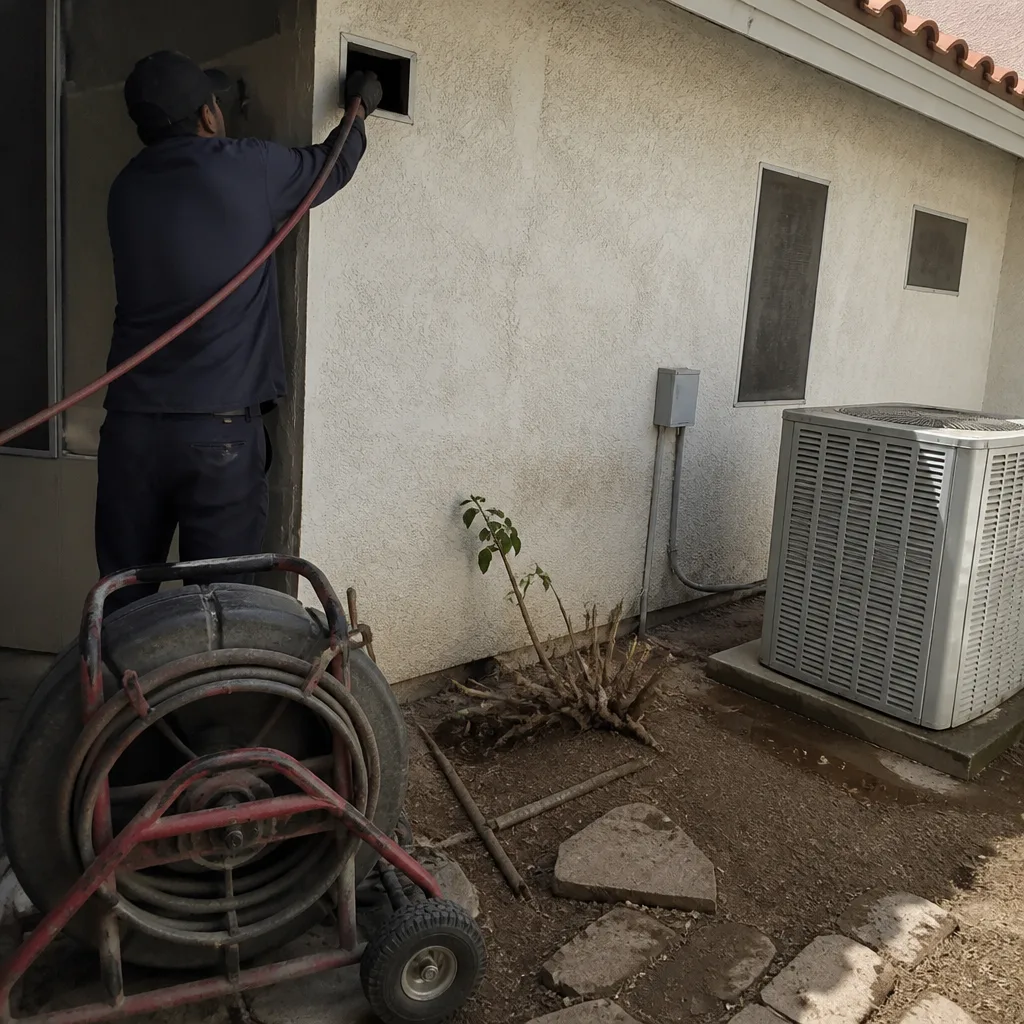
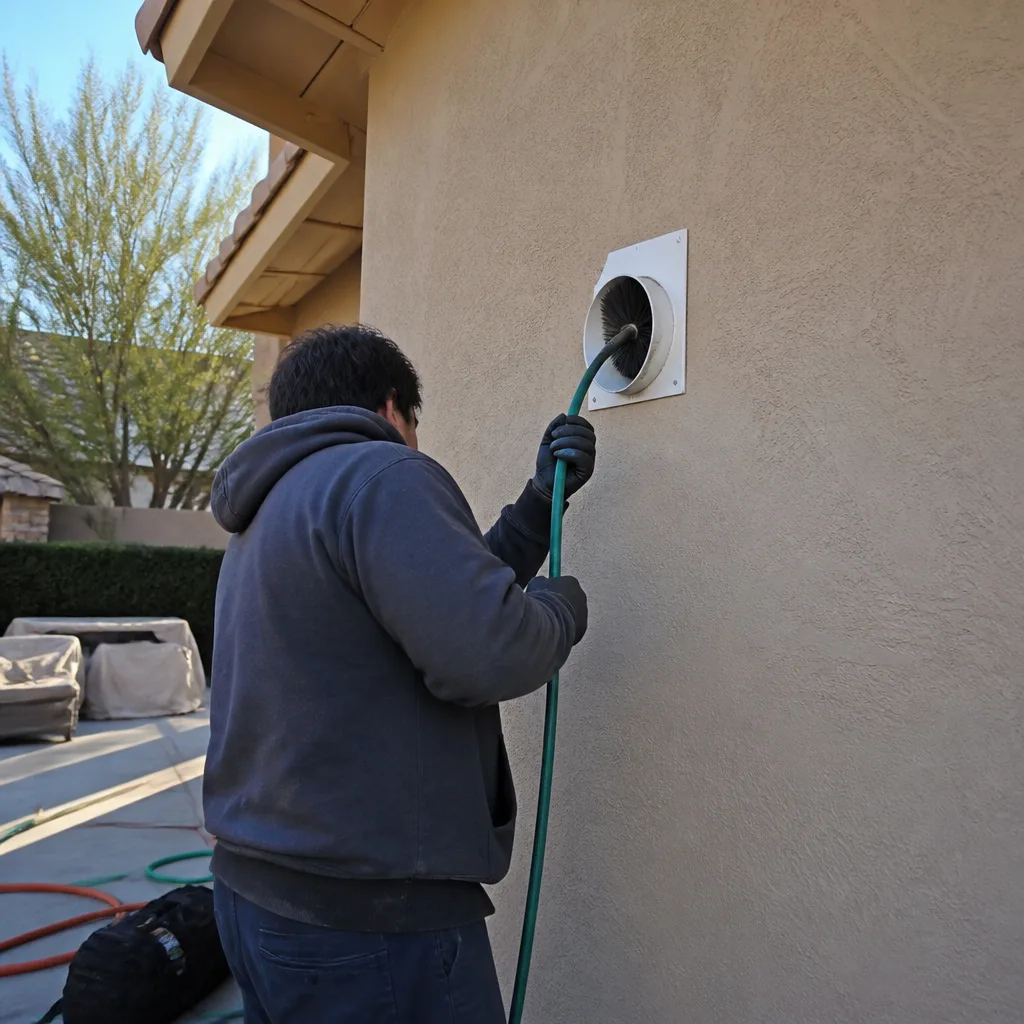
Whole-system duct and dryer vent check with before-and-after photos - you see exactly what came out of your vents
That "$99 whole-house special" is a bait ad - the real number appears once they are in your hallway, or the "clean" is a shop-vac at the register. We photograph the inside of your ducts before and after instead.
Air Duct Cleaning Emergency Preparedness Guide for Palm Desert Homes
Dust storms in the Coachella Valley don’t just leave a film on your patio furniture. Fine particulate from a haboob can enter a home’s duct system through return vents, small gaps in the plenum, or a poorly sealed filter slot – and once it’s inside, it stays there. Running the HVAC afterward doesn’t just recirculate the dust; it forces microscopic particles through every register in the house, into upholstery, bedding, and lungs. For Palm Desert homeowners, the question isn’t whether the ducts will eventually need attention after a significant weather event or fire season. The question is what you do in the first 48 hours – and whether that response contains the problem or compounds it. This guide walks through the specific duct-related emergencies Palm Desert homes face, the exact triage steps for each scenario, and when the right call is a professional with equipment built for actual source removal rather than a surface-level fix.
Styles & brands we work with
- Whole-home duct cleaning
- Dryer vent cleaning
- Camera inspection
- Sanitizing & deodorizing
Quick Answer
Air duct cleaning becomes an emergency in Palm Desert when a specific event introduces significant contamination into your ductwork: a haboob, wildfire smoke infiltration, water intrusion, or a system failure during triple-digit heat. In most cases, the correct first move is to shut the HVAC system off at the thermostat, run the fan only if filtration allows, and document what you see before calling a professional who can inspect the full duct path. Waiting often makes the problem worse – fine dust settles into the duct lining, moisture creates mold conditions within 48 to 72 hours, and smoke odors bond to porous surfaces if left untreated.
Table of Contents
- Haboob Response: The First Hour After a Major Dust Event
- Wildfire Smoke Infiltration: Why It Behaves Differently Than Dust
- HVAC Failure in Triple-Digit Heat: Duct Problems That Mimic Mechanical Breakdown
- Water Intrusion: The 48-Hour Mold Window in Palm Desert Ductwork
- The Emergency Documentation Kit: What to Keep Before You Need It
- What a Real Post-Emergency Duct Inspection Should Cover
- When Cleaning Is Enough – and When Duct Repair Has to Come First
- Common Mistakes to Avoid
- When to Call a Professional
- Frequently Asked Questions
- The Bottom Line
Haboob Response: The First Hour After a Major Dust Event
A haboob doesn’t give much warning. The wall of dust rolls east through the San Gorgonio Pass, visibility drops to near zero, and within minutes every exterior surface in Palm Desert carries a fine layer of particulate that works its way into places you wouldn’t expect. Your duct system is one of those places.
The particles suspended in a haboob aren’t the same as household dust. They’re finer – much of it under 10 microns, with a meaningful fraction under 2.5 microns. Particles that small don’t just rest on surfaces. They become airborne again with any disturbance, and they penetrate deep into fibrous materials like duct liner, insulation wraps, and filter media. If a home’s duct system has any leak – and most residential systems do, especially at joints, takeoffs, and the filter housing – negative pressure on the return side can pull that dust into the system while the HVAC is running. And in a Palm Desert summer, the HVAC is always running.
Here is the sequence to follow in the first hour after a significant haboob passes:
- Shut the system off at the thermostat. Switch from COOL to OFF. Do not leave the fan in the ON position, which can still pull dust through the filter slot and into branch lines. If you have a smart thermostat, set a temporary hold so it doesn’t automatically resume cycling.
- Close interior doors to rooms you’re not using. This limits airborne dust movement and gives you a cleaner picture of which areas are affected when you inspect registers.
- Check the filter slot immediately. Pull the filter and look at the framing around it. In our experience in Palm Desert, a high percentage of filter slots are oversized, warped, or poorly sealed – which means a portion of return air bypasses the filter entirely. If you see dust trails on the clean side of the filter frame, that’s a leak path, not a filter failure.
- Wipe the register faces and surrounding ceiling or wall areas with a damp microfiber cloth. Do this before you run the system again. This prevents surface dust from being drawn into the ducts when airflow resumes.
- Document with photos. Photograph the filter, the filter slot, visible interior duct surfaces at each register, and the return grille. If you end up filing an insurance claim or explaining the situation to a contractor, these photos establish a timeline.
- Let the system rest for at least 1 to 2 hours. This allows the heaviest suspended particulate to settle in open spaces. Then vacuum and dust the living space before resuming any HVAC operation.
If you see fine dust inside the supply registers themselves – not on the grille face, but behind it, in the duct opening – that’s a signal the system has already taken in dust. A visual inspection can only tell you so much. The interior of a duct system includes long horizontal runs, bends, and plenum surfaces you can’t see with a flashlight from the register. That’s when a professional inspection makes sense, ideally with video inspection equipment that can show you the actual condition of the duct interior.
For regular seasonal upkeep before dust events arrive, Air Duct Cleaning in Palm Desert matters more here than in coastal climates. The Coachella Valley’s dust load is a year-round factor, not an occasional one.
Wildfire Smoke Infiltration: Why It Behaves Differently Than Dust
Wildfire smoke is not just dust with a smell. It’s a complex aerosol of combustion byproducts: carbon particles, volatile organic compounds, partially burned plant resins, and fine ash. Those particles behave differently in a duct system than mineral dust from a haboob. Dust is relatively inert – it sits, it irritates, it can be removed with mechanical agitation and proper extraction. Smoke particles are smaller, stickier, and chemically active. They bond to porous surfaces, including fiberglass duct board and flex duct liner. That bond is why a home can smell like smoke for months after a fire, even with the windows open and the HVAC running.
In Palm Desert, wildfires in the San Bernardino Mountains, the San Jacinto area, or points west of the valley send smoke drifting into the low desert with enough frequency that any homeowner should know how to respond. The particles travel on the same wind patterns that drive haboob season, but the remediation path is different.
Here is the triage sequence for smoke infiltration:
- Close all fresh-air intakes. Most homes don’t have a dedicated fresh-air damper, but if you do, close it. Switch the system to recirculation mode if your thermostat supports it.
- Upgrade the filter temporarily. A MERV 11 or MERV 13 filter can capture a meaningful portion of smoke particulate, but only if the filter slot is properly sealed. A high-efficiency filter in a leaky slot does very little. If you use a Honeywell media cabinet, check that the filter is seated squarely and that the access door gasket is intact.
- Run the fan continuously during the smoke event. Unlike a dust event, where the goal is to let particulate settle, smoke demands active filtration. The more air passes through a quality filter, the more particulate is removed from the living space.
- After the event, assess the smell. If the smoke odor fades within 48 to 72 hours with filtration running, your system probably handled the exposure reasonably well. If the smell lingers or returns whenever the blower kicks on, the contamination is in the ducts or on the coil surfaces – not just in the air.
- Do not attempt to mask lingering odors with duct sprays or scented filters. This hides the symptom and can make remediation more difficult by adding a solvent layer that bonds to the same surfaces as the smoke residue.
Here’s the distinction most guides miss: when smoke has genuinely contaminated a duct system, standard cleaning alone may not be enough. The coils, blower wheel, and plenum surfaces all need attention, because smoke residue settles on every surface air touches – not just the inside of the ducts. This is why equipment selection matters. We use Rotobrush source-removal systems because agitating the duct surface and extracting the dislodged material under vacuum is a fundamentally different process than running a brush-and-vacuum combination in a single pass. For smoke contamination, source-removal cleaning is the baseline, not the upgrade. And in homes where smoke exposure is severe, the duct work may need to be paired with a full HVAC component cleaning before the air quality genuinely recovers.
If the smoke season has been rough on your system, our full Duct Cleaning Palm Desert home page covers how we approach serious contamination cases.
HVAC Failure in Triple-Digit Heat: Duct Problems That Mimic Mechanical Breakdown
In July and August, when Palm Desert temperatures sit above 110°F for consecutive weeks, a system failure is a crisis. But before you schedule an HVAC technician, it’s worth understanding that a significant percentage of “mechanical failures” we see in the field are actually duct system problems. The compressor, condenser fan, and refrigerant charge may be perfectly fine. The airflow path – which includes every linear foot of duct between the blower and the supply registers – is not.
Two duct-related issues commonly masquerade as mechanical failure during extreme heat:
- Severe airflow restriction from accumulated debris. Over years, dust, pet hair, and construction debris accumulate in the return side and along the first several feet of supply plenum. When the system runs harder and longer during a heat wave, that restriction reaches a tipping point. The blower is working against excessive static pressure. The symptom appears as weak airflow from every register, a frozen coil, or the system short-cycling. A technician who replaces the blower motor without addressing the restriction hasn’t solved the problem – they’ve treated a symptom.
- Collapsed or disconnected flex duct. Palm Desert attics reach 140°F to 160°F in summer. Flexible duct, especially older installations with thin mylar jackets, can soften, sag, and collapse under those conditions. A collapsed flex run in an attic effectively blocks airflow to an entire zone. The condenser runs, the blower runs, but the rooms served by that run never cool. The homeowner, understandably, assumes the air conditioner is broken.
- Check airflow at every register. Walk the house and feel each supply vent. If every register is weak, the problem is likely on the return side or at the coil. If only some rooms are weak, the problem is likely in the branch lines serving those rooms – often a collapsed or restricted flex run.
- Check the return grille and filter. A filter you changed a month ago may already be loaded if you’ve had dust events or the system has run continuously. Restricted return air is the most common cause of frozen coils in Palm Desert homes during August.
- Look for condensation or staining around registers. Excess moisture on a register or its surrounding ceiling surface in summer often points to a restricted branch line or a disconnected duct. The cold air is pooling rather than flowing.
- Document the temperature differential. Measure the air temperature at the return grille and at the nearest supply register. A well-functioning system in Coachella Valley conditions typically shows a 15°F to 20°F split. Much less than that, and you have either refrigerant or airflow problems. Much more than that, and airflow is restricted badly enough that the coil may be close to freezing.
- Water enters the space around the ducts – whether from a roof leak, an overflowing drain pan, or a failed condensate line.
- The duct insulation wicks the moisture. Fiberglass duct liner and flex duct insulation are absorbent. Once wet, they hold water against the duct surface for extended periods.
- The interior duct environment reaches elevated relative humidity. Even if standing water never enters the duct interior directly, the humid air in the plenum and runs creates surface condensation on cooler duct walls.
- Mold spores – always present in any home – find a viable surface and begin colonizing. The first visible growth may be inside the duct where you can’t see it from the register.
- Shut the HVAC system off at the breaker or the thermostat. Do not run the fan. Moving air through a wet duct system distributes spores and accelerates the spread.
- Identify and stop the water source. If it’s a condensate line, the fix may be as simple as clearing a clog. If it’s a roof leak or a water supply line, shut off the appropriate supply and call the right trade.
- Remove visible standing water. Use a wet/dry vacuum for accessible pooling. The goal is to reduce the moisture load as quickly as possible.
- Run dehumidification in the affected space. A portable dehumidifier in the mechanical closet or near the affected ceiling can make a meaningful difference in the first 48 hours. The goal is to get the relative humidity in the space below 50% and keep it there.
- Inspect what you can see. Look at the exterior of the ducts, the register boots, and the plenum access panel. Discoloration, staining, or a musty odor indicates the moisture has already begun to interact with building or duct materials.
- Photos of your duct system. At minimum: the filter slot with the filter removed, the return grille from the interior side, each supply register opening (looking into the boot), the plenum access panel if you have one, and any visible duct runs in the attic or garage. These photos establish what the system looked like when it was in known-good condition.
- Your filter change log. A short note with the date, filter brand, and MERV rating each time you change it. If you switched from a MERV 8 to a MERV 13 during a smoke episode, a contractor needs to know that. It affects the pressure characteristics of your system.
- The last cleaning or inspection receipt. If you’ve had the ducts cleaned or inspected before, keep the record. A video inspection report is ideal. The next contractor can compare findings against the previous baseline.
- The make, model, and approximate age of your HVAC equipment. This takes two minutes to photograph the data plate on the air handler and the condenser. In an emergency, having this on hand means you’re not climbing into an attic during a stressful situation.
- Notes on any known issues. If a bedroom has always been warmer, if a register whistles, if there’s been a prior water event or renovation, write it down. Contractors spend the first part of any emergency call reconstructing this list from scratch. You already know it.
- The full return path. Return grille, filter slot, return plenum, and the first section of return duct. This is where haboob dust and smoke particulate enter the system first, and where accumulated debris causes airflow restriction.
- The supply plenum and the first several feet of each main trunk line. Debris that makes it past the filter tends to settle where airflow changes direction – at the top of the supply plenum, at the first bend, and at takeoffs for branch lines.
- Representative branch lines. Not every branch run needs a full video pass, but a representative sample – including the longest run and the run serving the room farthest from the air handler – tells you a lot about overall system condition.
- Visible attic sections. If access allows, the visual and physical condition of the flex duct in the attic – sag, kinks, disconnected sections, compression – should be examined. In Palm Desert’s summer attic temperatures, flex duct condition is a meaningful reliability factor.
- The coil and blower housing. If smoke or fine dust has penetrated the system, these components are affected as much as the ducts themselves. An inspection that stops at the duct interior misses the surfaces that most directly affect the air moving through the system.
- The contamination is limited to particulate that entered the system but the duct structure is intact.
- The ducts are properly connected, sealed at the joints, and the insulation is dry.
- The filter slot is properly sized and seals correctly.
- Video inspection confirms no breaks, collapses, or disconnections.
- A branch line is disconnected or collapsed – the area beyond the failure was never part of the air path, and cleaning a disconnected duct is meaningless.
- The ducts have leaked at the joints during a haboob or smoke event, allowing contaminated air to bypass the filter entirely.
- Water exposure has compromised the insulation or the duct material itself – wet fiberglass liner and soaked insulation need replacement, not cleaning.
- The return side has a gap or opening that pulls attic air, garage air, or exterior dust directly into the system.
- Running the HVAC immediately after a haboob without checking the filter slot. A loaded filter or a leaky slot means the system is pulling unfiltered air through the return side. You may be actively loading the ducts with particulate that settles in places you’ll have to pay to clean later.
- Ignoring a smoke smell and hoping the system “filters it out” over time. Smoke residue bonds to duct surfaces. Time doesn’t remove it – it just makes the odor part of the house’s baseline. The longer it sits, the more thorough the remediation has to be.
- Treating a musty odor from the supply registers as a filter issue. A musty smell when the blower runs is almost always moisture-related inside the system or in the duct-connected cavity. Replacing the filter doesn’t address it. The moisture source has to be found.
- Postponing a water intrusion response in a summer month. The 48-to-72-hour mold window doesn’t pause because the leak is small or the water went somewhere you can’t see. In Palm Desert’s summer temperatures, the window is on the tight end of that range.
- Assuming weak airflow in one wing of the house means the AC is broken. Zone-specific airflow loss often points to a collapsed or restricted branch line, not a compressor failure. Triaging this correctly before calling an HVAC contractor can save you a service call fee and a wrong diagnosis.
- Hiring a cleaning company that can’t repair what they find. When an emergency reveals a broken duct, the worst outcome is a cleaning contractor who completes their scope and leaves the actual problem for someone else. You’ve paid, and the air path is still compromised.
Here is a triage sequence you can do before calling an HVAC contractor:
If you suspect a duct issue – weak zone airflow, visible sagging in the attic, or recent renovation work that may have disturbed the ducts – Air Duct Repair in Palm Desert is the right starting point, not a compressor replacement quote.
Water Intrusion: The 48-Hour Mold Window in Palm Desert Ductwork
Palm Desert gets less than five inches of rain in a typical year, but when a monsoon cell or a winter storm moves through, the water arrives fast and often finds the roof penetrations, flashing failures, and AC condensate lines that have been silently waiting to fail. Moisture intrusion into a duct-connected space – a ceiling cavity, an attic floor, a soffit, or a mechanical closet – becomes a mold risk in a specific and predictable timeframe: 48 to 72 hours in warm conditions.
In a Palm Desert summer, the temperatures in a ceiling cavity or attic are already high. Add moisture, and you’ve created an incubator. Several species of mold that colonize building materials and duct interiors grow aggressively at 75°F to 100°F with available moisture. That’s exactly the environment a leaking condensate line or a storm-driven roof leak creates.
The sequence of concern is:
Here is the correct response when you discover any water event affecting duct-connected spaces:
Here’s the part that gets overlooked: the visible surfaces are only a fraction of the system. The horizontal runs in a ceiling cavity, the insulation wrap on flex duct, and the bottom of a plenum can hold moisture for weeks with no visible sign. A professional inspection after a water event should include video inspection of the duct interior and a check of the insulation for retained moisture. If the event was significant, cleaning may need to be paired with duct repair – replacing wet insulation, re-sealing affected joints, or replacing a section of compromised duct.
This is also where the distinction between a cleaning-only contractor and a company that can actually repair what they find becomes critical. A cleaning crew that finds a failed section of duct during a water damage response has to stop and refer you to someone else. We carry Dryer Vent Cleaning in Palm Desert and Air Duct Repair in Palm Desert as part of the same service operation precisely so that a discovery during cleaning doesn’t end with a partial fix and a string of phone calls.
The Emergency Documentation Kit: What to Keep Before You Need It
The most useful thing you can do for your duct system is boring, cheap, and takes fifteen minutes. Build a documentation baseline now, before anything goes wrong, so that any professional you call during an emergency has context instead of guesswork.
Here is what belongs in that baseline:
This documentation kit costs you nothing and lives in a folder on your phone or in a drawer near the thermostat. When an emergency does hit – and in the Coachella Valley, the probability isn’t theoretical – the difference between a contractor working from your baseline and one working from nothing is the difference between a focused response and a lengthy, expensive discovery process. If a haboob has just forced dust through a compromised return, having a photo of that return from six months earlier tells us immediately what changed.
What a Real Post-Emergency Duct Inspection Should Cover
Not all duct inspections are equal. A visual check from the register opening – which is what many “free inspections” amount to – tells you very little about the condition of the system. The register opening represents the last few inches of a run that may extend 30 or 40 feet through a ceiling cavity or attic. The bottlenecks, the contamination, and the damage are almost always elsewhere.
A proper post-emergency inspection should cover:
Equipment matters here. We run Nikro HEPA-equipped inspection and extraction systems because the inspection phase and the remediation phase need to be connected. You can’t make good remediation decisions from a blurry video frame or a glance through a register.
If you’re considering an Aprilaire filtration upgrade as part of your emergency response – which we recommend for homeowners who’ve been through a significant contamination event – the same visit can address cleaning, filtration, and any necessary repairs. The three services work together, and splitting them across three contractors creates gaps in responsibility.
When Cleaning Is Enough – and When Duct Repair Has to Come First
After an emergency, the intuitive response is to clean. But if the duct system has physical damage – a disconnected section, a collapsed flex run, a leak at a plenum joint, wet insulation, or a compromised seal – cleaning before repairing is the wrong order. It leaves the system open for recontamination the moment the HVAC resumes operation.
Here is the decision framework we use when evaluating a post-emergency duct system in Palm Desert:
Clean first, repair if needed when:
Repair first, clean after when:
This decision tree is why the company’s structure matters. A cleaning-only contractor who encounters a disconnected branch line has one option: clean past the failure and pretend it doesn’t exist, or stop and refer the repair elsewhere. The homeowner, already dealing with an emergency, now has to coordinate two contractors and two scopes of work. We built our service line – Air Duct Cleaning in Palm Desert, Air Duct Repair in Palm Desert, and Dryer Vent Cleaning in Palm Desert – so that a discovery during one phase of work doesn’t end the visit. The same crew, the same equipment, the same standard.
In a haboob response, for example, the cleaning may reveal that the return plenum has been leaking attic air for years – which is exactly why the dust got in. Cleaning alone would leave the leak in place, and the next dust event re-contaminates the system the same way. Sealing that leak is a repair, and it has to happen before or during the cleaning, not as an afterthought.
Common Mistakes to Avoid
When to Call a Professional
Some situations genuinely require professional equipment and training. You should call when you see visible dust accumulation on the interior surfaces of ducting, when a smoke odor persists longer than two days after a wildfire event, when water has entered a duct-connected space and you can’t access the affected area to dry it, when zone-specific airflow problems suggest a collapsed or disconnected run, or when a musty odor emanates from the registers whenever the blower runs.
Duct Cleaning Palm Desert offers free estimates in Palm Desert – call (833) 589-9812 to schedule an inspection. We bring Rotobrush and Nikro equipment to every residential job, and we inspect before we quote. If the ducts need repair rather than cleaning, you’ll know that before any work is scheduled.
Frequently Asked Questions
Emergency air duct cleaning in Palm Desert typically runs between $450 and $850 for a standard single-system home depending on the size of the system, the number of runs, and the severity of contamination. Homes with multiple systems or significant smoke exposure fall higher. The best way to get an exact number is to call for an in-person estimate – we quote one flat price before work starts. Call (833) 589-9812 for a free estimate.
Wait at least 1 to 2 hours after a significant dust event in Palm Desert, and only resume operation after checking and replacing the filter if needed, wiping down the register faces, and confirming that the filter slot is sealed. If you see dust inside the supply registers themselves, have the system inspected before running it continuously.
Wildfire smoke can bond to porous duct surfaces and leave a persistent odor that doesn’t dissipate on its own. In severe exposure cases, the interior duct surfaces, coil, and blower housing all need to be cleaned – and in some cases, sections of duct or insulation need replacement. Standard cleaning alone may not be sufficient.
Mold can begin colonizing vulnerable surfaces within 48 to 72 hours when moisture and warmth are both present. In a Palm Desert summer, the temperature side of that equation is already met – the moisture from a leak or condensation event is all that’s needed.
Zone-specific airflow loss typically points to a collapsed or restricted flex duct branch in the attic, not a failing compressor. Palm Desert attic temperatures in summer can cause older flex duct to sag and collapse. An inspection of the attic runs is the fastest way to confirm.
It depends on what the emergency exposed. If the ducts are intact and the issue is particulate contamination, cleaning is usually sufficient. If the event revealed a leak, a disconnection, a collapse, or water-compromised insulation, repair has to happen before or alongside cleaning. A proper inspection answers that question definitively. Call (833) 589-9812 to schedule one.
The Bottom Line
Palm Desert homes face a specific set of duct emergencies that most national cleaning guides never address: haboobs that load fine particulate into leaky return systems, wildfire smoke that bonds to duct surfaces, HVAC failures in extreme heat that are actually airflow restrictions, and water intrusion events that start a mold clock ticking in 48 hours. The right response in every case starts the same way: shut the system down, document what you see, and get an inspection that looks at the full duct path, not just the register openings. Equipment matters, and so does a contractor who can repair what they find. For Palm Desert homeowners, the goal isn’t just cleaning – it’s an air delivery system that’s sealed, unrestricted, and ready for the next event.
Written by the team at Duct Cleaning Palm Desert, serving Palm Desert since 2018.
See the difference
 Before
 After
 Before
 After
 Before
 After