
Last updated November 2, 2026
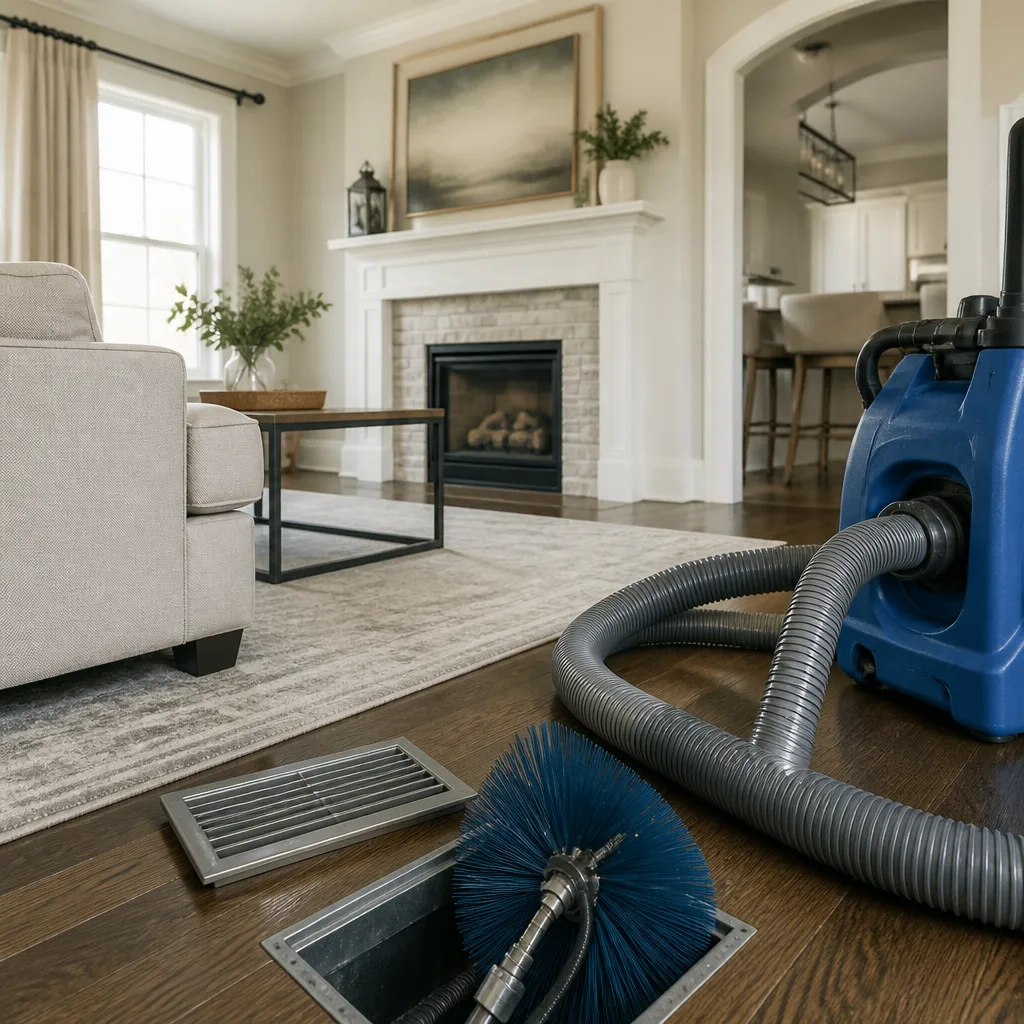 Whole-home duct cleaning
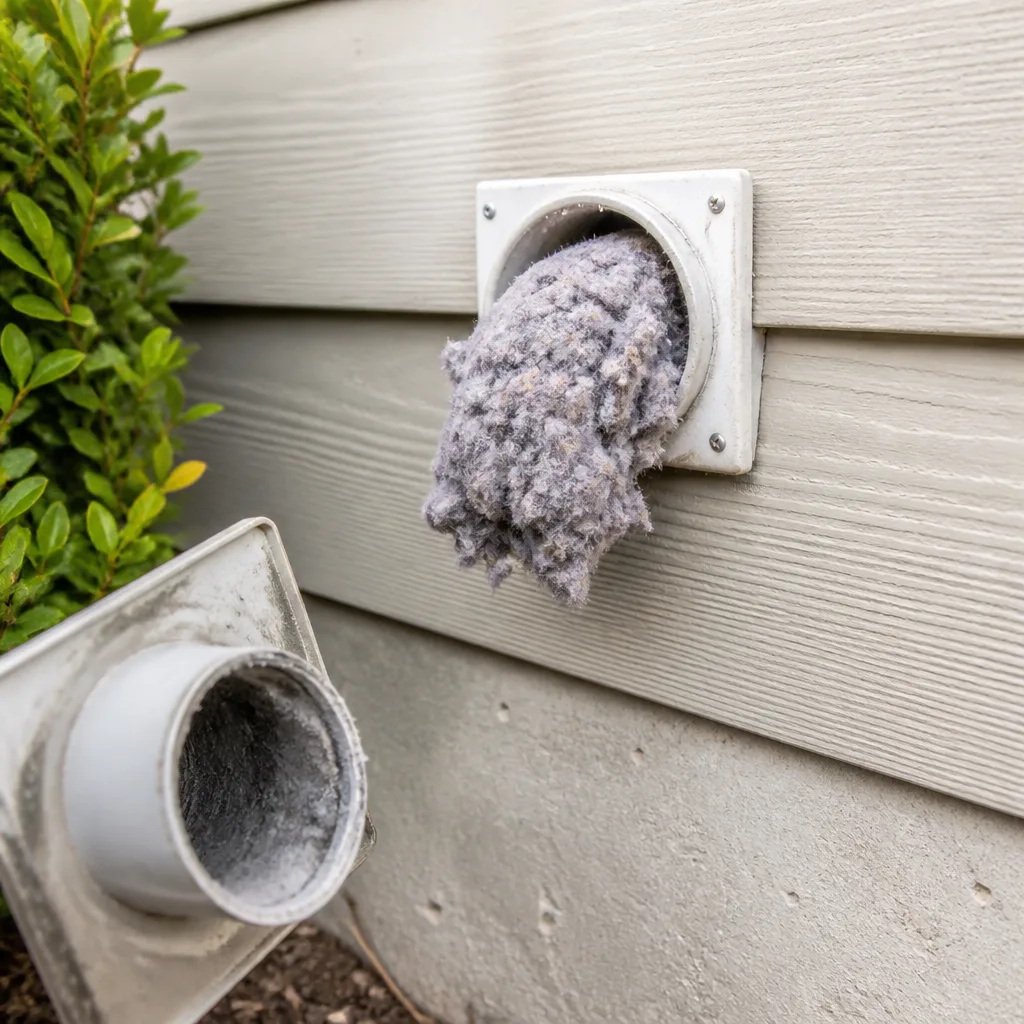 Dryer vent cleaning
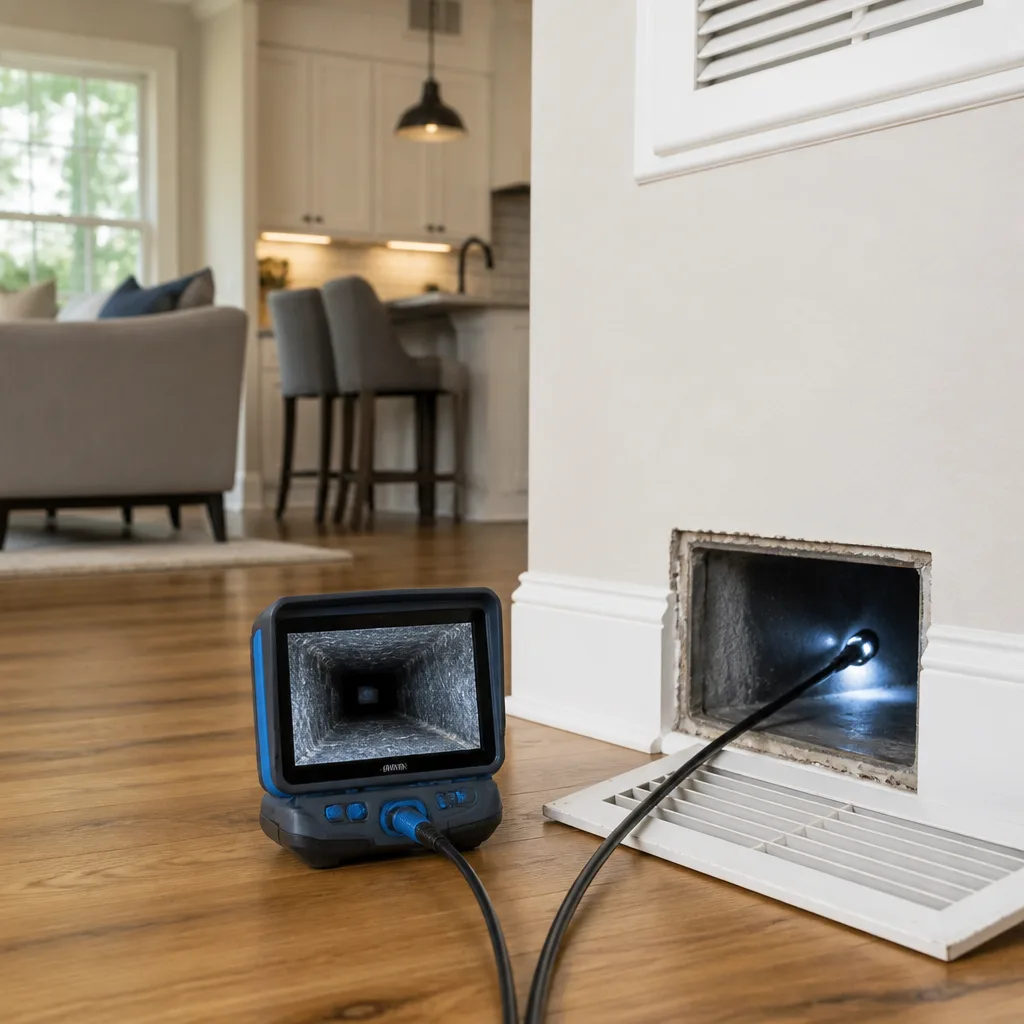 Camera inspection
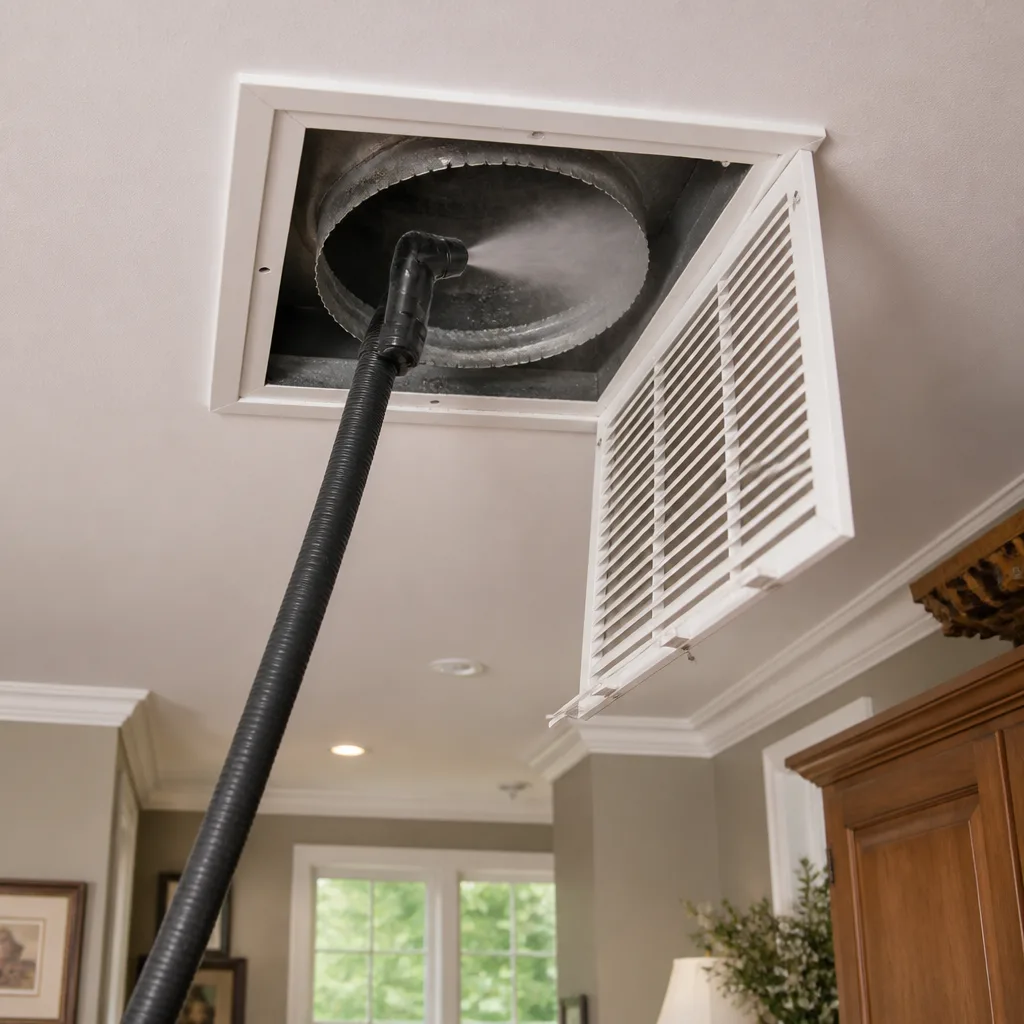 Sanitizing & deodorizing
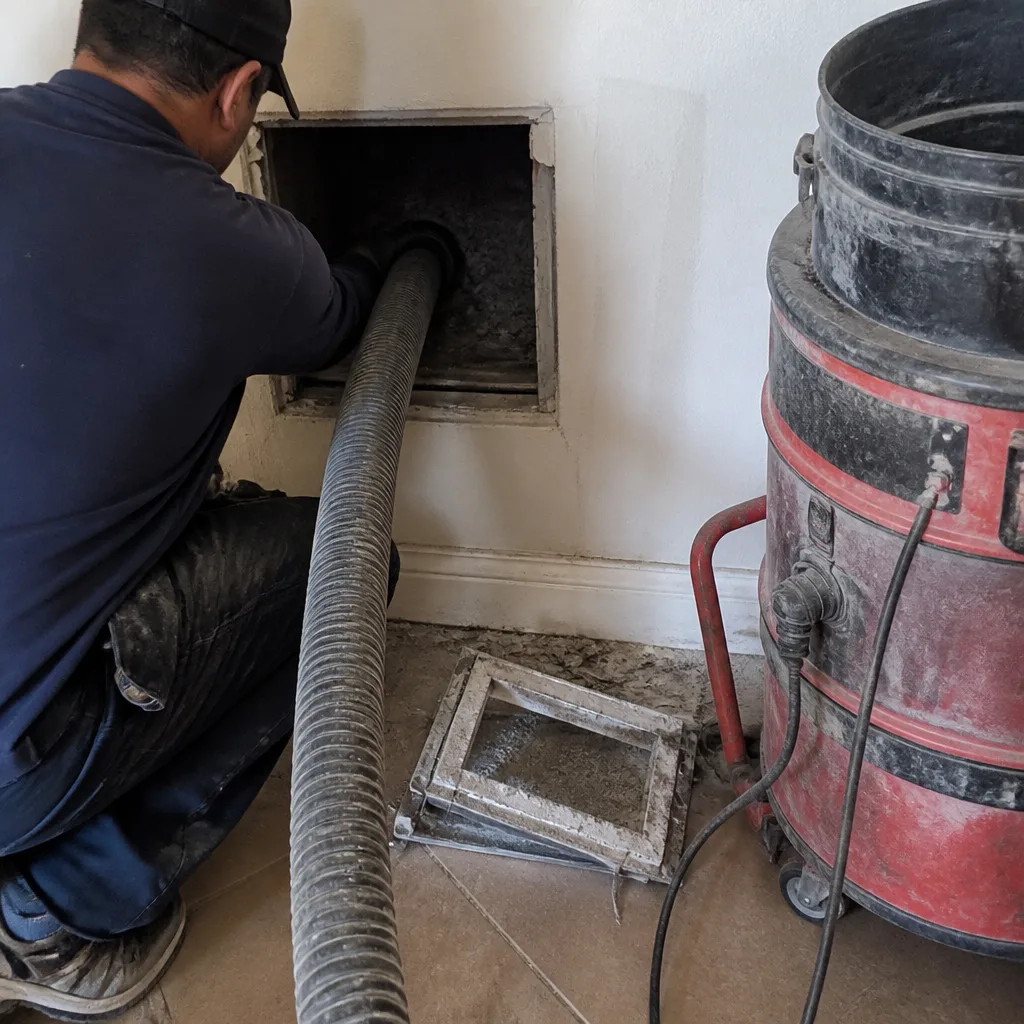
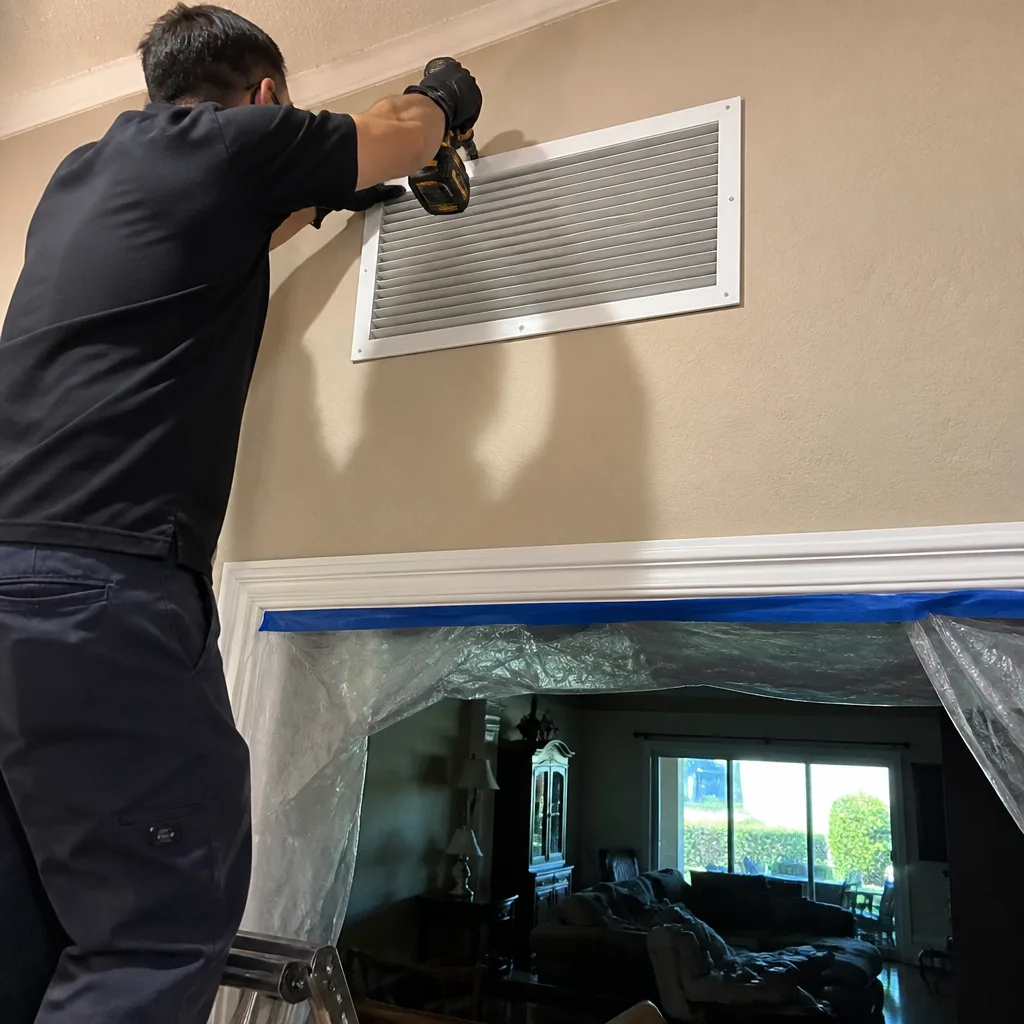
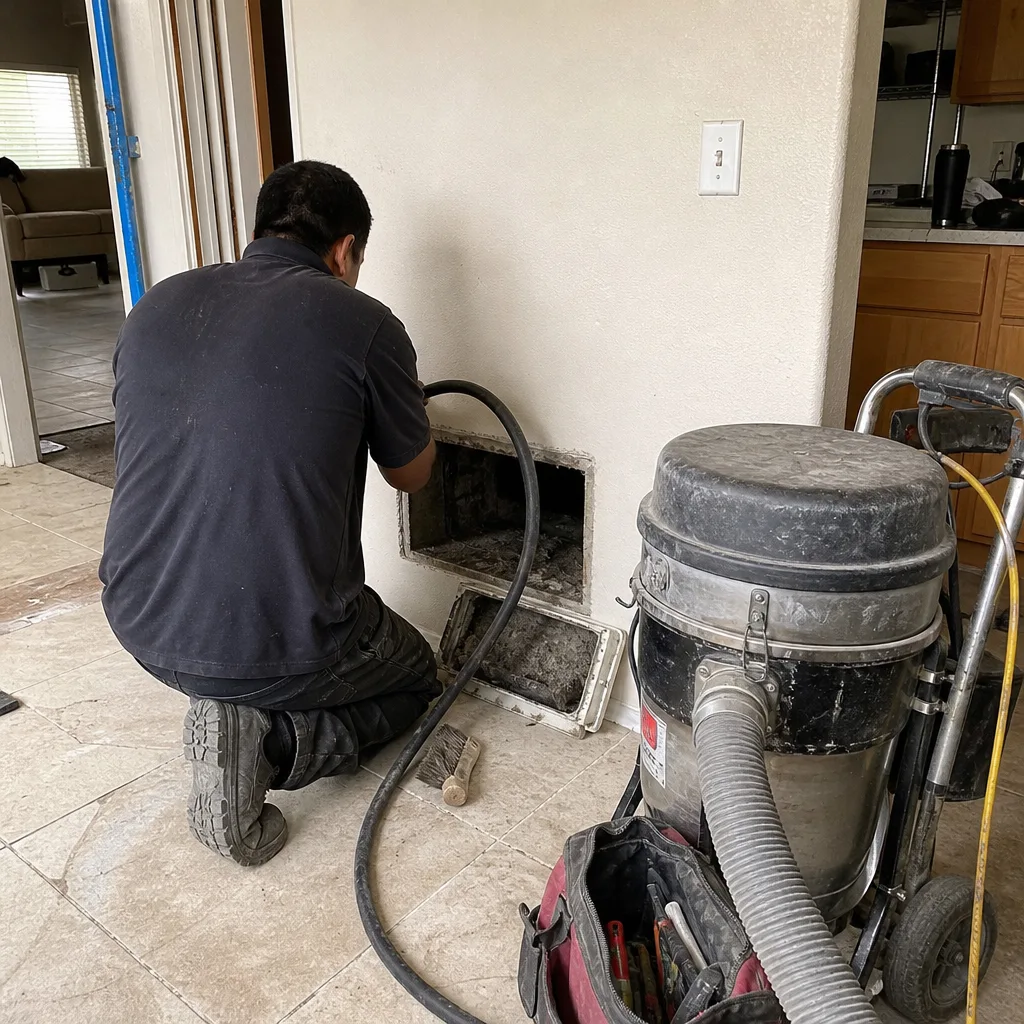
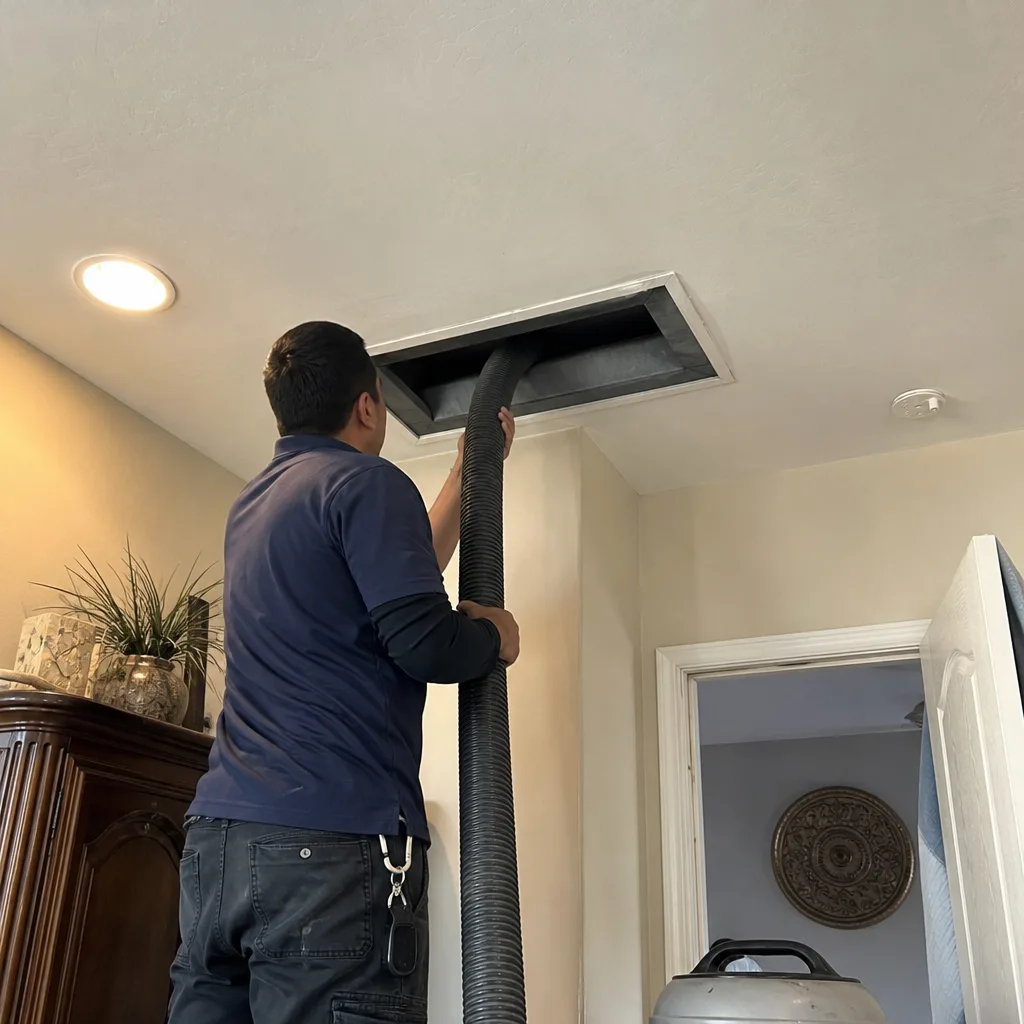
Whole-system duct and dryer vent check with before-and-after photos - you see exactly what came out of your vents
That "$99 whole-house special" is a bait ad - the real number appears once they are in your hallway, or the "clean" is a shop-vac at the register. We photograph the inside of your ducts before and after instead.
Air Duct Cleaning Warning Signs: A Palm Desert Homeowner’s Reference Guide
Dust on your supply registers is a lagging indicator. By the time you can see it clearly, the buildup inside your ducts has already been affecting your air quality and system efficiency for months. In Palm Desert, where the AC runs nearly year-round and the desert keeps resupplying fine particulate, the signs are often subtler than a dusty vent cover. This guide – along with our The Complete Air Duct Cleaning Guide for Palm Desert Homeowners – covers what actually shows up first: the odors, the airflow changes, the utility bill shifts, and the room-to-room temperature differences that most people misattribute to an aging AC unit rather than the ductwork feeding it. You’ll learn how to distinguish a duct contamination problem from an air handler or coil problem, how to run a no-tools self-inspection in under 20 minutes, and when a Palm Desert duct system genuinely needs professional attention.
Styles & brands we work with
- Whole-home duct cleaning
- Dryer vent cleaning
- Camera inspection
- Sanitizing & deodorizing
Quick Answer
The most reliable early warning signs of dirty or leaking ductwork in Palm Desert are fine white or tan dust reappearing on surfaces within days of cleaning, musty odors during the first heating cycle of the year, rooms that won’t reach the thermostat setpoint despite a functioning AC, and a measurable jump in utility bills without a corresponding change in usage. Any two of these together usually indicate a duct system that needs inspection rather than another filter change or a condenser tune-up.
Table of Contents
- Desert-Specific Warning Signs Most Homeowners Overlook
- Performance Indicators That Point to Ductwork, Not the AC
- Duct Contamination vs. Air Handler Problems: Telling Them Apart
- Odor Character and Timing: Mold, Pests, and Off-Gassing
- A 20-Minute Self-Inspection Protocol
- How Often Does Duct Cleaning Actually Need to Happen in Palm Desert?
- Common Mistakes to Avoid
- When to Call a Professional
- Frequently Asked Questions
- The Bottom Line
Desert-Specific Warning Signs Most Homeowners Overlook
Palm Desert’s environment creates warning signs that differ from what you’d read in a generic duct cleaning guide written for a humid climate. For a local perspective, see our Choosing the Right Air Duct Cleaning Brand: A Buyer’s Guide for Palm Desert. The Coachella Valley’s fine, alkaline desert dust behaves differently than the household dust found in coastal or forested regions. It’s finer, it’s lighter in color, and it’s often pulled into the duct system through return-side leaks rather than generated inside the home. Here are the signs we’ve come to recognize as specific to this climate.
Fine white or tan dust reappearing within days of cleaning
You dust the furniture. Three days later, a fine film has settled again. This is frequently not surface dust entering through open windows. In many Palm Desert homes, it’s attic particulate being pulled into the return ductwork through separated joints, poorly sealed connections, or flex duct that has worked loose over years of thermal cycling. The attic air in this valley carries a lot of gypsum dust from drywall, blown-in insulation fibers, and exterior desert silt that works through soffit vents. When return ducts run through a hot attic and there’s a leak on the return side, the negative pressure actively vacuums that particulate into your system and distributes it through every supply register. If the dust returns in days, not weeks, suspect a duct leak rather than a housekeeping problem.
Musty odor during the first heating cycle of the year
Palm Desert homes run their air conditioners for eight or nine months a year. The heating cycle gets used briefly, and often only at night in January and February. What happens during the long cooling season is this: condensation forms on the cooling coil, a small amount of moisture works its way into dust deposits inside the duct system, and then the system runs continuously enough that things stay relatively stable. When the first heating cycle fires up, the warm air passing over those damp dust deposits creates a distinct musty, earthy smell. This is not the normal smell of a heating system that’s sat idle. If you notice that smell specifically when the heat runs, there’s moisture and organic material inside the ducts or at the coil. It’s more common near artificial lakes, golf course communities, and lower-lying areas of Palm Desert like portions of the Civic Center area and some neighborhoods bordering the Whitewater wash corridor where ambient humidity runs slightly higher.
Unusual static electricity near registers
Desert air is already dry, and Palm Desert’s single-digit humidity in the summer makes static shock a fact of life. But if you notice a persistent crackle or a stronger-than-normal shock when you walk near certain supply registers, it can indicate a high concentration of dry particulate moving through the duct at velocity. The friction of fine dust particles against the metal boot and register face builds a localized static field. You’ll usually notice it as a small shock when reaching toward a register to adjust the louvers, or a faint sound. A properly sealed, clean duct system with a good filter will produce less of this effect. If one register is noticeably worse than others in the same home, the duct run serving that register is often the one with either a leak pulling in outside particulate or a significant internal dust load.
Performance Indicators That Point to Ductwork, Not the AC
Palm Desert homeowners understand HVAC performance. When it’s 112 degrees in August, you notice if a room isn’t cooling. What’s harder is knowing whether the problem lives in the AC equipment itself or in the duct system connected to it. These indicators skew toward ductwork, and they’re the ones most often misattributed to an aging condenser or a failing compressor.
Rooms that won’t cool to setpoint despite a functioning AC
You’ve had the condenser serviced. The coil was cleaned. The refrigerant charge was checked and it’s fine. But the west-facing guest room still runs four degrees warmer than the rest of the house every afternoon. Before you replace the unit, look at the ductwork. A disconnected or partially collapsed flex duct, a crushed trunk line, or a supply register that was never properly balanced will produce exactly this pattern. The AC is producing cold air; the duct system is failing to deliver it. In Palm Desert homes built during the Rancho Mirage and Palm Desert construction booms of the 1980s and 1990s, we commonly see flex duct that has sagged, separated at the takeoff collar, or been kinked during a previous attic service. The room will never cool until that duct run is repaired.
Unusual increases in monthly utility bills with no usage change
This is the quietest warning sign and the one that costs Palm Desert homeowners the most money. If your July bill runs 15 to 20 percent higher than last July, with the same thermostat settings and the same daily routine, conditioned air is escaping. Leaky supply ducts in a hot attic bleed cooled air into a 140-degree space before it ever reaches the living areas. The AC runs longer to compensate, and the utility meter records every extra minute. A 15 percent leak rate is not extreme by California building practice standards for older homes, and it translates directly to a 15 percent longer runtime. The fix is duct inspection and repair, not a new AC. Our Air Duct Repair in Palm Desert work addresses exactly this: finding the leaks, sealing them properly, and restoring the system to its designed efficiency.
The HVAC system short-cycling
Short-cycling means the AC turns on, runs for eight or ten minutes, shuts off, and then starts again after a short pause. You’ll hear it as a pattern of frequent starts and stops rather than the long, steady runs typical of a properly operating Palm Desert AC. Short-cycling has many causes, and a few of them are duct-related. A severely restricted filter or a collapsed return duct raises the static pressure in the system, which can trip the high-limit safety or cause the blower motor to overheat and cycle off. The system looks like it’s failing when the real problem is airflow. Before you call for a compressor replacement, check the filter loading rate and the condition of the return duct, especially any section that runs through an unconditioned attic where it can be flattened by stored boxes or insulation.
Duct Contamination vs. Air Handler Problems: Telling Them Apart
Two different problems, two overlapping sets of symptoms, two very different solutions. An air handler problem, which typically means a dirty evaporator coil or blower wheel, produces reduced airflow and weak cooling. A duct contamination or leakage problem can produce the same. Here’s how to separate them.
A dirty blower wheel loses its ability to move air. The system runs, but the air at the registers feels weak, and it’s weak at every register in the house, not just one or two. A dirty evaporator coil reduces cooling capacity. The air moves fine but it’s not cold enough. A duct leak or restriction, by contrast, usually produces a localized symptom: one room is warm, one register is weak, one area of the house gets more airflow than another. The whole-house symptoms of a duct problem will be airflow-related odors, dust generation, and unusually high utility bills. The location-specific symptoms point to a specific duct run.
There’s also a filter loading test. If a brand-new filter loads up visibly within two to three weeks, the system is pulling in outside air somewhere. A sealed system with a clean coil will load a filter slowly. A return-side duct leak draws unfiltered attic air into the system constantly, and the filter does the work that the duct seal should have done. That’s a duct leak indicator, not an air handler problem. This is also why we run Abatement Technologies negative-pressure containment during our Air Duct Cleaning in Palm Desert jobs. It prevents exactly this cross-contamination pattern during the cleaning itself.
Odor Character and Timing: Mold, Pests, and Off-Gassing
Odors are the most useful diagnostic information you’ll get from a duct system, because they’re character-specific. Dust smells earthy. Mold smells musty and persistent. Pests smell sharp and acrid. And off-gassing insulation smells chemical. Timing matters as much as character.
Mold: musty, damp, and persistent
A mold odor doesn’t go away when the system cycles off. It lingers because the microbial growth is embedded in the dust and fiberglass lining inside the duct or on the coil. It’s most noticeable on startup, then fades into the background, then returns. In Palm Desert, mold in ductwork is less common than in humid climates, but it happens where condensation persists: near the evaporator coil, in the condensate pan, and in ducts that run close to humid areas. Homeowners in communities with a lot of irrigation, pools, and water features should consider this more seriously than someone in a dry section of the central valley.
Pests: sharp, acrid, and timed
Rodents in a duct system produce a distinctly sharp, ammonia-like odor from urine and droppings. It’s often worse in the evening and at night when the animals are active in the ducts. Geckos and insects, more common in Palm Desert than rodents in some neighborhoods, produce a drier, less intense smell. If the odor is sharp rather than earthy, and you’ve seen droppings near the return register, the problem requires removal and sanitation before cleaning, not just a standard duct cleaning.
Insulation off-gassing: chemical or formaldehyde-like
Some older duct systems used insulation board or mastic products that off-gas, especially when heated. If you smell a chemical or plastic-like odor during the first few minutes of a heating cycle, and it goes away after the system has been running, it may be duct insulation warming up. This is more common in homes with original equipment from the 1980s. The fix is usually replacement or repair of the offending duct section, not cleaning.
A 20-Minute Self-Inspection Protocol
You don’t need a boroscope or a pressure gauge to gather useful information about your duct system. This protocol takes about 20 minutes and requires only your eyes, your hand, and a piece of paper to note your findings. It will not tell you definitively what’s wrong, but it will tell you whether a professional inspection is warranted, and it will produce information that helps any technician you call.
- Register airflow check. Walk to each supply register in the house with the AC running. Hold your hand about six inches from the register face. Note the airflow you feel. Compare the living room register to the furthest bedroom register. A weak register that’s far from the air handler may be normal. A weak register that’s close to the air handler is a restriction or leak signal. Write down the weak registers.
- Visual boot inspection. Remove one or two supply register covers (they typically lift off or have two screws). Look inside the boot, which is the metal or plastic fitting that connects the register to the duct. Use a phone camera with the flash on if it’s dark. Note what you see: dust accumulation, debris, or insulation visible at the edges. A thick layer of grey material caked on the inside of the boot is a sign the rest of the duct run looks the same way.
- Filter loading rate assessment. Install a new, mid-grade filter and write the date on the frame with a marker. Check it in two weeks. A filter that’s visibly darkened, clogged, or discolored in two weeks in a normal-occupancy Palm Desert home indicates abnormal particulate loading. Compare the appearance to a new filter’s color. If it’s noticeably dark, the system is drawing in unfiltered attic or outside air.
- Return-side leak check. Look at the return grille in your hallway or wherever it’s located. Note whether the area around the grille is darker than the surrounding wall, which can indicate dust being pulled toward the return. Listen for a faint whistling or sucking sound from the grille when the AC runs, which becomes louder when the filter is dirty. Either indicates higher-than-designed static pressure on the return side.
- AC runtime observation. On a day when the outside temperature is above 95 degrees, note how long the AC runs during one cycle in the mid-afternoon. A properly sized system in Palm Desert typically runs 15 to 30 minutes per cycle in peak heat. Shorter cycles combined with frequent starts suggest an airflow or static pressure problem.
None of these findings by themselves prove you need a cleaning or repair. Taken together, they build a useful picture. Two or more findings point toward a duct inspection. If your registers are weak, your filter loads fast, and dust reappears on furniture within a few days, the odds of a return-side duct leak or significant contamination are high. That’s a duct system problem, and our Duct Cleaning Palm Desert home inspection covers the full system, not just the registers.
How Often Does Duct Cleaning Actually Need to Happen in Palm Desert?
The honest answer: there’s no fixed interval that applies to every Palm Desert home. The National Air Duct Cleaners Association (NADCA) recommendation is every three to five years under normal conditions, but desert conditions are not normal conditions. Homes in this valley run their AC systems 3,000 to 4,000 hours per year, compared to 800 to 1,200 hours in coastal Southern California. That’s roughly triple the airflow volume through the same ductwork, which means triple the particulate loading rate. A home in Palm Desert that runs its AC heavily and has pets will load its ducts in three years to the same degree a coastal home reaches in eight to nine.
Homes with the following profiles should consider inspection sooner than the generic interval: households with shedding pets, homes with recent renovations that produced drywall or flooring dust, homes adjacent to active construction lots (common in the northern expansion areas of Palm Desert), and homes with occupants who experience respiratory irritation that improves away from home. The renovation case is particularly relevant in this market. A kitchen remodel, a flooring replacement, or even a simple drywall patch generates fine gypsum dust that the HVAC system circulates for months. That dust coats the coil, the blower, and the duct interior. In a normal year, the filter catches most household dust. During a renovation, the dust load exceeds the filter’s capacity, and the excess ends up in the system.
What we recommend for most Palm Desert homes is an Air Duct Cleaning services inspection at the three-year mark, with cleaning scheduled based on what the inspection shows. That approach matches the equipment we run, including Nikro HEPA-filtered vacuum collection systems, which remove what’s actually in the ducts rather than brushing it loose and hoping it travels to the filter. Source-removal cleaning means the contaminant is physically extracted from the system and contained, not redistributed. That’s the standard that matters in a climate where the AC never really stops.
Common Mistakes to Avoid
- Assuming a dusty house means the ducts are the problem. In Palm Desert, a significant portion of household dust enters through window and door seals that have dried and shrunk in the desert heat. The ducts may be clean while the house still dusts quickly. Inspect before you spend on cleaning.
- Replacing the AC before inspecting the ductwork. A compressor replacement costs thousands. A duct repair costs a fraction of that. If rooms are unevenly cooled but the condenser checks out, the ductwork is the next suspect on the list.
- Using a high-MERV filter to compensate for duct leaks. A filter rated above MERV 13 increases static pressure, which strains the blower motor and reduces airflow. It’s not a substitute for sealing leaks. In older Palm Desert systems with standard blowers, a high-resistance filter can cause more harm than the leak it’s trying to mitigate.
- Trusting a per-vent pricing model. Duct cleaning quotes that price per vent create the wrong incentive. The job should be priced per system, with the scope defined before the van arrives. A whole-system quote with a defined method (source removal, negative-pressure containment) is the only way to compare apples to apples.
- Waiting for visible dust on the registers to act. By the time dust is visibly crusted on the register louvers, the interior of the supply duct has been accumulating for a long time. The register is the last place dust appears, not the first.
- Ignoring odors that only occur during heating. Palm Desert’s heating season is short, and it’s easy to dismiss a musty smell that lasts two or three weeks. That odor is diagnostic evidence of moisture inside the system. It doesn’t go away because the heating season ends; it goes quiet until the next one.
- Cleaning the ducts without addressing the source. If the ducts were contaminated by a return-side leak, cleaning them without sealing the leak means the system re-contaminates itself within a season. The leak is the problem; the dust is the symptom. Our Dryer Vent Cleaning in Palm Desert service follows the same logic: clear the vent, then verify the termination point and connections are correct so the problem doesn’t return.
When to Call a Professional
Call a duct professional when you have two or more of the signs described in this guide: dust that returns within days, musty heating-cycle odors, uneven room temperatures, a utility bill increase you can’t explain, or a filter loading faster than it should. A professional inspection will identify whether the problem is contamination, leakage, or both, and whether repair is needed before cleaning. The inspection should be specific: where the leaks are, what the dust load looks like, and what the cleaning method will be. We bring commercial-grade equipment to residential jobs, including Rotobrush source-removal tools, Nikro HEPA collection, and Abatement Technologies negative-air containment. If you’re in Palm Desert or the surrounding Coachella Valley, Duct Cleaning Palm Desert offers free estimates. Call (833) 589-9812 and we’ll inspect the system before you commit to anything.
Frequently Asked Questions
In Palm Desert, whole-system air duct cleaning for a typical single-family home usually runs between $350 and $650, depending on the number of systems, the size of the home, and the level of contamination. Homes with significant mold, pest, or construction debris may run higher. The key is that the price should be quoted as a flat rate per system before work begins, not a per-vent price that can expand once the crew arrives. Call (833) 589-9812 for an exact quote on your specific home. Estimates are free.
Cheaper quotes usually come from a different cleaning method. A crew with a shop vac and a brush spends less on equipment and time, and that’s reflected in the price. The result is surface cleaning at best. A source-removal job using professional equipment, such as Rotobrush and Nikro systems, costs more because the equipment costs more and the job takes longer. The cheap quote also often excludes what the job will actually require once the crew sees the system. The flat-rate quote with a defined method is the number to trust.
You should receive before-and-after photos of the interior of your ducts, not just the registers. A professional crew using source-removal equipment will document the upstream and downstream duct interior before starting and after finishing. You should also notice a measurable change: reduced dust settling, less odor, and a filter that loads more slowly. If the crew can’t show you the interior of the ducts after the job, ask why. The air you can’t see is the whole point of the service.
In Palm Desert, every three to five years is the practical range for most homes, with the shorter end applying to homes with pets, renovation history, or occupants with respiratory sensitivity. The AC runtime in this climate is triple what it is on the coast, which means the ducts load faster. An inspection at three years will tell you whether cleaning is due or whether the system can go longer.
A faint hot dust smell during the first heating cycle of the year is normal and should clear within a few hours. A persistent musty or damp odor that lasts for days is not normal and indicates moisture and organic material inside the system. If the smell lingers, have the ducts inspected rather than waiting for the next heating season.
A higher-MERV filter captures smaller particles, but it does nothing to remove existing contamination inside the ducts. It also increases static pressure, which can strain an older blower motor and reduce airflow. The right order is to clean the system first, then choose a filter that balances filtration with your system’s static pressure limits. We work with Honeywell and Aprilaire filtration products and can recommend the right option for your specific equipment.
The Bottom Line
In Palm Desert, a duct system that needs attention rarely announces itself with a dramatic failure. It whispers: a room that won’t cool, a bill that climbs, a smell that appears each January, a film of dust that reappears on the nightstand every few days. The job of a homeowner is to listen to the whispers before they become a compressor failure or a microbial bloom. For additional help, explore our more guides & resources. The job of a duct professional is to inspect what’s actually happening inside the system and to fix it with the right method. If you’re seeing two or more of the signs in this guide, get an inspection. The ducts in your Palm Desert home move the air you breathe every hour of every day. That system deserves more than a filter change. It deserves to be clean, sealed, and working the way it was designed to.
Written by the team at Duct Cleaning Palm Desert, serving Palm Desert since 2018.
See the difference
 Before
 After
 Before
 After
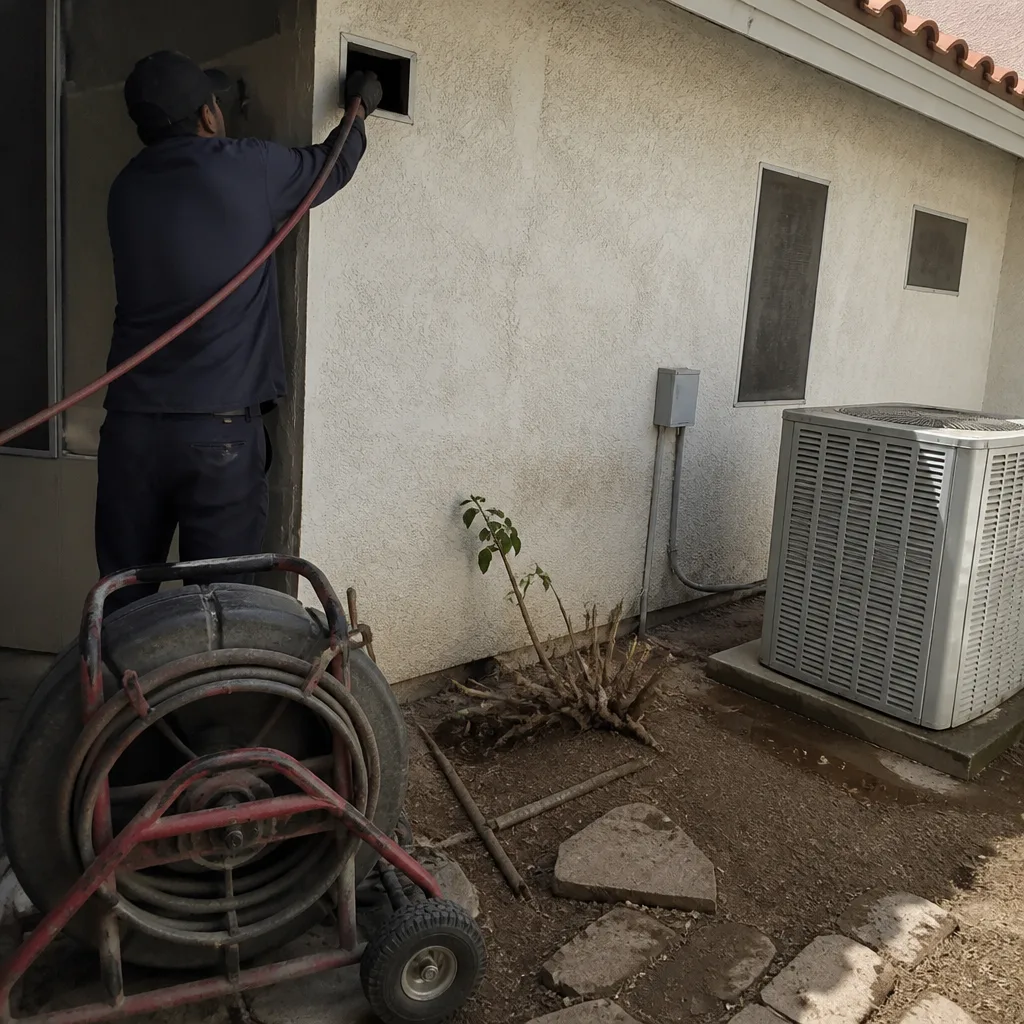 Before
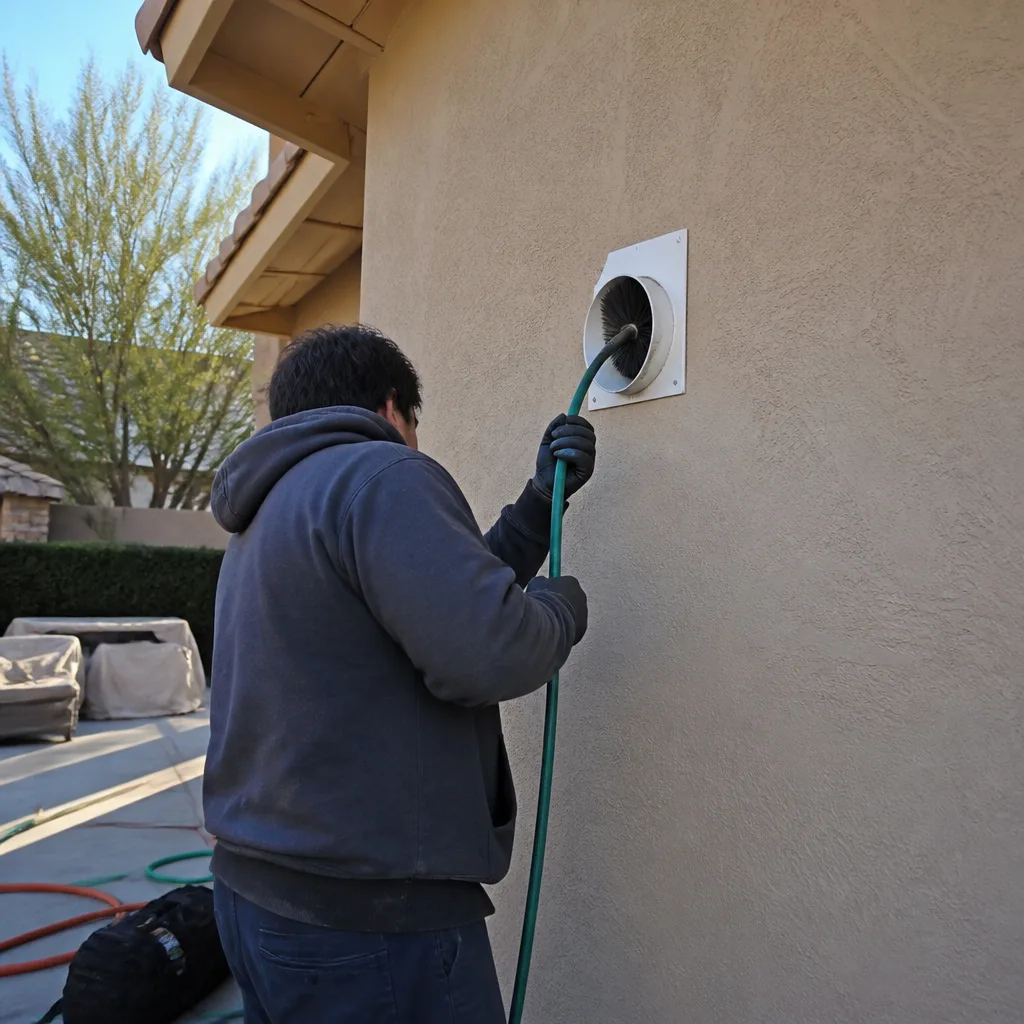 After