
Last updated November 2, 2026
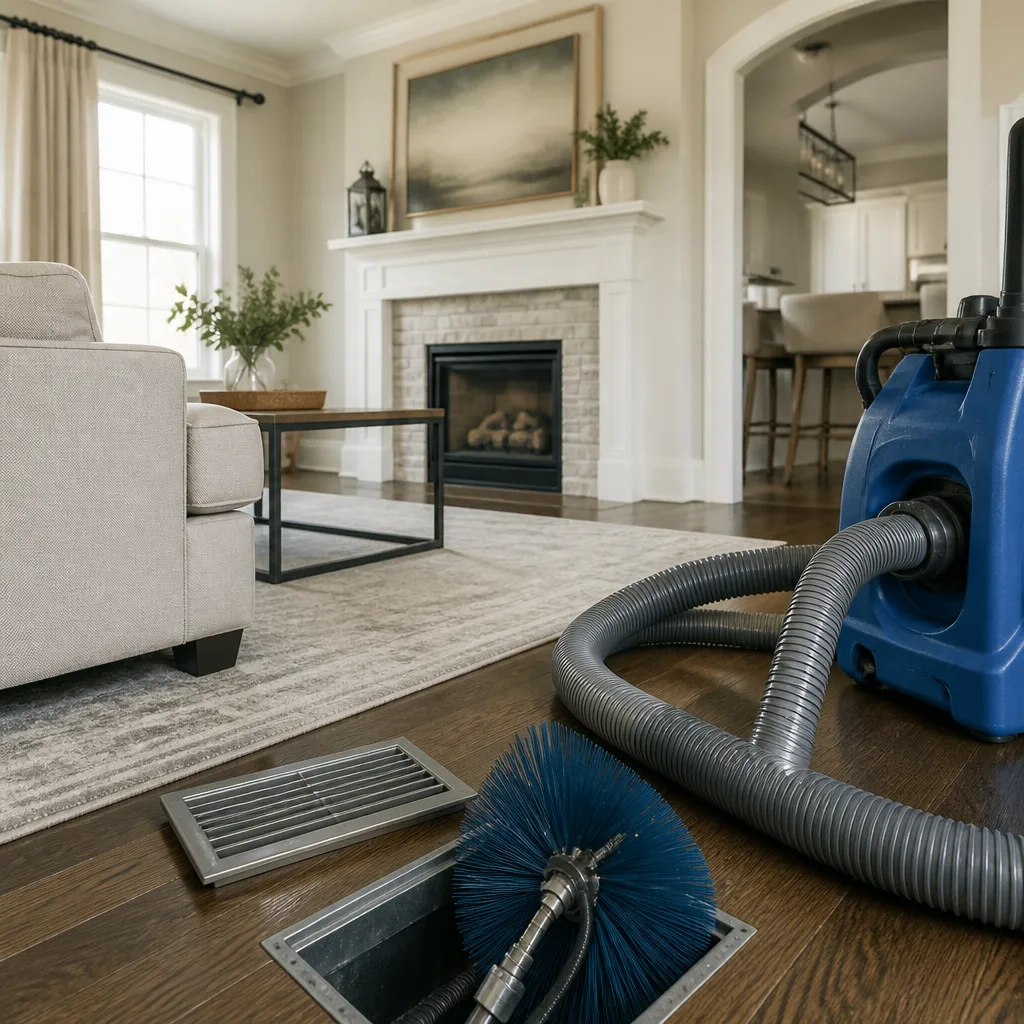 Whole-home duct cleaning
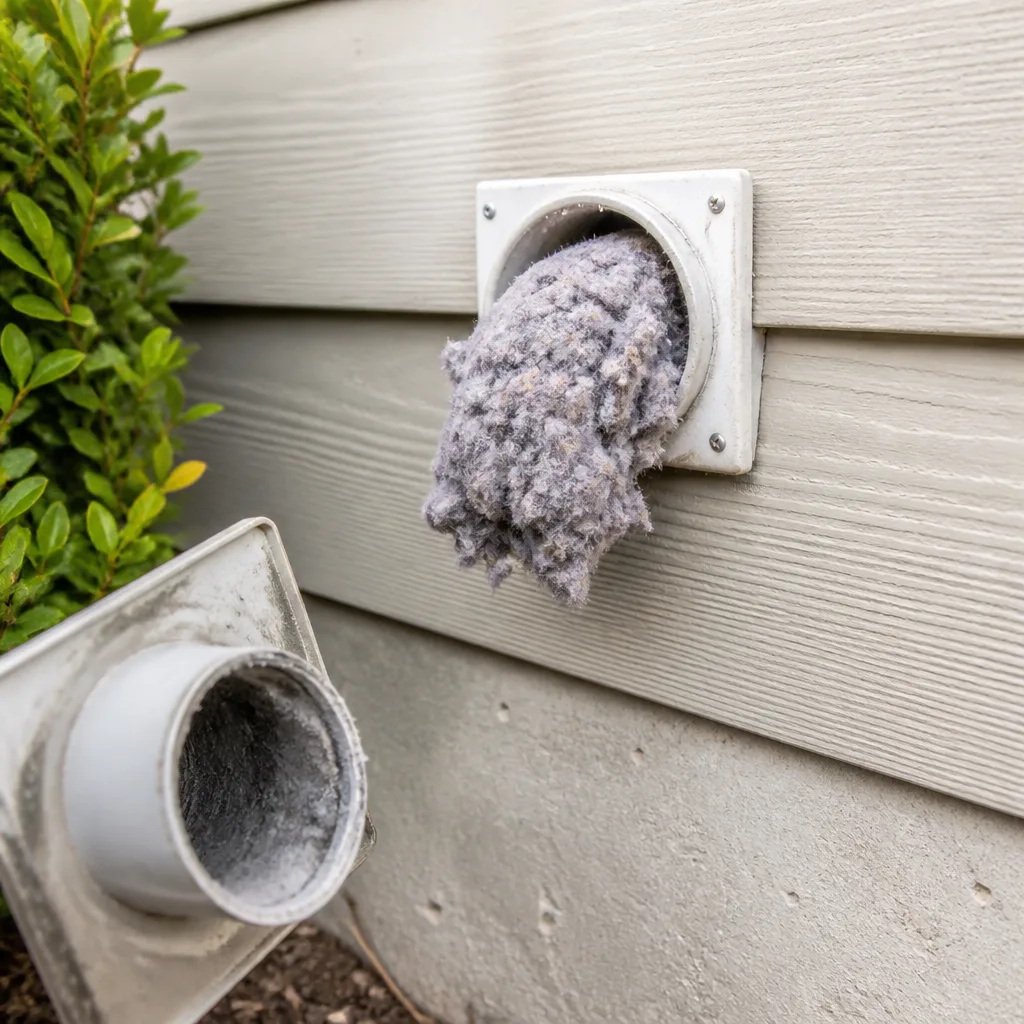 Dryer vent cleaning
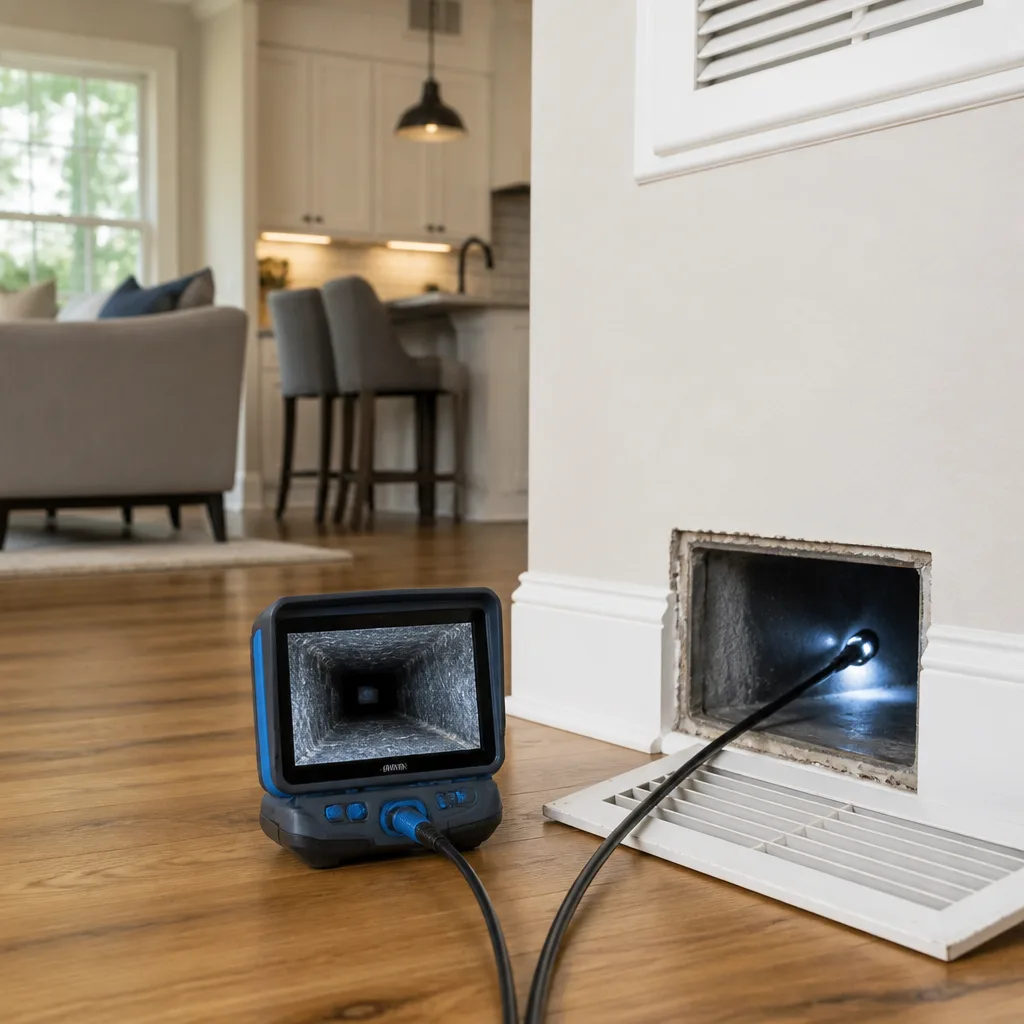 Camera inspection
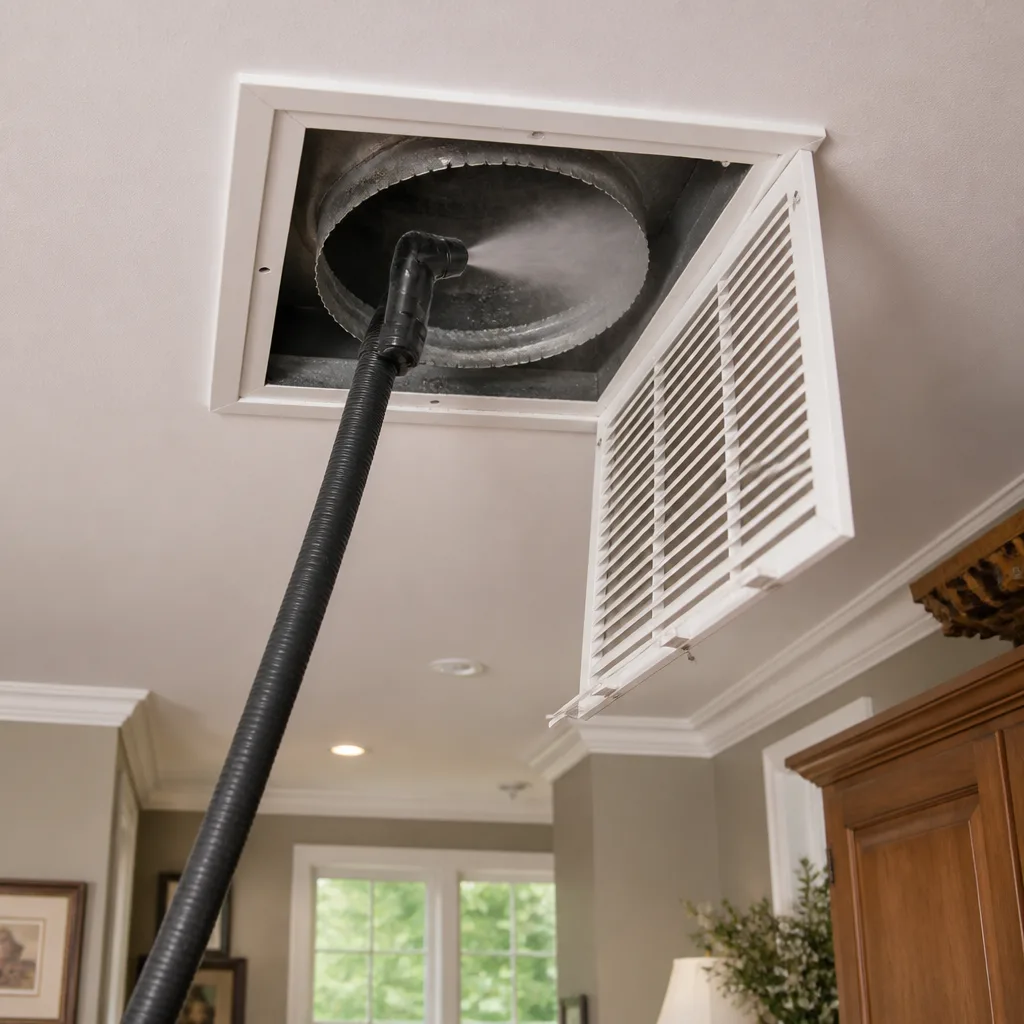 Sanitizing & deodorizing
Whole-system duct and dryer vent check with before-and-after photos - you see exactly what came out of your vents
That "$99 whole-house special" is a bait ad - the real number appears once they are in your hallway, or the "clean" is a shop-vac at the register. We photograph the inside of your ducts before and after instead.
Air Duct Cleaning Maintenance Checklist for Palm Desert Homeowners
A standard air filter in a Palm Desert home can load up in 3 to 4 weeks during peak dust season. That’s roughly half the time it takes in a coastal California city, and it’s the first clue that most generic duct cleaning checklists simply don’t apply here. The Coachella Valley’s particular combination of fine desert dust, extreme summer heat, and older HVAC systems means your maintenance calendar needs to be built around Palm Desert conditions, not a national average. This guide walks you through exactly what to check, when to check it, and what you can ignore.
Quick Answer
An effective air duct cleaning maintenance checklist for Palm Desert homeowners includes monthly filter inspections (with replacement every 1 to 3 months depending on MERV rating), pre-summer and post-summer visual inspections of registers and boots for sand intrusion, an annual check of flex duct integrity for heat-related cracking, and a full source-removal cleaning every 2 to 3 years. Most importantly, your checklist must include verifying that attic insulation hasn’t migrated into duct openings and confirming your air handler cabinet isn’t recontaminating cleaned ductwork.
Styles & brands we work with
- Whole-home duct cleaning
- Dryer vent cleaning
- Camera inspection
- Sanitizing & deodorizing
Table of Contents
- Monthly Maintenance Tasks for Palm Desert Homes
- Pre-Summer Duct Inspection Checklist
- Post-Summer Recovery Checklist
- The Every 2-3 Year Professional Cleaning
- Desert-Specific Problems Other Checklists Miss
- Checking Your Air Handler Cabinet for Recontamination
- Filter Upgrade Guidance for Desert Dust Loads
- What You Can Do Yourself vs. What Needs Equipment
Monthly Maintenance Tasks for Palm Desert Homes
Monthly duct maintenance in Palm Desert is mostly about monitoring rather than cleaning. The goal is catching problems before they compound, because desert dust has a way of turning a minor issue into a significant one within a single season. Here are the tasks you should complete every 30 days during dust season, which runs roughly from March through November.
- Check your air filter. Hold it up to a light source. If you can’t see light through it, it’s time to replace it regardless of what the packaging says. In Palm Desert, we’ve seen 1-inch fiberglass filters load completely within three weeks during windy periods.
- Inspect visible registers for dust accumulation. Run a white cloth along the inside of a floor or wall register. A light gray film is normal. Any visible sand granules or dark debris means your duct system is pulling in outdoor particulate from somewhere.
- Listen for new sounds in your ductwork. A sudden rattle, whistle, or banging sound when the system cycles is often the first sign of duct damage, loose boots, or a new gap that’s letting in unfiltered attic air.
- Check for temperature differences between rooms. If one bedroom is running five degrees warmer than the rest of the house, you may have a disconnected or crushed duct serving that room.
- Scan the air handler cabinet for dust marks. Dust streaks or accumulation around the seams and access panel indicate air bypassing the filter entirely, which means that air is moving through your duct system uncleaned.
These checks take about fifteen minutes total. The point isn’t to find something wrong every month. The point is to establish a baseline so that when something does change, you notice it within weeks instead of months. For more guidance on what a properly functioning duct system should look like, see our full breakdown of Air Duct Cleaning in Palm Desert.
Pre-Summer Duct Inspection Checklist
In most climates, “pre-season” maintenance is about getting ready for heavy use. In Palm Desert, it’s about getting ready for the specific failure patterns that triple-digit heat creates. Your cooling system will run continuously from May through September, and any existing duct problem will be stressed daily. Here’s your numbered pre-summer inspection sequence.
- Replace your air filter with one appropriate for the cooling season. During summer, your system runs constantly. A loaded filter increases static pressure, which forces the blower motor to work harder and can push dirty air through any small gaps in the ductwork.
- Walk the attic, if accessible. Look at flex duct runs for any visible sagging, kinking, or compression. Duct that was fine in March can be damaged by June heat, especially if it’s older flexible duct from the 1990s or early 2000s that’s reached the end of its service life.
- Inspect duct boots at every register. Remove the register cover and shine a flashlight down into the boot. Look for sand accumulation, insect nests, or gaps where the boot meets the drywall. Palm Desert sand is fine enough to work its way through surprisingly small openings.
- Verify your return air path is unobstructed. Furniture, rugs, or stored items blocking return grilles starve the system of air and create negative pressure zones that pull dust from wall cavities and attic spaces into the ducts.
- Run the system for 15 minutes and check every room. You’re looking for consistent airflow, normal operating sounds, and the absence of any new smells. A musty odor when cooling starts indicates moisture in the ducts, which is a problem that compounds quickly in a desert climate where the air is otherwise bone dry.
If you find sagging duct, cracked flex, or loose boots during this inspection, those are structural issues that need repair before they become larger problems. Our Air Duct Repair in Palm Desert page covers what those repairs involve and why they matter for system efficiency.
Post-Summer Recovery Checklist
After a Palm Desert summer, your duct system has been through months of continuous operation in sustained heat. The post-summer period, typically October through November, is when you assess what the season did to your system and prepare for the winter heating months. This is also the ideal time for duct cleaning if you’re due, because contractors have more scheduling flexibility than during the March-April pre-season rush.
- Check for heat-related damage. Flex duct that runs through uninsulated attic spaces in Palm Desert can experience surface temperatures exceeding 150 degrees during summer peaks. Over time, this degrades the plastic outer jacket and inner liner, leading to cracks that leak conditioned air into the attic.
- Look for signs of rodent or pest activity. Summer heat pushes rodents and other pests toward cooler spaces, and ductwork in attic spaces is a common entry point. Droppings, chewed outer jackets, or disturbed insulation near duct runs all signal a pest issue that needs addressing before cleaning.
- Check the condensate drain line. During humid monsoon weeks, your cooling coil produces significant condensate. A slow-draining or clogged line can back up into the air handler and create standing moisture, which becomes a breeding ground for mold and bacteria that then get distributed through the ducts.
- Inspect the plenum connections. The plenum is the main supply and return trunk where ducts connect. Heat cycling causes metal to expand and contract, which can loosen mechanical connections over time. Loose plenum connections are one of the most common sources of attic air being pulled into the system.
- Remove and clean register covers. After a summer of continuous airflow, register covers accumulate a surprising amount of fine dust and even light scale from the air. A quick wash with warm soapy water restores both airflow and appearance.
After a heavy monsoon season followed by fall winds, many Palm Desert homeowners find their ducts are substantially dustier than they were in spring. If your post-summer inspection reveals significant accumulation, see whether you’re due for professional attention by reading about Duct Cleaning Palm Desert home service options.
The Every 2-3 Year Professional Cleaning
Professional air duct cleaning in Palm Desert typically makes sense every 2 to 3 years, though this interval shifts based on specific household conditions. Homes with multiple pets, recent renovations, or a history of dust intrusion may need cleaning annually. Homes with aggressive filtration and well-sealed ducts might stretch to 4 years. What matters is that you don’t wait until ducts are visibly dirty, because by then the contamination has already been circulating through your living space.
Professional cleaning is a distinctly different process from what you can do yourself. A proper source-removal cleaning involves accessing every supply and return duct, agitating debris off duct walls with air-powered tools, and drawing the loosened particulate into a HEPA-filtered vacuum. The key word is source-removal: the process extracts contaminants from your home entirely, rather than just pushing them around inside the system. This is where equipment matters. We use Rotobrush and Nikro systems for residential work because they’re designed around this source-removal principle, not adapted from commercial carpet cleaning equipment.
In addition to cleaning, a professional visit should include a full inspection. The best time to spot cracks, leaks, and separation is when the system is open and accessible. A cleaning-only company will clean and leave; a provider with Air Duct Repair in Palm Desert capability can identify and fix problems in the same visit. For Palm Desert specifically, we also recommend scheduling cleaning after any significant renovation project. Drywall dust and construction debris travel far through a home’s air system, and a pre-existing duct cleaning is cheap insurance against breathing that particulate for months afterward.
One more consideration: if your home has never been cleaned and is more than five years old, you may be surprised by what’s in the ducts. We’ve removed construction debris from the original build, children’s toys, and decades of accumulated sand from Palm Desert homes. The only way to know is to look.
Desert-Specific Problems Other Checklists Miss
Most air duct maintenance checklists are written for a generic American suburb, and they miss the failure patterns that are specific to the Coachella Valley. After years of servicing Palm Desert homes, we’ve identified several recurring issues that you won’t find addressed in a generic checklist. If you’re maintaining a home here, these items belong on your radar.
Sand Intrusion Through Registers and Boots
Palm Desert sits in a basin that collects blowing sand from the San Jacinto Mountains and the surrounding desert floor. During wind events, sand moves horizontally at ground level and enters homes through every available opening. Floor registers in rooms with exterior doors are the primary entry point. Fine sand granules work their way past register covers, settle in the boots, and eventually get pulled into the main duct trunk. Over time, this creates a layer of grit that acts like sandpaper on duct surfaces and mechanical components. The fix is regular boot inspection (monthly during windy season) and ensuring register covers fit tightly in their frames. In severe cases, foam gasket material behind the register cover creates a better seal.
Blown-In Insulation Migration
Many Palm Desert homes built in the 1980s through 2000s use blown-in fiberglass or cellulose insulation in attic spaces. This insulation sits directly on top of ductwork in many installations. When ducts develop small gaps at seams or connections, or when boots separate from the drywall, attic insulation gets pulled into the air stream. If you’re seeing small fibers or granular material around your registers that doesn’t look like sand, insulation migration is the likely culprit. This is not just a cleaning issue; it’s a sign that your duct system has structural gaps that need repair. An Air Duct Repair in Palm Desert specialist can identify the entry points and seal them, but the insulation already inside the ducts will need to be removed through a full cleaning.
Evaporative Cooler Crossover Contamination
Many Palm Desert homes, particularly older ones, use evaporative coolers either as the primary cooling system or as a supplement to central air conditioning. Evaporative coolers work by pulling outdoor air through water-saturated pads and distributing it through the home’s ductwork. The problem: if you switch from an evaporative cooler to central AC without thoroughly cleaning the ducts, you’re introducing the residue from the evaporative system into your air conditioning cycle. Evaporative coolers, by design, add moisture and outdoor particulate to the air, including Valley fever spores during certain seasons. If you’ve recently transitioned away from a cooler or alternate between systems, a professional duct cleaning is essential to remove accumulated mineral scale and organic matter from the ducts.
Flex Duct Heat Degradation
Flexible duct has a finite service life, and Palm Desert heat accelerates the clock. The outer jacket is typically a reinforced plastic film, and the inner liner is usually a thin polymer. Both materials break down under sustained UV exposure and high heat. Attic temperatures in Palm Desert routinely exceed 140 degrees in July and August. After 15 to 20 years, flex duct becomes brittle, develops micro-fractures, and eventually fails. The early signs are a white or gray powdery film on the duct exterior, visible cracking when the duct is flexed, and unexplained increases in your cooling bill as conditioned air leaks into the attic. Replacing degraded flex duct is a repair, not a cleaning, but it’s essential to identify it before you invest in cleaning ductwork that’s about to fail anyway.
Checking Your Air Handler Cabinet for Recontamination
You can clean every inch of ductwork, but if your air handler cabinet is dirty, the system will recontaminate itself within weeks. The air handler is the large metal cabinet that houses the blower motor and evaporator coil. It’s usually located in a closet, garage, or attic. When the blower runs, it pulls air through the return ducts, pushes it past the coil, and sends it out through the supply ducts. Any dust, dirt, or biological growth inside the cabinet gets picked up by this air stream and carried straight back into the ducts you just cleaned.
Here’s how to assess your air handler cabinet without special tools:
- Turn off the system at the thermostat and the breaker. This is non-negotiable. The blower can start unexpectedly, and the electrical components inside the cabinet carry line voltage.
- Locate the filter access panel. Most residential air handlers have a slot or door where the filter slides in. Open this and remove the filter.
- Look inside with a flashlight. Examine the blower wheel first. If the blades have dark accumulation or a fuzzy coating, that’s what’s being blown through your home. Next, look at the evaporator coil if visible. A matted layer of dust and hair on the coil both reduces efficiency and becomes a contamination source.
- Look at the bottom of the cabinet. Accumulated dust, insect parts, or moisture stains at the bottom of the air handler cabinet are signs that the unit has been pulling unfiltered air or that condensate is draining poorly.
- Check for dust streaks on the cabinet exterior. Streaks around seams, panel edges, or the plenum connection mean air is leaking around gaps and bypassing the filter. This is a common problem in older systems and one of the fastest ways to contaminate clean ducts.
If any of these checks reveal significant accumulation, the air handler needs professional attention before or during your duct cleaning. A thorough cleaning of the blower assembly, evaporator coil, and cabinet interior should be part of any serious duct cleaning service. We include this in every job we do in Palm Desert, because skipping it is the single most common reason cleaned ducts get dirty again within a year. The equipment matters here too; professional coil cleaning requires specific tools and chemicals that don’t damage the coil fins, which is why this isn’t a DIY task.
Filter Upgrade Guidance for Desert Dust Loads
Filter selection in Palm Desert is a balancing act between filtration efficiency and system health. The instinct is to buy the highest MERV rating you can find and call it done. In many cases, that’s a mistake that both reduces airflow and accelerates blower motor wear. Desert dust loads are heavy, and a high-MERV filter loads up faster, which increases static pressure and forces your system to work harder.
Here’s a practical guide to filter selection for typical Palm Desert single-family homes:
| MERV Rating | What It Captures | Palm Desert Reality |
|---|---|---|
| MERV 1-4 | Large dust particles, lint, insects | Insufficient for desert conditions. Allows fine sand and dust spores through. |
| MERV 5-8 | Dust, mold spores, pollen at 3-10 microns | Good baseline for most homes. Loads predictably and maintains acceptable airflow in systems designed for standard 1-inch filters. |
| MERV 9-11 | Fine dust, pet dander, some bacteria | Better for allergy sufferers and pet owners. Expect to replace every 1-2 months during dust season. |
| MERV 12-13 | Very fine dust, smoke particles, bacteria | Only appropriate if your system is designed for it. Many older Palm Desert systems will experience noticeable airflow reduction, especially if the ductwork is already undersized. |
The critical question isn’t just which MERV rating to buy, but whether your system can handle it. Older air handlers with standard blower motors may already be operating near their static pressure limit. Adding a high-MERV filter pushes them over, which reduces cooling capacity and can shorten motor life. If you want higher filtration without stressing your system, options include upgrading to a 4-inch or 5-inch media filter cabinet, which increases surface area and reduces pressure drop, or adding a standalone air purification system. We work with Honeywell and Aprilaire products for these upgrades, which means we can pair a duct cleaning with an appropriately-sized filtration upgrade instead of guessing at what your system can handle.
The practical takeaway for most Palm Desert homeowners: MERV 8 to 11 is the sweet spot, and replacement frequency matters more than max rating. A MERV 8 filter replaced every 30 days during dust season outperforms a MERV 13 filter left in place for three months.
What You Can Do Yourself vs. What Needs Equipment
There’s a lot you can do to maintain your duct system between professional cleanings. There are also things that require professional-grade equipment and training, and attempting them without the right tools either won’t work or will make the problem worse. Here’s an honest breakdown.
What You Can Do Yourself
- Filter replacement. This is the highest-impact maintenance task you control. Replace on schedule, and keep a spare filter on hand so there’s no excuse for letting one go too long.
- Register and boot inspection. Remove covers and inspect the visible portion of the boot with a flashlight. Wipe down accessible surfaces with a damp cloth. Don’t reach into the duct deeper than the boot; you risk damaging the connection and you’re not going to accomplish meaningful cleaning with a household tool anyway.
- Visible duct inspection. If your ducts run through an accessible attic or basement, you can visually inspect for sagging, kinking, cracks, and separation. This requires no special training, just attention and a good flashlight.
- Return air path management. Ensure return grilles aren’t blocked by furniture or rugs. This is free and prevents a cascade of problems.
- Monitoring. Track airflow consistency, listen for new sounds, and note any smells. These observations are invaluable when you eventually call a professional.
What Requires Professional Equipment
- Actual duct wall cleaning. It’s physically impossible to clean the interior surfaces of ductwork with household equipment. A shop vac at the register opening doesn’t reach more than a few feet into the run, and it doesn’t provide the agitation needed to dislodge adhered particulate. Professional source-removal cleaning uses air-powered agitation tools and high-powered negative-pressure vacuums to extract debris from the entire duct run.
- Air handler and coil cleaning. The evaporator coil is delicate. Wrong chemicals or excessive pressure damage the fins and reduce system efficiency permanently. This is skilled work with real equipment cost behind it.
- Duct sealing and repair. Identifying exactly where air is leaking and sealing it properly requires specialized materials and access equipment. Duct tape, despite the name, is not a duct sealing product. Proper sealing uses mastic or specialized tapes rated for HVAC use.
- Dryer vent cleaning. This is related to your air system but is a separate service with its own equipment needs. Palm Desert homes with long or multi-story dryer vent runs are at elevated risk of lint accumulation, and lint is a leading cause of residential dryer fires. Our Dryer Vent Cleaning in Palm Desert service addresses this directly.
The distinction matters because misguided DIY attempts often introduce new problems. We’ve seen homeowners use household cleaners in ducts, which leaves chemical residue that circulates through the home for weeks. Others have disconnected duct sections trying to look inside and couldn’t reconnect them properly, creating large leaks that went unnoticed until the next utility bill. If you’re unsure whether a task is DIY-appropriate, err on the side of professional assessment.
Common Mistakes to Avoid
- Treating the filter as optional. In Palm Desert, the filter isn’t a nice-to-have. It’s the first line of defense against sand and dust that would otherwise coat your evaporator coil and circulate through your living space. A dollar-store filter run until it’s visibly brown is providing almost no protection.
- Ignoring the return side. Many homeowners focus entirely on supply vents and forget that return ducts pull air into the system. A dirty or obstructed return path is as damaging as a dirty supply path.
- Blocking registers in unused rooms. Closing off vents to save energy increases static pressure in the rest of the system and can force dust out through every weak seam in the ductwork. It also reduces cooling efficiency by upsetting the system’s air balance.
- Cleaning ducts without addressing the source. If your ducts are getting dirty because of a leaking return duct pulling attic air, cleaning alone is a temporary fix. The contaminant source will re-fill the system within months.
- Using a general handyman for duct work. Duct sealing and repair requires HVAC-specific materials and knowledge. We’ve repaired many amateur seal jobs that made problems worse by trapping moisture or creating new restrictions.
- Assuming older homes don’t need inspection. Homes built in the Palm Desert boom of the 1980s and 1990s often have original ductwork now 30 to 40 years old. Flex duct from that era is well beyond its designed service life and needs active inspection, not benign neglect.
- Overlooking dryer vents. Your dryer vent is part of your home’s exhaust air system, and its maintenance is often forgotten entirely. In a desert climate with low humidity, lint dries out and becomes extremely flammable. Regular dryer vent cleaning is a genuine fire prevention measure, not a cosmetic service.
See the difference
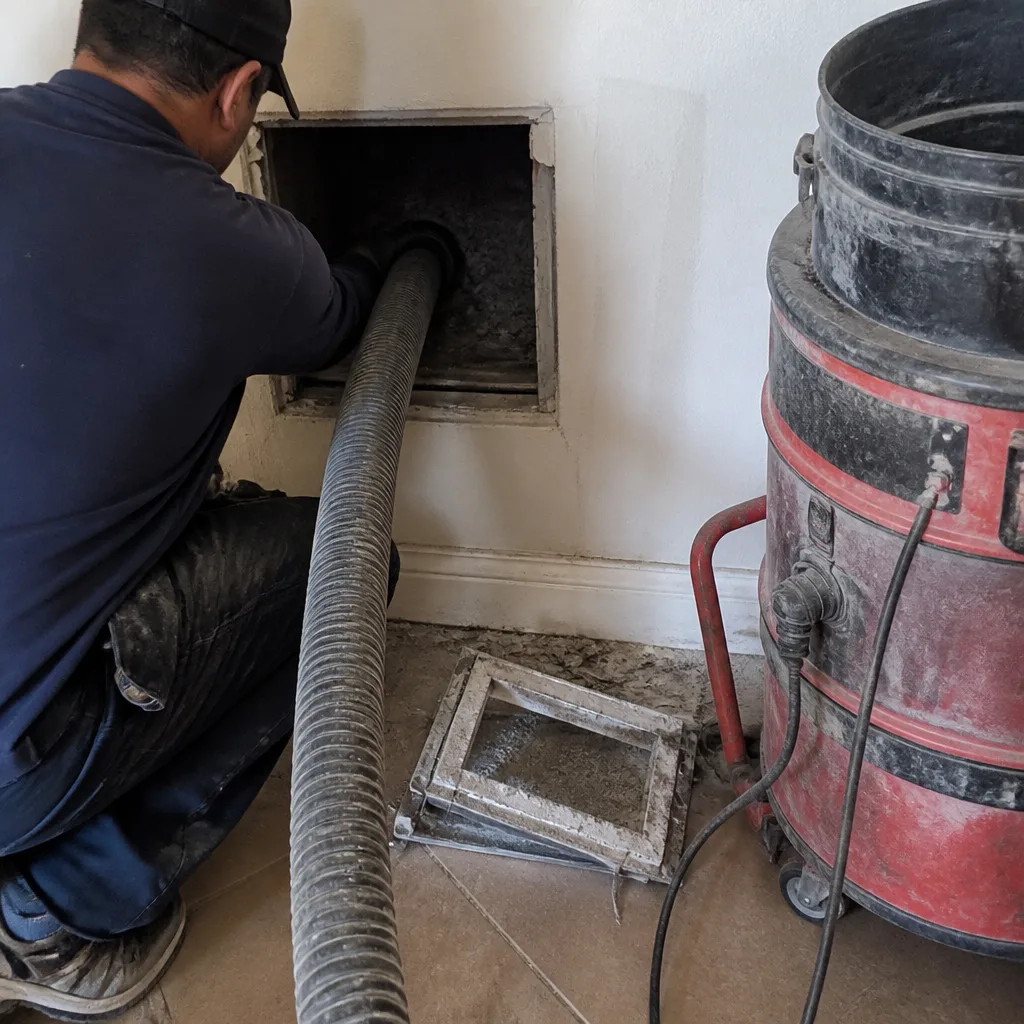 Before
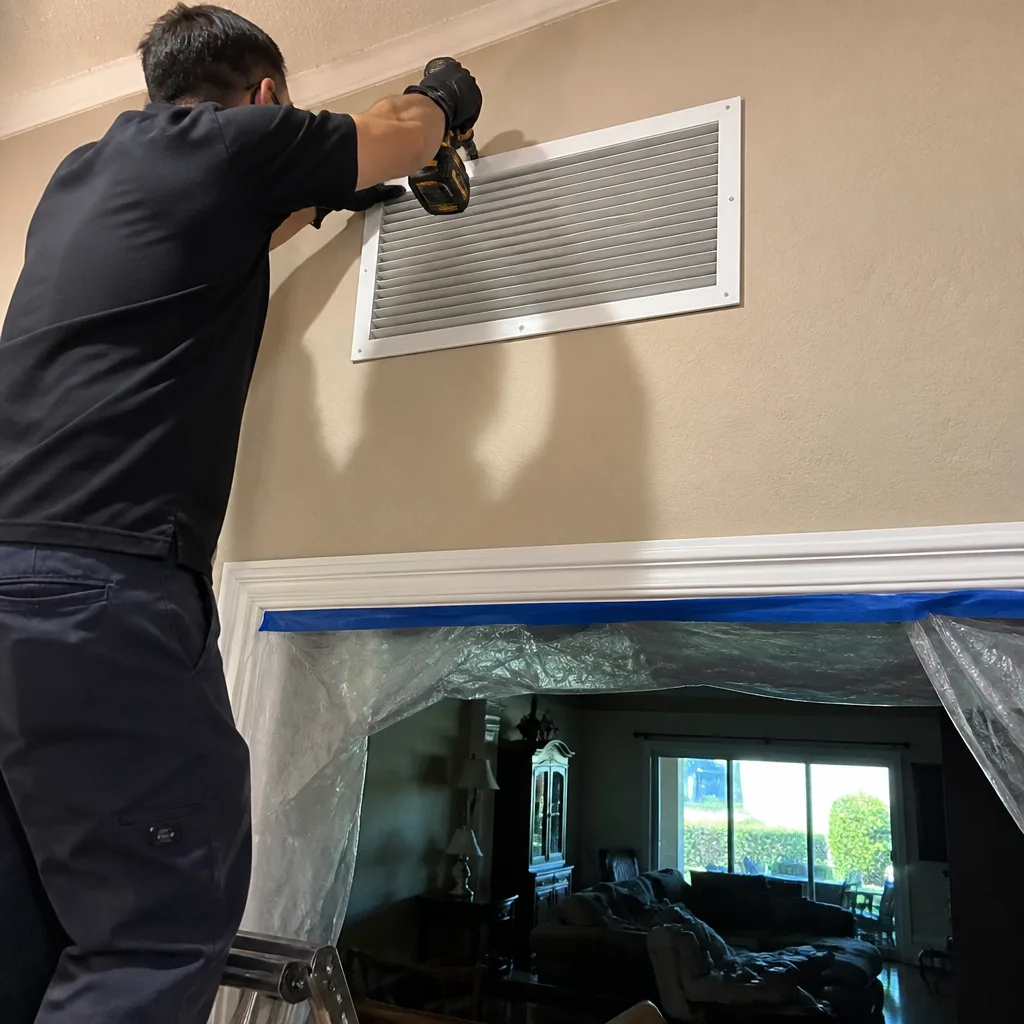 After
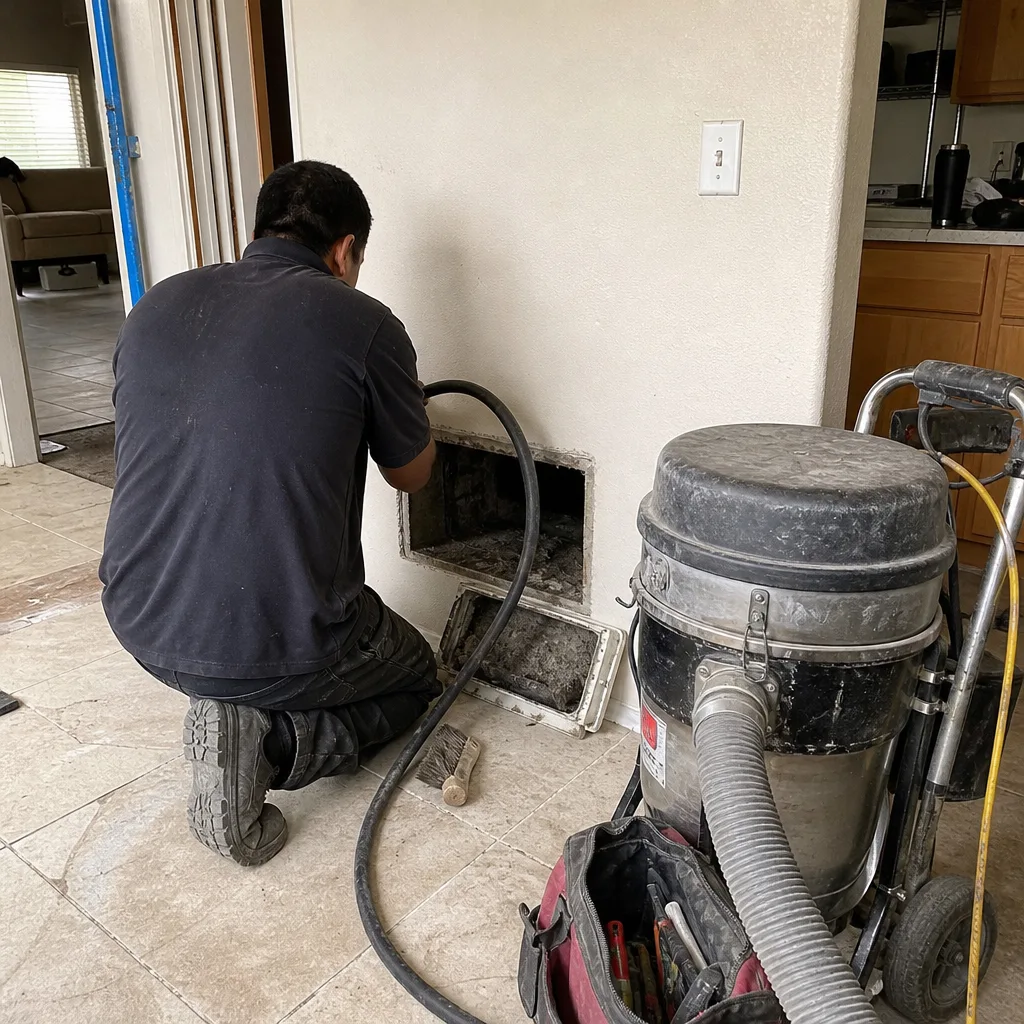 Before
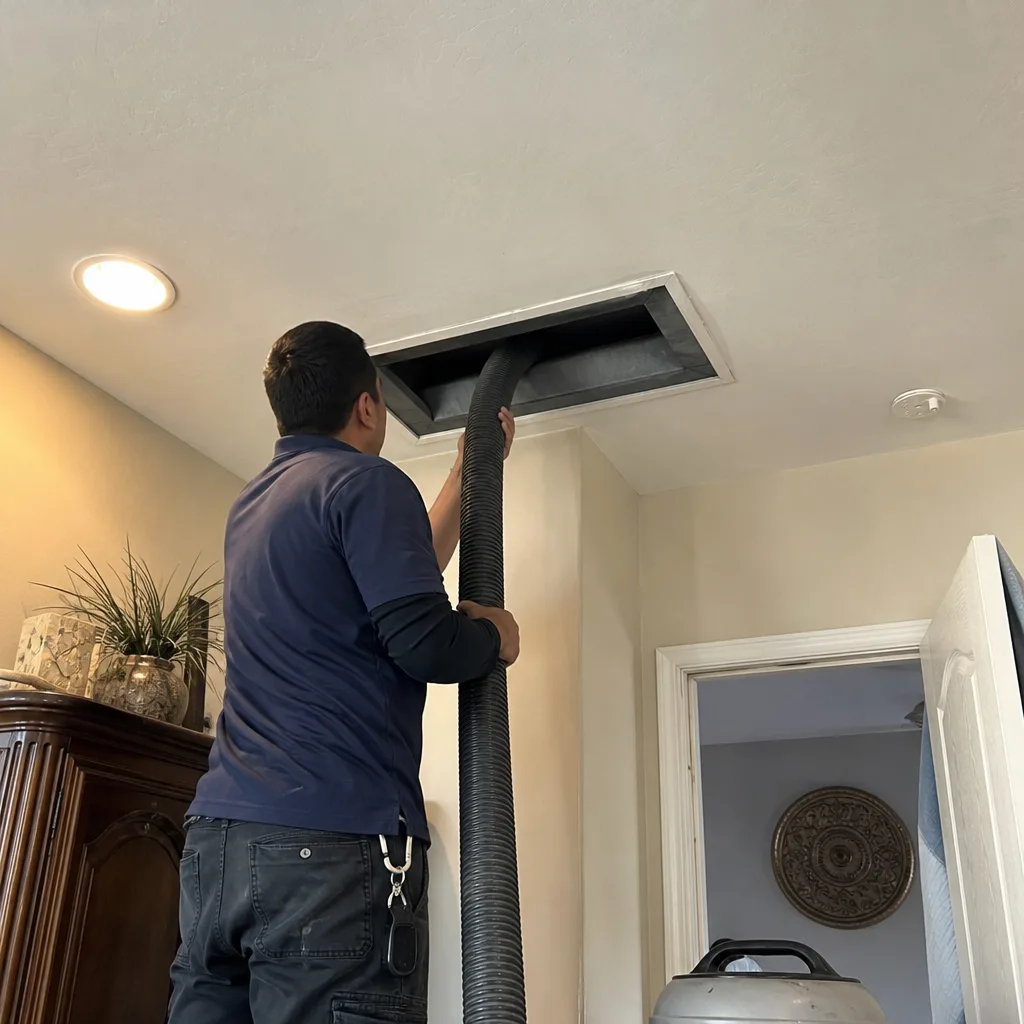 After
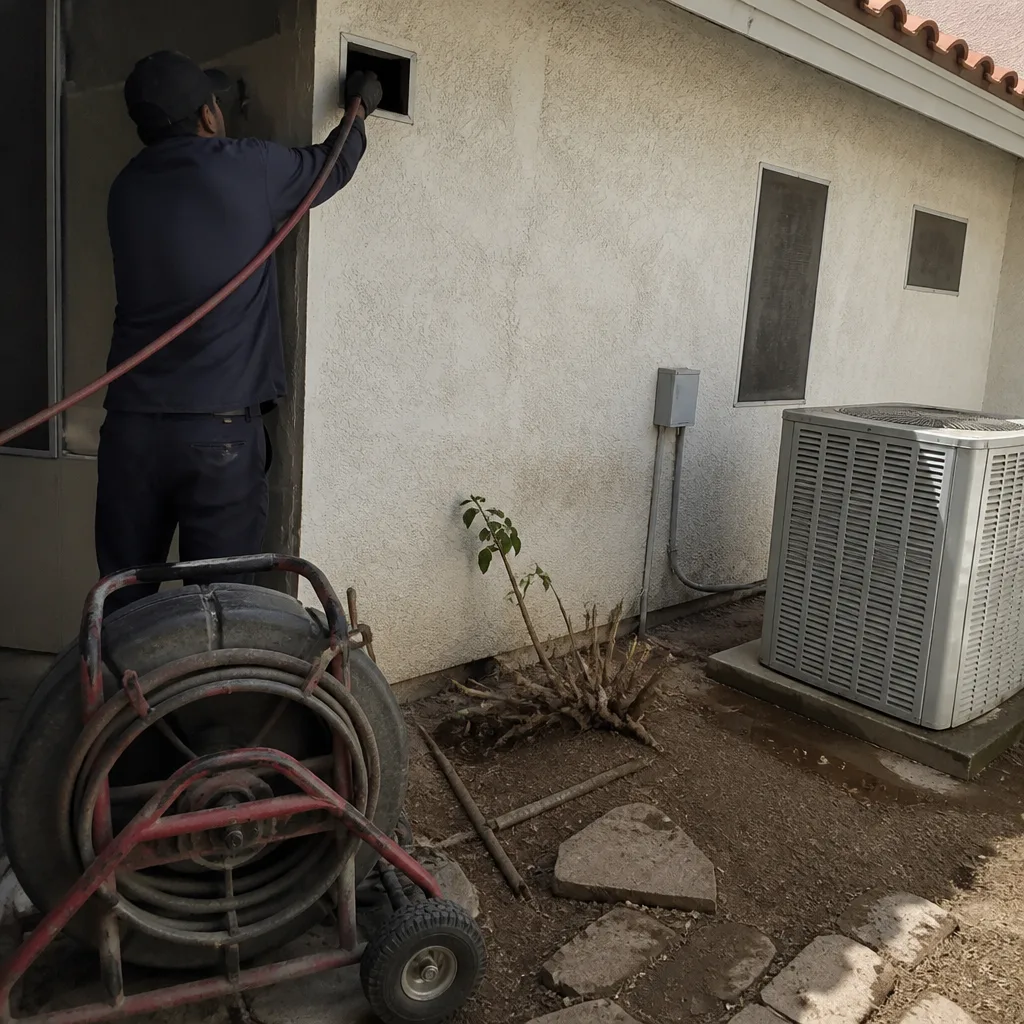 Before
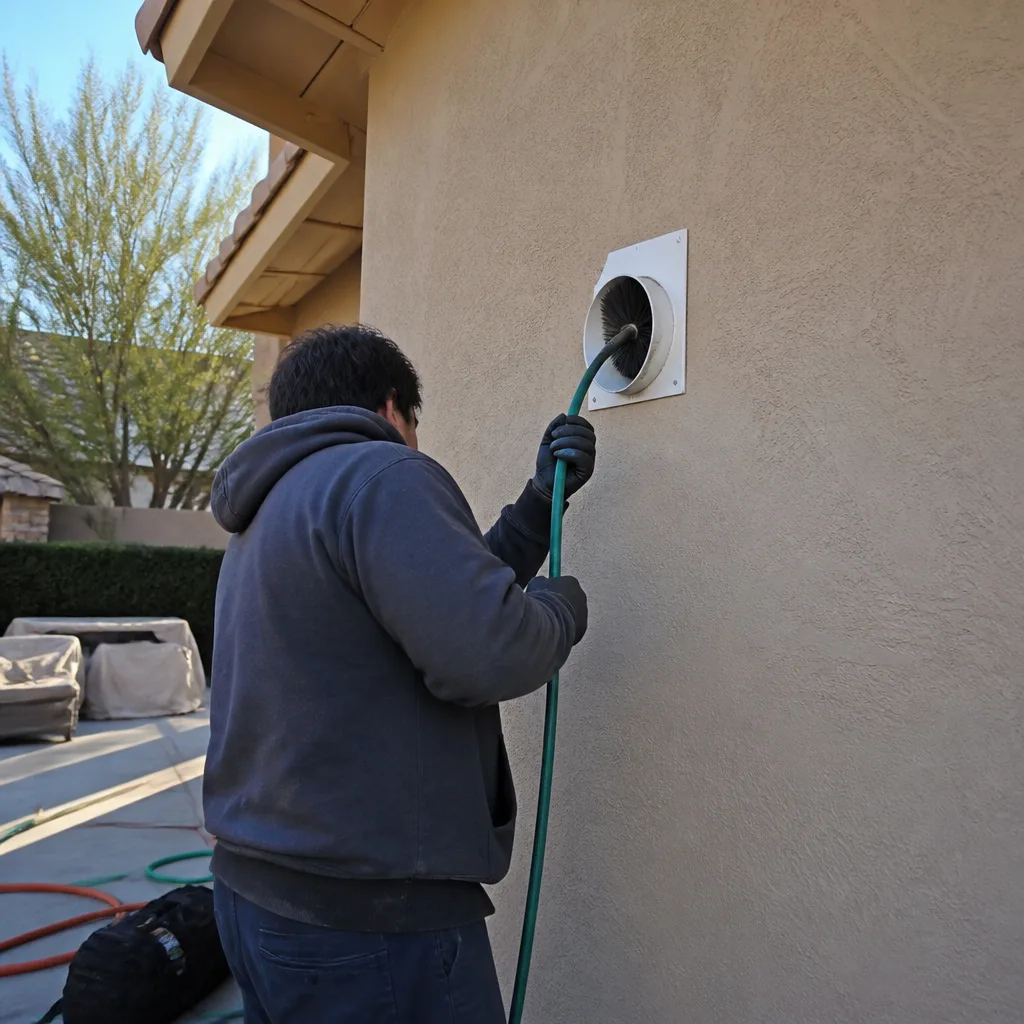 After
When to Call a Professional
Some signs warrant immediate professional attention. Visible mold growth anywhere in your duct system, a persistent musty smell when the system runs, sudden and unexplained increases in your cooling bill, or dust appearing on surfaces within days of cleaning all indicate a problem that’s beyond DIY maintenance. If you’ve just completed a renovation or purchased a home with an unknown maintenance history, a professional inspection and Air Duct Cleaning in Palm Desert service is a sound investment. Duct Cleaning Palm Desert offers free estimates in Palm Desert and throughout the Coachella Valley; call (833) 589-9812 to schedule an assessment.
Frequently Asked Questions
Air duct cleaning in Palm Desert typically ranges from $350 to $650 for a standard single-family home, depending on the number of systems, the size of the home, and the level of contamination. Larger homes with multiple HVAC systems can exceed this range. Be wary of quotes significantly below $250, which often indicate a bait-and-switch operation that surfaces later with add-on charges. Call (833) 589-9812 for an exact quote on your home; estimates are free.
Cheap duct cleaning quotes usually reflect a different scope of work, not a better deal. A very low price typically covers only a superficial vacuum of accessible register openings, not a full source-removal cleaning of the entire duct system. Some operations use the low initial quote as a foot in the door, then discover “problems” that require expensive add-on services. Real source-removal cleaning requires professional equipment like Rotobrush or Nikro systems, which costs money to own and operate properly.
Ask for visual verification. A legitimate provider can show you before-and-after photos of your ducts taken during the cleaning process. We document every job with photos of the duct interior at multiple points, so you can see the actual condition of the duct walls before and after. You should also receive a report of what was found, including any damage, leakage, or repair recommendations. If a company refuses to show you any verification and simply hands you a receipt, you have reason to be skeptical.
Most Palm Desert homes benefit from professional cleaning every 2 to 3 years. Homes with multiple pets, a recent renovation, or known dust intrusion issues may need annual cleaning. Homes with aggressive filtration and well-sealed ducts might extend to 4 years. The 3-5 year interval recommended in some national guides doesn’t account for the heavy dust loads and sand intrusion specific to the Coachella Valley. Call (833) 589-9812 if you’re unsure where your home falls.
Dirty ducts themselves have a modest impact on cooling costs, but the problems that accompany dirty ducts can be significant. A coated evaporator coil reduces heat transfer efficiency, forcing the system to run longer to achieve the same temperature. A loaded filter increases static pressure and makes the blower motor work harder. Leaky ducts that pull hot attic air into the system can increase cooling costs substantially. In a Palm Desert summer, even a 10 percent efficiency loss translates to real money on your electric bill.
Professional duct cleaning is safe for older ductwork when done correctly, but older systems need a careful approach. Flex duct that’s 20 years old or more can be brittle, and aggressive cleaning can cause damage. A skilled technician assesses the condition of the ductwork before cleaning begins and adjusts the process accordingly. In some cases, the honest answer is that the ductwork needs replacement rather than cleaning, and a reputable company will tell you that before taking your money for a cleaning that won’t hold up. We’ve seen this many times in Palm Desert homes built in the 1980s and 1990s.
The Bottom Line
Palm Desert’s climate puts unique stress on residential duct systems, and a maintenance checklist that works for the rest of the country simply doesn’t apply here. Monthly filter checks, seasonal boot inspections, and awareness of desert-specific issues like sand intrusion, insulation migration, and heat-degraded flex duct are all essential. Between your own monthly checks and a professional cleaning every 2 to 3 years, you can keep your system clean, efficient, and delivering the air quality your home deserves. When you’re ready for a professional assessment, Air Duct Cleaning in Palm Desert is a phone call away at (833) 589-9812.
Written by the team at Duct Cleaning Palm Desert, serving Palm Desert since 2018.